Chinese Humanoid Robot Tiangong Ultra Shatters Usain Bolt's 100m Record in Beijing
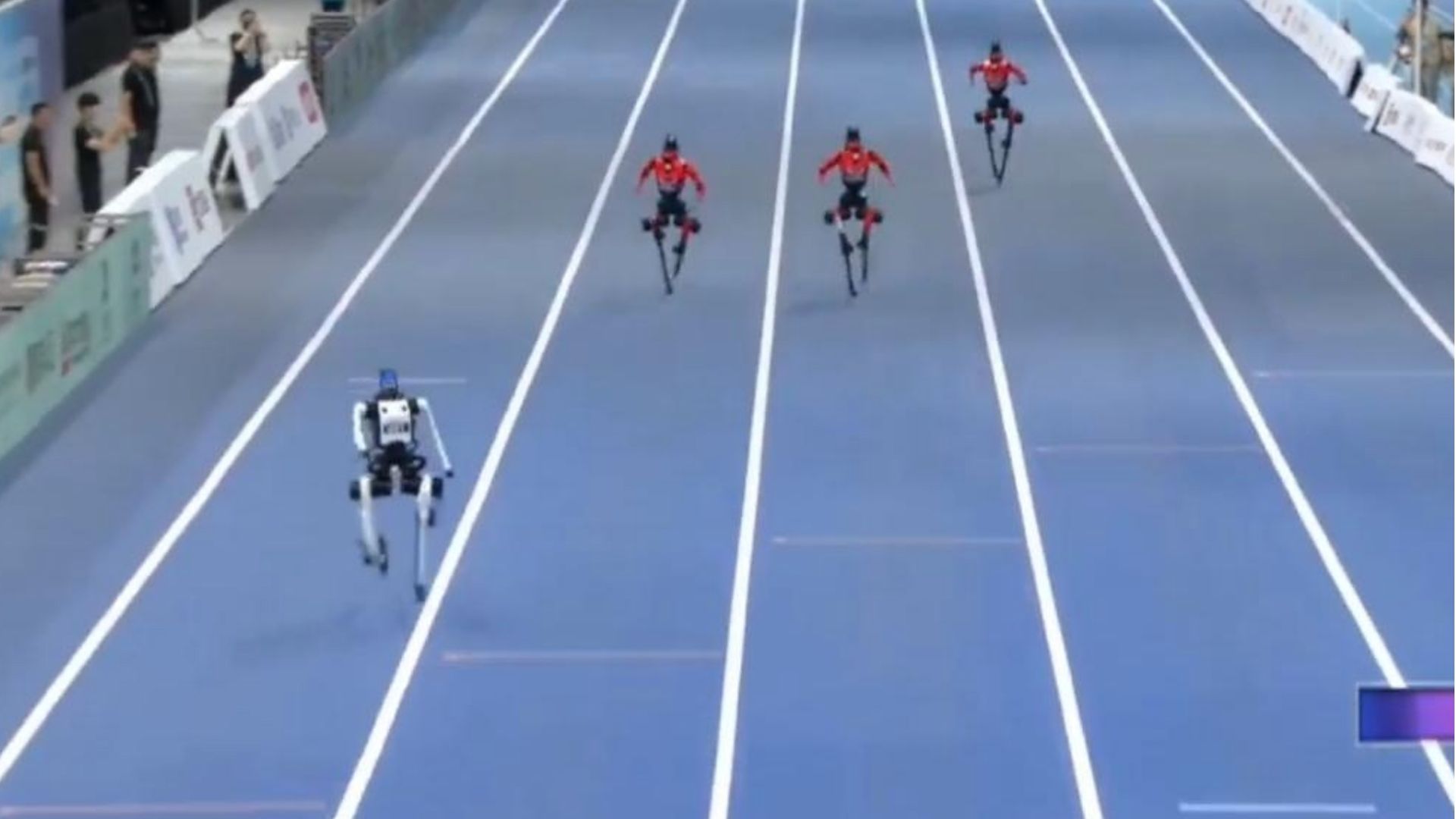
A Chinese robot sprinted 100 meters in 8.64 seconds at the World Humanoid Robot Games, surpassing the fastest human time and raising new questions about the future of robotics and sport.
By Luca Moretti · First published 17 Aug 2026
In brief
- Chinese humanoid robot Tiangong Ultra set a new 100-meter sprint record of 8.64 seconds at the World Humanoid Robot Games.
- This achievement surpasses Usain Bolt's previous world record of 9.58 seconds, raising questions about the future of sports and robotics.
- The event featured over 2,000 robots and 666 teams, showcasing significant advancements in robotic technology and performance.
- Debate continues regarding the practical applications of these robots, as many still struggle with basic tasks outside competitive environments.
- The robotics sector is experiencing volatility, with discussions about the implications of rapid advancements and investment risks.
Timeline · 8 moments
Chinese robots surpass Bolt's 100m record in Beijing
SlashdotSlashdotSearch Slashdot ↗Unitree unveils super-fast humanoid, jumps to $51B valuation
Fast Company ↗Robot sprints 100m in 8.86 seconds at Beijing Games
Tech Xplore - electronic gadgets, technology advances and research news ↗Chinese robot clocks sub-9-second 100 meters
Al Jazeera ↗World Robot Games end with 8.64s 100m sprint
World News CNA ↗Chinese robot sets new 100m record at Robot Games
Interesting Engineering ↗Robot Olympics reveal progress, but challenges remain
Nature ↗Chinese robot completes 400m in 38.16 seconds
Spider's Web - Opinie i analizy na temat technologii ↗How it started
The World Humanoid Robot Games began as a showcase for the latest advances in robotics. The event, held in Beijing, brought together teams from around the globe to compete in a variety of sports and skill-based challenges.
Chinese robotics companies, especially Unitree and Beijing X-Humanoid, had been making headlines with their rapid progress. Their humanoid robots were already impressing audiences with feats like high jumps and complex acrobatics, according to Fast Company and NBC News. The excitement was further fueled by a surge in investment and a high-profile IPO for Unitree, which briefly pushed its valuation above $50 billion.
The stage was set for a dramatic contest, with both technical achievement and public spectacle in mind. The 100-meter dash, long the domain of elite human sprinters, became the focus of attention.
How it unfolded
On August 24, 2026, news broke that Chinese humanoid robots had beaten Usain Bolt's iconic 9.58-second 100-meter record. Early reports from Slashdot and Fast Company described preliminary heats where the Tiangong Ultra robot ran 100 meters in 9.39 seconds, already faster than any human.
As the competition continued, the robots improved further. By August 25, multiple outlets including Al Jazeera and Tech Xplore reported that Tiangong Ultra had run the distance in 8.86 seconds, smashing its previous time and widening the gap with Bolt's 2009 world record. The Sydney Morning Herald and Gizmodo highlighted both the robots' unprecedented speed and their struggles with other, more delicate tasks.
On August 26 and 27, new records were confirmed. World News CNA and Interesting Engineering stated that Tiangong Ultra completed the 100 meters in 8.64 seconds. Coverage from Nature and DIE WELT emphasized that this was almost a full second faster than the best human effort, and that these breakthroughs were achieved at an event featuring more than 2,000 robots and 666 teams.
The Games also drew international attention for dramatic robot failures and technical mishaps. Ars Technica described incidents where robots broke apart mid-race, while other outlets noted the spectacle of robots falling during tug-of-war and other events.
Where it stands
As of late August 2026, Chinese robots have firmly eclipsed human sprinting records at the World Humanoid Robot Games. Tiangong Ultra's 8.64-second 100-meter run is now the benchmark, according to multiple sources.
The achievement has sparked debate about the future of robotics, sports, and even the meaning of athletic competition. While robots have proven their speed and power, questions remain about their usefulness outside of controlled environments. Some robots still struggle with simple tasks, as Nature and the Sydney Morning Herald reported.
Meanwhile, the rapid rise and sharp fall of Unitree's stock price has led to broader discussions about the risks and rewards of investing in China's booming robotics sector.
What to watch
Observers are now waiting to see how these technological advances will translate to real-world applications. NBC News and Forbes suggest that the focus is shifting from flashy displays to integrating robots into practical work settings. The next steps for companies like Unitree and X-Humanoid will likely involve adapting their technology for industrial or everyday use.
There is also curiosity about whether future robot competitions will introduce new rules or categories, as the boundary between robotics and sport continues to blur.
More in Technology
All →
Dell Unveils 14S Laptop to Compete With Apple's MacBook Neo in US
Dell has launched the 14S laptop, targeting students with a colorful, budget-friendly device that directly challenges Apple's MacBook Neo amid concerns about value and pricing.
8 sources · today
Google Rapidly Expands Gemini AI With Student Tools and New Models
Google has rolled out major updates to its Gemini AI platform, launching new models and offering free AI access to students, signaling a push to make its AI central to education and creative work.
27 sources · over 6 days
Apple Schedules September 9 Event to Launch iPhone 18 Pro and Foldable Ultra
Apple will unveil the iPhone 18 Pro and its first foldable iPhone Ultra at a major September 9 event, marking a pivotal moment for both its flagship lineup and entry into the foldable phone market.
46 sources · over 7 days