Disney+ Adds Ads to All Subscription Plans and Raises Prices Again
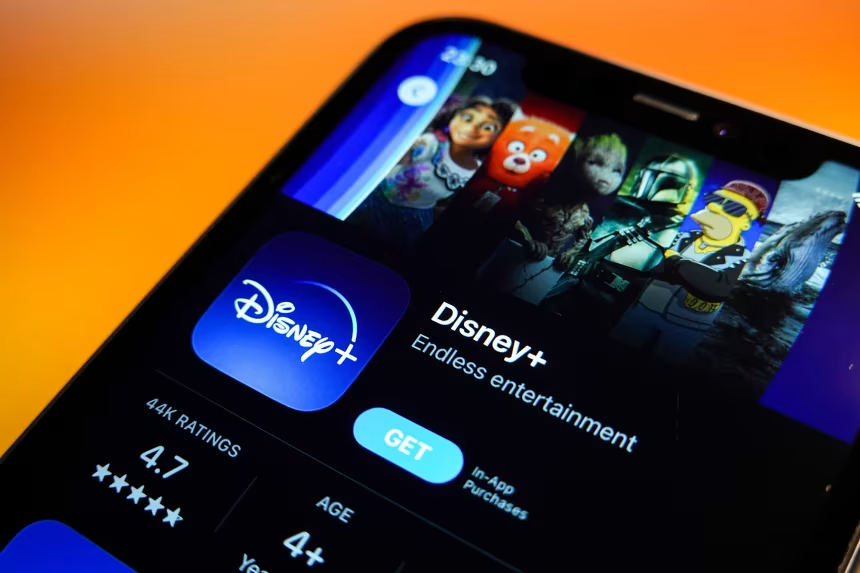
Disney+ has ended completely ad-free streaming by introducing ads across all plans, including its premium tier, while also announcing significant price hikes for both Disney+ and Hulu.
By Marcus Bell · First published 23 Sept 2026
In brief
- Disney+ has updated its subscriber agreement to allow advertisements on every plan, including the former ad-free premium tier.
- The change means no Disney+ subscription will be fully ad-free, though the placement and frequency of ads will vary by plan.
- Shortly after the ad policy change, Disney+ and Hulu both announced price increases for nearly all subscription tiers.
- Premium standalone plans for Disney+ and Hulu now cost over $21 per month, with bundles offered at discounted rates.
- The changes have sparked confusion and frustration among subscribers, and industry watchers are monitoring for further reactions or cancellations.
Timeline · 6 moments
Disney+ updates subscriber agreement to allow ads on all plans
r/technology ↗Media confirm ads coming to every Disney+ subscription tier
elEconomista.es ↗Reports clarify ad placement differs by plan, not all ads are mid-program
tech ↗Subscriber confusion grows over the end of ad-free streaming
CNET News Tech ↗Disney+ and Hulu announce major price hikes for all plans
Technology ↗Premium ad-free plans now cost over $21 per month
cnn.com ↗How it started
Disney+ originally offered subscribers a choice between ad-supported and ad-free streaming, with the premium plan guaranteeing uninterrupted viewing. Over time, streaming services across the industry have introduced ad-supported tiers as a way to offset rising content costs and subscriber churn.
Recently, Disney+ revised its user agreement, setting the stage for significant changes in how all its subscribers experience the platform. This move came as part of a broader trend among streaming giants to diversify revenue streams.
How it unfolded
On September 19, 2026, Disney+ amended its subscriber agreement to permit advertisements on every plan, including the previously ad-free premium option. This change was first noticed by subscribers and widely discussed online.
By September 21, multiple outlets confirmed that Disney+ would indeed show ads across all subscription tiers. However, the nature of the ads differs by plan. For most users, ads will not interrupt programs, except in the standard ad-supported tier, where ads can appear during shows and movies.
There was initial confusion among subscribers and media about whether any completely ad-free option would remain. Some reports clarified that while ads are now allowed everywhere, only the standard ad-supported plan will feature ads during playback. In higher tiers, ads may appear before content starts or in other non-intrusive ways.
Just days later, on September 23, Disney+ and Hulu announced new price increases. Monthly costs for the ad-free premium plans of both services jumped to over $21, marking the sixth consecutive year of price hikes for Disney+.
Bundles combining Disney+ and Hulu now offer a lower price compared to subscribing to both services separately. The new prices took effect immediately for new customers, while existing subscribers will see the increases reflected in their bills next month.
Where it stands
As of late September 2026, all Disney+ subscribers will encounter some form of advertising, regardless of their plan. The specifics of how and when ads appear depend on the subscription tier, but no option is entirely ad-free.
Meanwhile, the cost of both Disney+ and Hulu has risen sharply, with standalone ad-free plans now priced above $21 per month. The changes have led to widespread debate among subscribers, and industry analysts are watching closely to see if these moves will impact subscriber numbers or prompt further changes.
What to watch
It remains to be seen how subscribers will respond to the loss of a fully ad-free option and the higher prices. Disney+ and Hulu may face increased cancellations or pressure to adjust their offerings if backlash grows. Industry observers are also watching to see if other streaming platforms will follow suit.
More in Entertainment
All →
Matthew McConaughey and Woody Harrelson Reunite for Apple TV's 'Brothers'
Matthew McConaughey and Woody Harrelson star as exaggerated versions of themselves in 'Brothers,' a new Apple TV comedy inspired by rumors they might be actual siblings.
15 sources · over 2 days
Taylor Swift Unveils New Single 'Patient Zero' Set for September 25 Release
Taylor Swift has announced her first single since her wedding, 'Patient Zero,' which will be released on September 25, generating excitement and some debate among fans.
12 sources · today
Dolly Parton's Nephew Fired and Accused Amid Estate Power Struggle
A bitter dispute has erupted within Dolly Parton's family following her death, with her nephew fired and accused of threats and extortion as the estate seeks a restraining order.
15 sources · over 2 days