France Submits Revised Ban on Social Media for Under-15s to EU
France is pushing a new proposal to ban social media for children under 15 after its earlier law was struck down, seeking Europe-wide support to protect minors online.
By Ethan Cole · First published 14 Sept 2026 · Chapter 2 of 2
Earlier: France Submits Revised Law to Ban Social Media for Under-15s After Legal Setback
In brief
- France's previous law banning social media for under-15s was rejected by the Constitutional Council for restricting freedom of expression.
- The government quickly drafted a new version addressing legal concerns and has now submitted it to the European Commission.
- President Macron is urging the European Union to adopt similar rules across all member states to better protect children.
- The European Commission is preparing its own legislation, the EU Kids Act, which targets online safety for minors.
- Final decisions and details about age limits and enforcement are expected as the EU considers both national and union-wide measures.

Timeline · 4 moments
French Constitutional Council rejects under-15 social media ban
Euronews ↗French government submits revised social media ban to European Commission
Franceinfo ↗President Macron urges EU to adopt child online safety rules
The Hindu ↗European Commission prepares to unveil EU Kids Act for online safety
The Next Web ↗How it started
In early 2026, France passed a law banning children under 15 from accessing social media platforms. The aim was to protect young people from online risks and harmful content. However, the French Constitutional Council soon reviewed the law after concerns were raised about its impact on fundamental rights.
The Council found that the law, as written, imposed excessive restrictions on adolescents' freedom of expression. At the same time, the Council acknowledged the legitimate need to protect children's interests online. This decision forced the French government to reconsider its approach.
How it unfolded
On August 9, 2026, France's Constitutional Council officially struck down the original law, citing unnecessary infringements on children's freedom of expression. The government quickly promised to revise the proposal to address these constitutional issues.
By mid-September, President Emmanuel Macron announced that a new version of the law was ready. The updated proposal aimed to balance the need to protect minors with the requirement to respect their rights. Instead of immediately enacting the new law, France submitted it to the European Commission for review.
Macron also called on the European Union to move quickly and introduce similar protections across all member states. This push for coordinated action reflects growing concern about social media's impact on children throughout Europe.
Meanwhile, the European Commission prepared its own response. It is set to unveil the EU Kids Act, a package of rules designed to improve online safety for children, including possible restrictions on social media and AI chatbots for those under 15.
Where it stands
France's revised proposal is now in the hands of the European Commission, awaiting review and possible approval. The French government hopes the new version will avoid the legal pitfalls that blocked the first attempt, while still offering strong protections for minors.
The European Commission is also preparing to present its own legislation on child online safety, which may set the standard for all EU countries. The coming weeks will be critical as both national and EU-level measures are discussed and refined.
What to watch
Attention now turns to Brussels, where the European Commission will review France's proposal and present the EU Kids Act. Key details, such as the exact age limits and how any ban would be enforced, remain undecided. The outcome will shape how children across Europe use social media in the near future.
More in Politics
All →
No Confirmation of Trump's Claimed Russia-Ukraine Energy Truce
Trump announced a supposed Russia-Ukraine deal to halt energy strikes, but both sides have yet to confirm or implement any agreement.
29 sources · over 2 days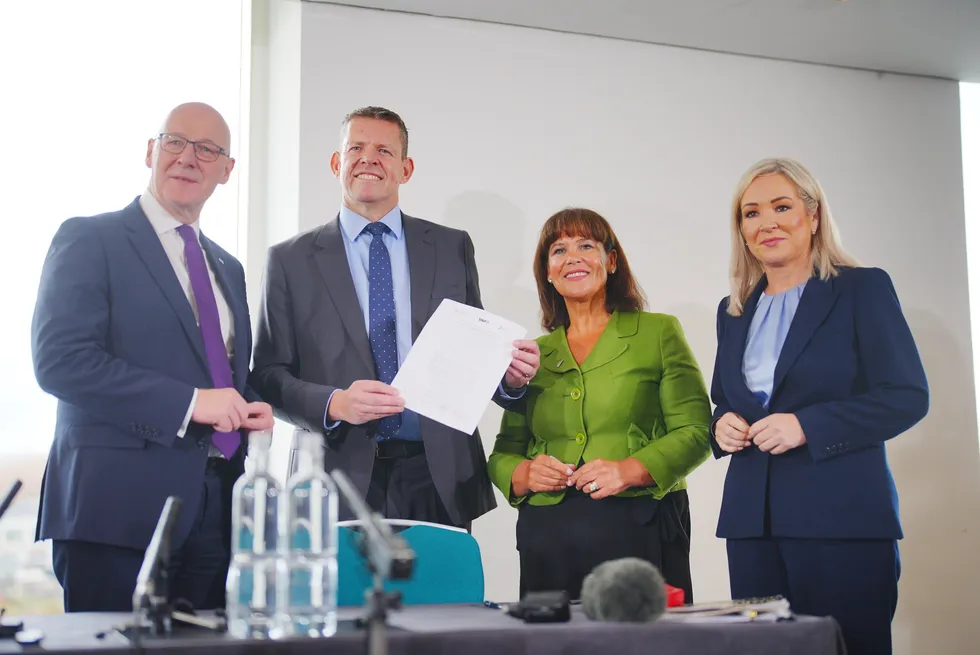
Scottish, Welsh, and Northern Irish Leaders Meet in Cardiff to Discuss UK Independence
Leaders from Scotland, Wales, and Northern Ireland are holding a historic summit in Cardiff to coordinate strategies for potential independence referendums, raising new questions about the future of the United Kingdom.
20 sources · over 2 days
Trump Claims Presidential Oversight Is Enough for AI Regulation Amid Industry Concerns
Donald Trump has dismissed calls for new AI regulations, insisting that only a strong and intelligent president is needed to manage the technology as safety concerns grow.
8 sources · today