Nagoya's Asian Games 2026 Marred by Athlete Housing and Logistical Setbacks
Organizers of the Asian Games in Nagoya, Japan, struggle to resolve major accommodation and transport problems for over 11,000 athletes as severe weather adds pressure.
By Marcus Bell · First published 20 Sept 2026
In brief
- Nagoya is hosting the 2026 Asian Games with more than 11,000 athletes from 45 countries competing.
- Organizers failed to provide a dedicated athletes' village, relying on hotels, container huts, and a cruise ship for housing.
- Athletes and officials have faced complaints about poor living conditions, delayed room allocations, and logistical confusion.
- A severe typhoon threatens event schedules, adding to the challenges already faced by participants and organizers.
- Despite the issues, the Games opened with a grand ceremony and competitions are proceeding while solutions are still being implemented.
Timeline · 8 moments
Organizers address complaints as cruise ship arrives for athlete housing
World News CNA ↗Lodging woes escalate as more athletes arrive in Nagoya
Japan Times ↗Athletes face leaking cabins and hotel shortages amid typhoon threat
Times of India ↗India's Chef de Mission confirms crisis and books extra hotel rooms
Times of India ↗Athletes from Singapore housed on a cruise ship due to lack of village
World News CNA ↗Organizational issues mount as athletes complain of exhaustion and poor lodging
Arab News ↗Asian Games open in Nagoya with 11,000 athletes and grand ceremony
World News CNA ↗IOC chief praises Games accommodations despite ongoing criticism
World News CNA ↗How it started
The Asian Games 2026 were awarded to Nagoya, Japan, with expectations that the city would showcase its organizational strengths. However, the event quickly ran into trouble as the number of participating athletes and officials climbed beyond initial projections, partly due to the addition of new sports.
Organizers had not built a traditional athletes' village, instead planning to use local hotels and other temporary solutions. As the Games approached, it became clear that these arrangements were insufficient, leading to early concerns about where thousands of athletes would stay.
How it unfolded
By mid-September, with the Games' opening imminent, reports of accommodation shortages and poor living conditions began surfacing. Some athletes were assigned to temporary wooden containers, while others faced leaking cabins and makeshift arrangements. Organizers scrambled to find alternatives, including booking extra hotel rooms and bringing in a cruise ship to house some teams.
Indian officials were vocal about the difficulties, revealing that their contingent had to secure additional lodging due to a reduced quota. Other countries, including South Korea, expressed similar frustrations about the lack of adequate facilities and organizational confusion.
A severe typhoon was forecast to hit Nagoya during the Games, raising additional concerns about athlete safety and event scheduling. Meanwhile, logistical problems extended beyond accommodation, with reports of accreditation delays, transportation issues, and food shortages.
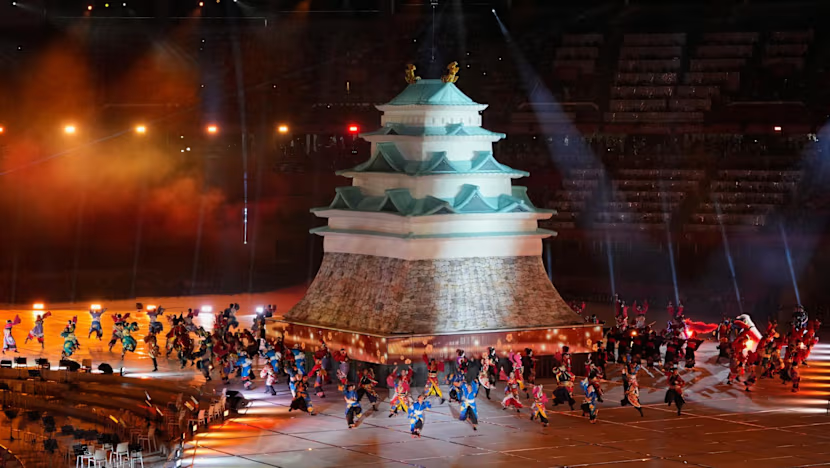
Despite these setbacks, the opening ceremony went ahead on September 19, drawing more than 11,000 athletes. The event was marked by celebrations of solidarity and Japanese culture, but the stadium was notably sparse, reflecting ongoing complications.
Where it stands
The Games are now underway, but accommodation and logistical challenges remain unresolved for many athletes. Some contingents continue to rely on makeshift housing and the cruise ship, while local communities and the Indian diaspora have stepped in to help address shortfalls.
Event organizers are under pressure to resolve ongoing complaints as competitions proceed. The threat of severe weather looms, and the success of the Games will depend on how quickly remaining issues are managed.
What to watch
Attention is now on whether organizers can stabilize accommodations and logistics as more events take place. The impact of the approaching typhoon on athlete safety and competition schedules is also a key concern in the coming days.
More in Sports
All →
Arsenal's Unbeaten Run Ends With 3-0 Loss to Brighton After Managerial Dispute
Arsenal's perfect start to the Premier League season was halted by a 3-0 defeat at Brighton, days after Mikel Arteta addressed a resolved dispute with Brighton's manager.
11 sources · over 2 days
Aston Villa Defeat Tottenham 3-2 in Dramatic Premier League Clash
Tottenham Hotspur suffered a third straight defeat as Aston Villa secured their first Premier League win of the season with a 3-2 victory in north London.
13 sources · over 2 days
Sandro Mazzola, Legendary Inter Milan and Italy Footballer, Dies at 83
Sandro Mazzola, one of Italian football's greatest icons and a lifelong Inter Milan player, has died at 83, prompting tributes across the football world for his lasting legacy.
15 sources · over 2 days