Nepal's Flash Floods Leave Over 1,300 Dead and Thousands Missing Amid Massive Damage
A deadly flash flood in northern Nepal has killed over 1,300 people, left more than 5,000 missing, and caused billions in damage, with rescue and recovery efforts still underway.
By Oliver Hartmann · First published 14 Sept 2026
In brief
- A sudden flash flood struck northern Nepal in late August, sweeping away towns, roads, and bridges.
- The disaster has killed at least 1,385 people, with thousands still missing and entire communities devastated.
- Nepal's government estimates the cost of reconstruction and recovery at nearly $4.8 billion.
- Rescue operations are ongoing, but the focus is shifting toward long-term recovery and disaster risk reduction.
- Experts link the disaster to rapid Himalayan glacier melt, raising urgent concerns about future risks in the region.
Timeline · 7 moments
Flash flood devastates northern Nepal after Himalayan glacier collapse
NDTV Top Stories ↗Death toll surpasses 1,300 as bodies recovered in multiple districts
Business Line - Home ↗Thousands still missing and rescue efforts continue across affected areas
France24 ↗Nepal estimates $4.78 billion needed for reconstruction and recovery
The Hindu ↗Official report details recovery needs and disaster-risk reduction plans
Business Line - Home ↗Scientists warn glacier melt is increasing disaster risks in Himalayas
Japan Times ↗Nepal moves from rescue to recovery, calls for climate justice
Deutsche Welle ↗How it started
The disaster began in late August when a sudden and intense flash flood struck northern Nepal. The flooding was triggered by a glacial collapse high in the Himalayas, releasing a torrent of water, mud, and debris downstream.
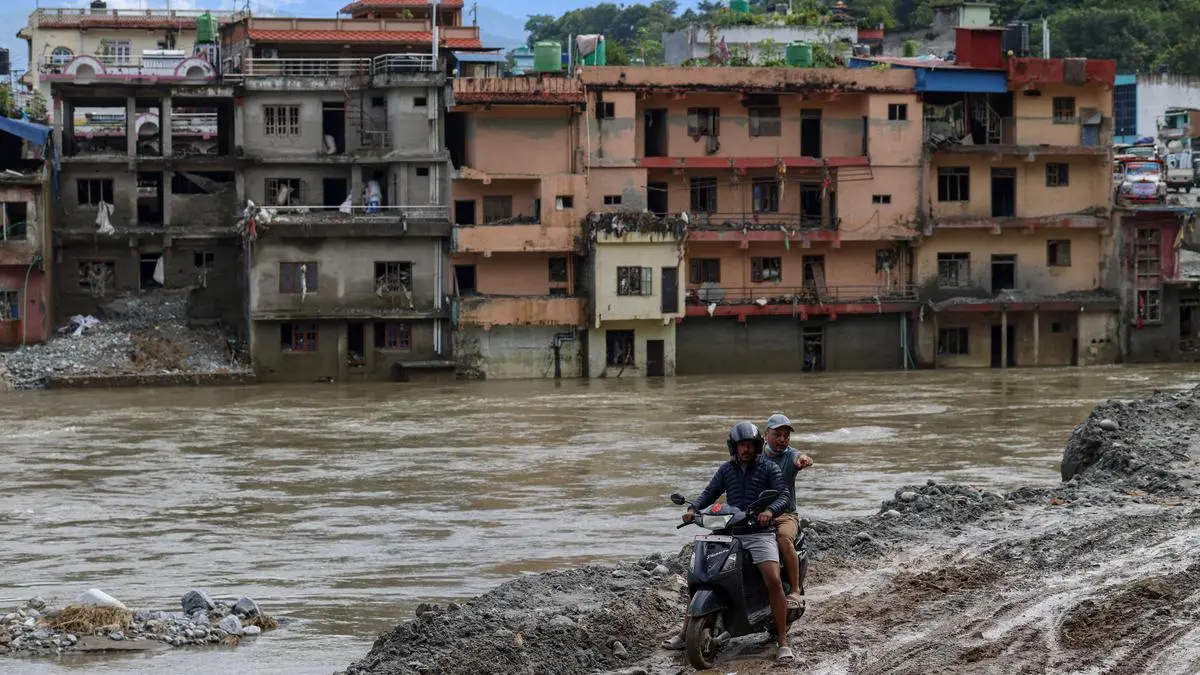
Entire towns and villages in mountainous districts were swept away within hours. Early reports described scenes of chaos as residents attempted to flee, and bridges and roads vanished under the force of the water. The event was described as unprecedented in both scale and impact by local authorities.
How it unfolded
By September 11, officials had confirmed at least 1,385 deaths, with major losses in districts like Chitwan, Nawalparasi East and West, Nuwakot, and Rasuwa, according to Business Line. The government and rescue teams worked to recover bodies and search for survivors, but the number of missing continued to rise, reaching over 5,000 as reported by Le Monde.
Two weeks after the flooding, the destruction was still visible. Reports described entire neighborhoods in places like Trishuli being wiped out, as well as significant infrastructure losses, including bridges and hydroelectric plants. Families posted photographs of missing loved ones at hospitals and military bases, hoping for news.
Nepal's government quickly assessed the scale of the disaster. The estimated cost for recovery and reconstruction was put at $4.78 billion, a figure that covers not only rebuilding but also disaster risk reduction and climate resilience, according to The Hindu and Business Line.
International attention grew as scientists and policymakers linked the flood to the rapid melting of Himalayan glaciers. Studies highlighted that glacial retreat is accelerating, creating unstable lakes and increasing the risk of future disasters, as reported in Gizmodo and Japan Times.
Where it stands
As of mid-September, Nepal remains in a state of emergency. Rescue operations are still ongoing in affected regions, but the government is beginning to shift focus toward long-term recovery. Thousands of people are still missing, and the death toll is expected to rise as search operations continue.
The scale of destruction means that reconstruction will take years. The government is calling for international support, both for immediate relief and for investments to help the country adapt to the rapidly changing Himalayan environment. There are also renewed calls for climate justice, as Nepal faces the consequences of global warming despite contributing little to its causes.
What to watch
The main questions now are how quickly Nepal can secure the necessary funding and expertise for reconstruction, and whether the international community will step up its support. Scientists warn that unless measures are taken to address glacial melt and climate risks, similar disasters could become more frequent and severe in the coming years.
More in World
All →
DHS Watchdog Reveals Immigrants Held in Phone Booth-Sized Cages at Florida Facility
A federal report uncovered that migrants at the now-closed 'Alligator Alcatraz' detention center in Florida were confined in tiny outdoor cages, raising urgent questions about U.S. immigration enforcement practices.
8 sources · today
Woman Biker Injured After Alleged Car Chase and Collision in Gurugram
A woman riding a sports bike in Gurugram was chased, hit, and injured by a car after asking the driver to keep distance, raising concerns about road safety.
8 sources · today
Turkish Police Raid LGBTQ+ Groups and Venues, Detaining Over 160 People
Turkish authorities have launched a nationwide crackdown on LGBTQ+ organizations and activists, detaining at least 162 people and blocking online accounts, raising fears for community rights ahead of national elections.
15 sources · over 2 days