Oil Prices Near $100 After Attacks on Saudi Energy Facilities Spark Supply Fears
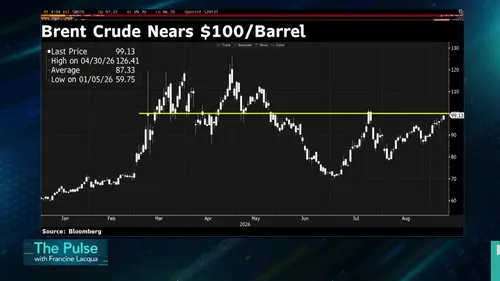
A surge in oil prices driven by escalating Middle East conflict is straining India's currency and raising global economic concerns as Brent crude approaches $100 per barrel.
By Elena Petrova · First published 8 Sept 2026
In brief
- Brent crude oil prices are nearing $100 a barrel after attacks disrupted Saudi energy facilities and heightened supply fears.
- The Indian rupee, initially rising, fell sharply as rising oil prices increased the cost of imports and pressured the currency.
- Iranian warnings and ongoing conflict in the Middle East have raised concerns about further disruptions to global oil supply.
- Traders and analysts expect oil prices to remain elevated as tensions persist and supply routes face continued risk.
- India faces a higher oil import bill, which could worsen inflation and impact its broader economy if high prices persist.
Timeline · 6 moments
Indian rupee rises slightly in early trade
The Hindu ↗Rupee falls as oil prices climb during the day
Business Line - Home ↗Attacks halt Saudi energy operations, oil nears $100
Bloomberg ↗Oil prices surge after Houthi attacks on Saudi facilities
Breaking News on Seeking Alpha Business & Economy ↗Brent crude hits six-week high at $100 for India
Times of India Top Stories ↗Iran warns of possible retaliation, supply fears rise
Mehr News (English) ↗How it started
Oil prices began creeping higher as tensions escalated in the Middle East, with particular focus on Saudi Arabia and Iran. The initial trigger was a series of attacks on Saudi energy facilities, which disrupted operations and raised concerns about the security of key oil infrastructure. These attacks, reportedly carried out by Yemen's Houthi group, heightened fears that the conflict might affect broader supply routes.
As the situation developed, global markets started reacting. Early trading saw the Indian rupee strengthen slightly against the U.S. dollar, partly due to strong dollar inflows. However, the mounting threat to oil supplies quickly became the dominant concern for traders.
How it unfolded
On September 7, the Indian rupee opened stronger at 94.39 against the U.S. dollar, but by the end of the day, it had fallen to 94.50 as oil prices started to surge. By September 8, attacks on Saudi Arabia's southern energy facilities had halted operations at several sites, pushing Brent crude oil close to the $100 mark.
The attacks led to immediate concerns over global supply, especially as the Strait of Hormuz, a crucial shipping route, faced constraints. Major oil traders estimated that flows through the strait had been affected, and Gulf producers began seeking alternative shipping routes to maintain exports.
Iran issued warnings about possible retaliation against U.S. actions, adding another layer of uncertainty. Reports indicated that WTI crude also climbed, reaching over $92 per barrel. Meanwhile, India's crude import benchmark crossed $100, the highest in six weeks, contributing to further pressure on the rupee.
Throughout September 8, the rupee suffered its sharpest single-day fall in more than a month, dropping to 94.84 per dollar by the close. Global benchmarks for oil, including Brent, hovered just under $100, with some reports noting intraday highs above $99. This surge in oil prices prompted concerns about rising inflation, particularly for large importers like India.
Where it stands
Brent crude oil is now trading just below the $100 per barrel mark, the highest level seen since late July. The Indian rupee has weakened significantly due to the increased cost of oil imports, closing at 94.84 per U.S. dollar. Markets remain volatile as traders watch for further disruptions and potential escalation in the Middle East.
The situation has left India facing the prospect of a higher oil import bill, which could fuel inflation and put additional strain on the country's economy. Analysts expect oil prices to remain elevated as long as supply risks persist and geopolitical tensions remain unresolved.
What to watch
Attention is now focused on whether further attacks or retaliation will disrupt oil supplies from Saudi Arabia or the broader Gulf region. The next few days will be crucial for both oil prices and the Indian rupee, as any new developments could quickly impact global markets and economic stability in major importing countries.
More in Business
All →
Jaguar Land Rover to Cut 4,000 Jobs Amid Shift to Electric Vehicles
Jaguar Land Rover is cutting 4,000 jobs over two years to save £1.7 billion, following falling sales, a cyber attack, and rising competition from Chinese carmakers.
28 sources · over 4 days
Volkswagen Sells Osnabrück Plant to Israeli Weapons Manufacturer for Air Defense Production
Volkswagen's Osnabrück plant will shift to making air defense systems with an Israeli weapons company, preserving most jobs.
15 sources · over 2 days
Mistral AI Raises €3 Billion, Now Valued Over €21 Billion
Mistral AI has secured €3 billion in funding, reaching a valuation exceeding €21 billion in Europe's largest tech equity round.
15 sources · today