Saudi Arabia Halts Oil Shipments to Europe After Pipeline Attack Disrupts Exports
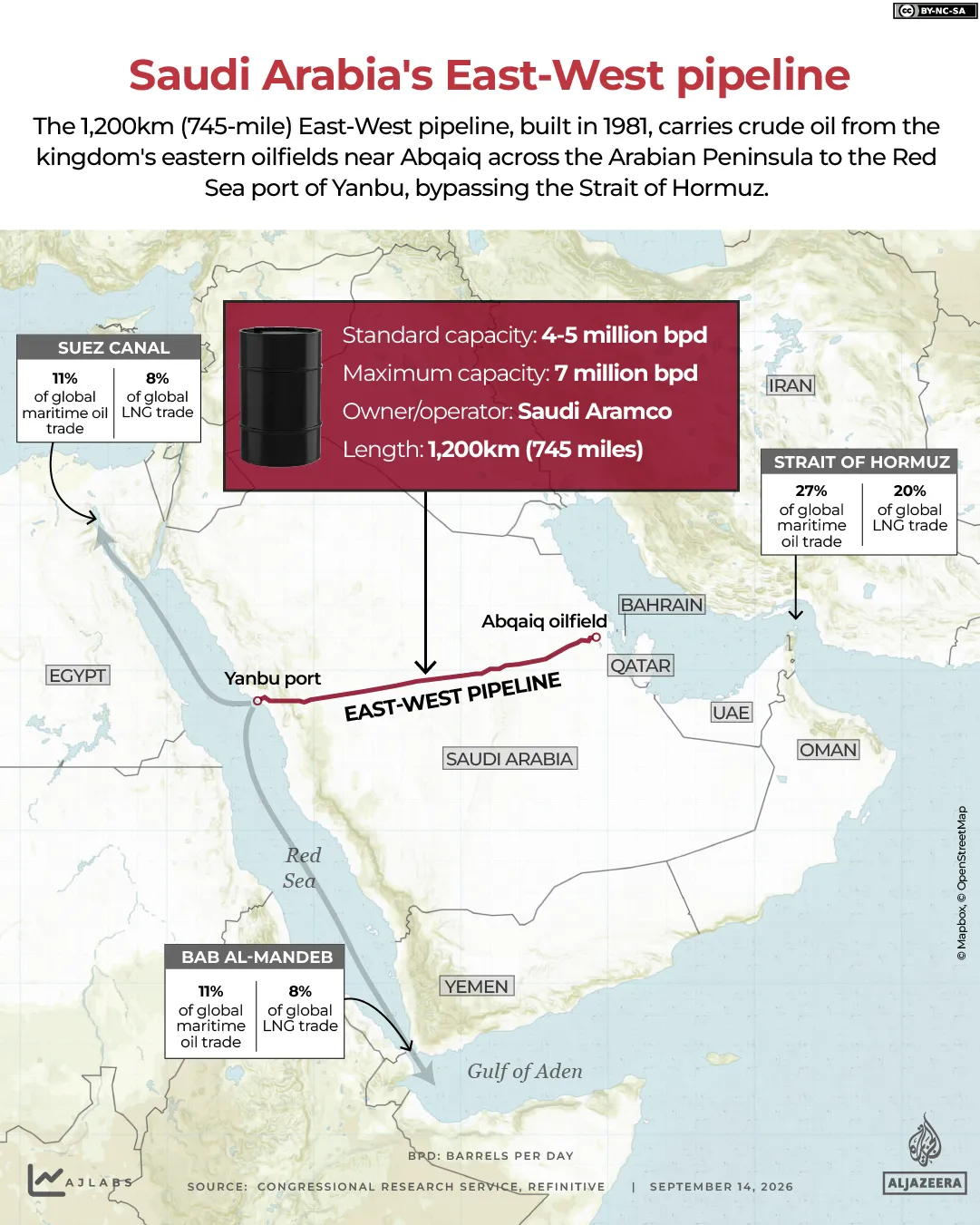
Saudi Arabia has suspended all crude oil deliveries to Europe for October after a major pipeline attack, prompting fears over European energy security and global oil supply stability.
By Nadia Hussain · First published 18 Sept 2026
In brief
- Saudi Arabia stopped oil shipments to Europe following a drone attack on its key East-West pipeline.
- European refiners have been told they will not receive Saudi crude in October, disrupting regular supply contracts.
- The pipeline attack removed an estimated 4 to 5 million barrels per day from global oil flows.
- Saudi Arabia is exploring alternative export routes, including shipping through Oman and the Strait of Hormuz.
- Oil prices initially spiked but later fell as hopes grew that Saudi supply disruptions would be limited.
Timeline · 8 moments
Oil prices surge after Middle East tensions rise
Curated News EN ↗Saudi Arabia cancels oil to Europe after pipeline blast
Al Jazeera ↗Saudi oil deliveries to Europe reportedly cancelled or delayed
Euronews ↗Saudi Arabia seeks alternate oil export routes after attack
Times of India ↗Saudi reroutes oil shipments through Oman
Business Line - Home ↗Saudi Aramco informs European refiners of no crude in October
Times of India ↗Saudi Arabia confirms no oil for Europe next month after Houthi attacks
Top World News- News18.com ↗Oil prices fall as hopes of limited Saudi supply disruption grow
CNBC ↗How it started
The crisis began after a drone attack struck Saudi Arabia's East-West pipeline, a critical route for moving oil from the kingdom's fields to the Red Sea. The attack, attributed to Houthi forces, forced Saudi authorities to halt operations on the pipeline. This pipeline usually allows Saudi oil to reach European buyers without passing through the more volatile Strait of Hormuz.
How it unfolded
On September 15, oil prices surged as markets reacted to news of the pipeline attack and growing concerns about Middle East tensions.
By September 16, reports confirmed that Saudi Arabia had canceled oil deliveries to Europe, with buyers scrambling to secure alternative supplies. European refiners were left uncertain about the scale and duration of the disruption, as the kingdom remained silent on the full impact.
On September 17, details emerged that Saudi Arabia was seeking to reroute exports. Shipments were being redirected through Oman and the Strait of Hormuz, but these alternatives carried their own risks. The removal of up to 5 million barrels per day from global supply became a central market concern.
As the week progressed, reports confirmed that Saudi Aramco had formally notified at least two European refiners they would not receive crude shipments in October. The absence of Saudi oil heightened pressure on European markets and forced buyers to consider replacements from other sources.
Despite initial fears, oil prices began to ease by September 18 as optimism grew that Saudi Arabia could manage some supply through alternative routes, reducing the risk of a prolonged global shortage.
Where it stands
Saudi Arabia has officially suspended all crude oil exports to Europe for October. European refiners are urgently looking for alternative sources to make up for the shortfall. Oil markets remain volatile, but prices have stabilized as hopes rise that Saudi Arabia can partially offset lost supply by using routes through Oman and the Strait of Hormuz. The full extent of the disruption is still unclear, and the situation continues to evolve as repairs to the damaged pipeline are assessed.
What to watch
Attention now turns to how quickly Saudi Arabia can restore its pipeline and whether alternative export routes will be enough to stabilize European supplies. European governments and refiners will need to adapt quickly if the disruption lasts longer than expected. Any new attacks or complications in the alternative routes could further unsettle oil markets in the weeks ahead.
More in Business
All →
Travis Kelce Confirmed Among 64 Victims in $35 Million Ponzi Scheme
Kansas City Chiefs' Travis Kelce is confirmed as one of 64 victims defrauded in Siddharth Jawahar's $35 million Ponzi scheme.
15 sources · over 3 days
Warren Buffett Steps Down as Berkshire Hathaway Chairman, Son Howard Succeeds Him
Warren Buffett, aged 96, is stepping down as chairman of Berkshire Hathaway, ending an era at the $1 trillion conglomerate and marking a major leadership transition.
30 sources · today
Putin Orders Nestlé's Russian Assets Into State Control Amid Growing Tensions
Russian authorities have placed Nestlé's Russian operations under state management, escalating uncertainty for foreign companies as Nestlé considers possible legal and strategic responses to protect its interests.
17 sources · today