Senate Passes Historic Protect College Sports Act With Bipartisan Support
The Senate has overwhelmingly approved the Protect College Sports Act, a sweeping bill set to reshape athlete compensation, transfer rules, and NCAA oversight, but its fate in the House remains uncertain.
By Hushread Stories, written with AI from 8 outlets · First published 29 Sept 2026
In brief
- The Senate passed the Protect College Sports Act on September 29 with a strong bipartisan vote of 77-22.
- The bill introduces national standards for athlete compensation, transfer limits, and strengthens NCAA enforcement powers.
- It aims to create a federal framework for name, image, and likeness (NIL) deals in college athletics.
- The legislation was one of the Senate's last actions before the midterm elections.
- The bill now faces significant uncertainty as it heads to the House for further consideration.
Timeline · 6 moments
Protect College Sports Act heads to final Senate vote
CBS Sports ↗Senate expected to pass sweeping college sports bill
CBS Top Stories ↗Senate resoundingly approves college sports measure
NYT Politics ↗Senate passes Protect College Sports Act with bipartisan support
The Hill ↗Senate passes sweeping bill to set national standards
New York Post ↗Senate advances bill to regulate name, image, and likeness
CNBC International ↗How it started
For years, college sports in the United States have faced mounting challenges around athlete compensation and fairness. The NCAA, which traditionally oversaw college athletics, struggled to address issues like transfer rules, athlete pay, and the growing importance of name, image, and likeness (NIL) deals.
Calls for a unified federal approach grew louder as patchwork state laws and lawsuits left schools and athletes in legal limbo. Lawmakers from both parties began drafting major reforms to bring clarity and stability to college sports.
How it unfolded
On September 28, the Protect College Sports Act reached a critical stage as it headed to a final floor vote in the Senate. The bill's provisions included a coveted antitrust shield for the NCAA, new limits on athlete transfers, and potential compensation of up to $50 million for athletes, according to CBS Sports.
That same day, outlets widely reported that the Senate was expected to pass the measure with strong bipartisan backing. The legislation represented one of the most significant federal interventions in college sports history.
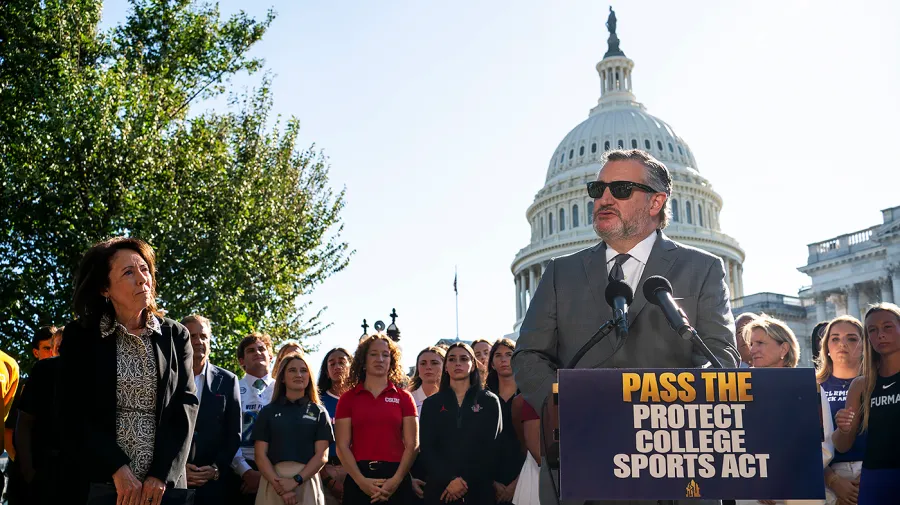
On September 29, the Senate resoundingly approved the bill with a 77-22 vote. The measure sets nationwide standards for athlete compensation and transfer rules, and boosts the NCAA's enforcement authority. Legislators described it as a sweeping attempt to stabilize an unsettled system and address concerns about fairness and equity in college athletics.
The bill also creates a national framework for NIL deals, seeking to resolve inconsistencies between states and provide clearer protections for student athletes. Despite some pushback from Democrats concerned about certain provisions, the vote was overwhelmingly in favor.
The Senate's passage of the bill came just days before the midterm elections, highlighting the urgency lawmakers felt in addressing these issues before the legislative session ended.
Where it stands
With the Senate's approval, the Protect College Sports Act has taken a major step forward. The bill now moves to the House, where its future is less certain. Lawmakers and stakeholders are watching closely to see if the House will take up the measure and whether any changes will be made before it can become law.
For now, the Senate's action marks the furthest any comprehensive college sports reform has advanced at the federal level. But the process is far from over, and the outcome will have lasting effects on athletes, schools, and the NCAA.
What to watch
The key question is whether the House will take up the Protect College Sports Act and what amendments, if any, might be proposed. The bill's provisions on athlete compensation, transfer limits, and NIL deals could face further debate or revision. Until the House acts, the future of federal college sports regulation remains uncertain.
More in Sports
All →
Italy Defeats Turkey 4-1 in Nations League After Major Lineup Changes
Italy bounced back from a tough loss to Belgium by defeating Turkey 4-1, fielding a youthful squad and setting up a key clash with France later this week.
17 sources · over 2 days
Pro Wrestler Benjamin Satterley, Known as Pac, Dies Suddenly at 40 After AEW Match
Benjamin Satterley, famed in the wrestling world as Pac, died unexpectedly at age 40 just one day after his final match, shocking fans and colleagues.
15 sources · today
Manchester City Found Guilty on 114 Premier League Financial Rule Breaches
Manchester City has been found guilty of nearly all financial rule breaches after a lengthy Premier League investigation, putting the club at risk of major penalties and uncertainty about its future.
38 sources · over 4 days