South Korea Blames North Korea for DMZ Landmine Blasts That Injured Soldiers
Three South Korean soldiers were wounded by landmine explosions in the Demilitarized Zone, fueling sharp accusations and denials between the two Koreas amid rising border tensions.
By Hushread Stories, written with AI from 15 outlets · First published 2 Oct 2026
In brief
- On September 21, three South Korean soldiers were injured by explosions in the Demilitarized Zone near the inter-Korean border.
- South Korea's military suspects the blasts were caused by North Korean landmines and considers it a violation of the armistice.
- North Korea has denied responsibility, calling South Korea's claims a 'farce' and accusing Seoul of conspiracy.
- The UN Command and South Korean officials launched a formal investigation into the incident, with both sides trading public threats and demands for an apology.
- Diplomatic tensions have escalated, with concerns that further incidents could heighten the risk of military confrontation along the border.
Timeline · 8 moments
Three South Korean soldiers injured in DMZ explosions
Le Monde ↗South Korean military and UN command launch investigation into DMZ blast
The Hindu ↗Seoul says North Korean mines 'highly suspected' as cause
World News CNA ↗South Korea says North Korean mines likely behind explosions
Mint ↗North Korea denies South's claim it was behind DMZ mine blasts
World News CNA ↗South Korea demands apology from North Korea for landmine blasts
BBC World ↗Kim Jong Un's sister issues warning and denies landmine claims
Sky News ↗Border mine blasts highlight urgent need for communication
South China Morning Post ↗How it started
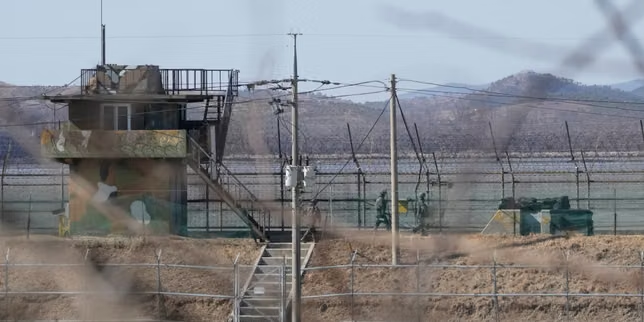
On September 21, a series of explosions injured three South Korean soldiers inside the Demilitarized Zone, the heavily fortified buffer between North and South Korea. According to official statements, the soldiers were conducting a search operation near the border when the blasts occurred.
South Korea's military quickly suspected that the explosions were caused by North Korean landmines. The area is known for its dense fortifications and the presence of landmines from both sides, but recent years have seen additional fortifications and mines installed by North Korea.
How it unfolded
Following the blast, South Korea's Joint Chiefs of Staff announced an investigation in coordination with the United Nations Command on September 27, sending about 40 officials to examine the site. The South Korean military publicly stated that North Korean mines were highly likely to be the cause, describing the incident as a clear violation of the armistice agreement.
In the days that followed, tensions rose as South Korea demanded an official apology from Pyongyang and warned of a possible response if North Korean involvement was confirmed. North Korea responded by strongly denying any role in the blasts, calling the accusations a 'conspiratorial farce.' Kim Yo Jong, the influential sister of North Korea's leader, issued a warning and accused Seoul of manufacturing the incident for political gain.
Both countries exchanged public threats and accusations, with North Korea insisting that South Korea was using the incident to stoke tensions. Observers warned that the situation could spiral if not addressed diplomatically, especially given recent increases in North Korean military activity near the border.
By the end of September, the incident had led to renewed scrutiny of the security situation along the DMZ and highlighted the lack of direct communication between the two militaries.
Where it stands
As of early October, the investigation by South Korean and UN officials remains ongoing, but both sides continue to blame each other. South Korea maintains that North Korean mines are responsible and has not received an apology. North Korea continues to deny any involvement and has threatened retaliation if further accusations persist.
Tensions along the border are high, with both militaries on alert. Diplomatic relations remain strained as both governments trade accusations and warnings.
What to watch
Observers are closely monitoring the investigation's outcome and any new military movements along the border. There are growing calls for both Koreas to restore military communication to prevent further incidents, but so far, no new talks have been announced.
More in World
All →
Bodycam Footage Reveals Luigi Mangione's Arrest in Pennsylvania McDonald's
Newly released police bodycam video shows the dramatic arrest of Luigi Mangione, a suspect in the killing of UnitedHealthcare CEO Brian Thompson, inside a McDonald's in Altoona, Pennsylvania.
8 sources · today
British Man Charged With Terrorist Plot Targeting Nigel Farage After Ann Widdecombe Murder
A 28-year-old already accused of killing former MP Ann Widdecombe now faces charges for allegedly planning terrorist acts against Reform UK leader Nigel Farage, highlighting ongoing security concerns.
15 sources · today
Two Iranian Nationals Charged in Manchester Jewish Community Terror Plot
British authorities have charged two Iranian men with planning a terrorist attack on the Jewish community in Manchester, raising concerns about security ahead of Yom Kippur.
8 sources · today