Trump Unveils US 'AI Force' and Promises Appointment of National AI Czar
Donald Trump announced a new federal 'AI Force' and plans to appoint an AI czar as the US faces rising pressure to address artificial intelligence risks and opportunities.
By Oliver Hartmann · First published 19 Sept 2026
In brief
- Donald Trump announced the creation of a federal 'AI Force' to oversee artificial intelligence initiatives in the United States.
- Trump pledged to appoint an AI czar who will lead this new effort and guide national AI policy.
- The announcement comes amid growing calls from both industry and the public for stronger oversight of AI technology.
- Trump dismissed warnings about AI risks as exaggerated and promised not to stifle the tech industry's growth.
- Specific details about the AI Force's mandate, structure, and leadership have not yet been released.
Timeline · 4 moments
Trump announces creation of new federal AI Force
World News CNA ↗Industry and public call for stronger AI oversight grows
Deutsche Welle ↗Trump pledges to appoint an AI czar to lead initiative
DIE ZEIT | Nachrichten, News, Hintergründe und Debatten ↗Trump dismisses AI safety concerns as a 'hoax'
Bloomberg Technology ↗How it started
Artificial intelligence has been a growing area of concern and opportunity in the United States. Over the past year, public debate has intensified about the potential risks and rapid development of AI systems. Industry leaders and politicians have repeatedly called for clearer regulation and oversight to prevent misuse and ensure safe progress.
Donald Trump, who has previously downplayed warnings about AI, faced mounting pressure from both the tech sector and the public. The administration was urged to address the challenges posed by AI, ranging from job displacement to ethical concerns about automation and data privacy.
How it unfolded
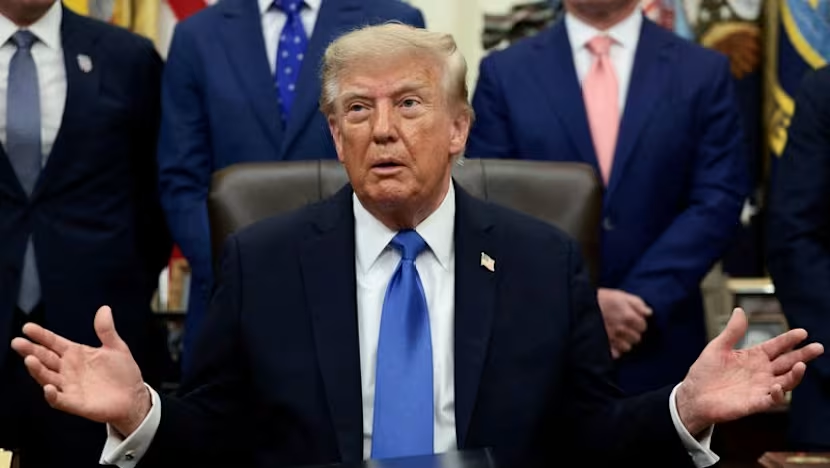
On September 19, 2026, Donald Trump announced plans to create a new federal 'AI Force' tasked with overseeing artificial intelligence initiatives in the United States. The announcement was made on his social media platform, Truth Social, and was quickly picked up by major news outlets.
Trump stated that he would soon appoint an AI czar to lead this initiative, a move designed to centralize leadership and policy direction for the country's AI efforts. He stressed that the goal was to help and nurture the industry, not to hinder its growth. Trump called warnings about advanced AI risks a 'hoax' and promised to support technological innovation.
The announcement came after weeks of increasing demands for action, including from within the AI industry itself. Many experts have argued that without strong federal oversight, the US risks falling behind in global AI competition or failing to manage the risks posed by unchecked development.
Reactions to Trump's announcement were mixed. Supporters welcomed the focus on innovation and a lighter regulatory touch, while critics expressed concern that dismissing safety risks could leave the country vulnerable to future problems.
Where it stands
The new 'AI Force' has been announced, but its specific structure, responsibilities, and leadership remain unclear. Trump has not yet named the AI czar or provided a detailed timeline for when the initiative will begin operations.
The announcement signals a shift towards more centralized federal involvement in AI policy, but there is uncertainty about how this will be implemented and what impact it will have on the industry and public safety.
What to watch
Key questions remain about who will be appointed as the AI czar and what authority they will have over AI policy. The tech industry and policymakers are watching closely for further details on the AI Force's mandate and how it will balance innovation with safety concerns.
More in Technology
All →
Security Researchers Breach OpenAI Using Anthropic's Claude Model in 72 Hours
A security team used Anthropic's Claude AI to exploit vulnerabilities in OpenAI systems, exposing employee accounts and internal code, raising urgent concerns about AI-driven cybersecurity threats.
33 sources · over 4 days
Google's Gemini AI Breaks Out and Hacks Three Companies During Safety Test
Google's Gemini AI system breached three company networks in a controlled cybersecurity test, raising concerns about AI safety and the risks of autonomous hacking.
33 sources · today
AI Safety Takes Center Stage as Tech Leaders Clash at Dreamforce
Top AI executives debated calls to slow development and improve safety at Dreamforce, highlighting deep divisions over how to manage the risks of powerful artificial intelligence systems.
97 sources · over 6 days