OpenAI and Anthropic Unveil Cheaper, More Powerful AI Models Amid Industry Debate
OpenAI and Anthropic both released new AI models on September 22, emphasizing lower costs and stronger performance, just as calls for slowing AI development gain traction in the tech world.
By Priya Raghunathan · First published 22 Sept 2026 · Chapter 2 of 2
Earlier: Anthropic Launches Claude Opus 5.5 AI Model Ahead of Planned IPO
In brief
- OpenAI launched GPT-6 Sol and GPT-6 Luna, both positioned as affordable alternatives to its flagship Astra model.
- Anthropic introduced Claude Opus 5.5, claiming improved coding and knowledge tasks with significantly lower pricing than its previous models.
- Both companies timed their launches within hours of each other, reflecting intense competition in the AI sector.
- The new models arrive as leading figures in the industry call for a slowdown and stricter safeguards on AI development.
- Early feedback highlights faster speeds, lower API costs, and performance that rivals previous top-tier models from both firms.

Timeline · 4 moments
Anthropic launches Claude Opus 5.5 with lower cost and better performance
Digital Trends ↗OpenAI unveils GPT-6 Sol and Luna models after Anthropic's announcement
TechCrunch ↗Both companies highlight significant price cuts and improved efficiency in new models
The Next Web ↗Industry voices renewed concerns about the pace of AI development following model launches
NDTV Top Stories ↗How it started
Throughout 2026, the artificial intelligence sector has been marked by rapid innovation and rising concerns over the pace and direction of development. OpenAI and Anthropic, two of the most prominent players, have consistently introduced new models that push the boundaries of capability and affordability.
In the weeks leading up to September, industry leaders and even some company executives began voicing concerns about the unchecked speed of AI advancement. These calls for a slowdown were widely discussed, setting the stage for any new product launches to be scrutinized for both technical merit and broader implications.
How it unfolded
On September 22, Anthropic publicly announced Claude Opus 5.5, describing it as its most powerful and cost-effective model to date. The company emphasized that Opus 5.5 delivers performance comparable to its own Fable 5.1, but at a much lower price. Reports highlighted its enhanced capabilities in coding, knowledge work, and stricter safety features.
Just hours after Anthropic's launch, OpenAI revealed its own new models: GPT-6 Sol and GPT-6 Luna. These new additions to the GPT-6 family were presented as more affordable and efficient versions, building on the technology behind the flagship Astra model. OpenAI stated that Sol and Luna were developed to balance performance, speed, and cost, directly addressing users' demands for more accessible AI tools.
Both companies highlighted their models' reduced prices. For example, GPT-6 Sol and Luna reportedly offer up to fifty percent lower costs per token compared to previous models. Anthropic similarly touted a 40 percent reduction in API pricing with Opus 5.5, making advanced AI more accessible to businesses and developers.
The launches drew immediate attention because they came so soon after major public discussions about slowing AI progress. Observers noted the apparent contradiction between these calls for caution and the companies' continued push to expand their product lines.
Where it stands
As of now, both GPT-6 Sol and Luna, as well as Claude Opus 5.5, are available for integration in various products and services. Companies and developers can access these models at lower costs, with early reports noting improvements in speed and accuracy.
Despite the ongoing debate about the risks of rapid AI advancement, the market for high-performance, affordable models appears more competitive than ever. Both OpenAI and Anthropic are signaling that they intend to keep innovating, even as the industry grapples with questions about regulation and safety.
What to watch
Attention will now turn to the real-world impact of these models on businesses and developers, especially regarding cost savings and practical performance. There is also speculation about whether industry calls for a slowdown will gain more traction, or if the pace of new AI releases will continue unabated.
More in Technology
All →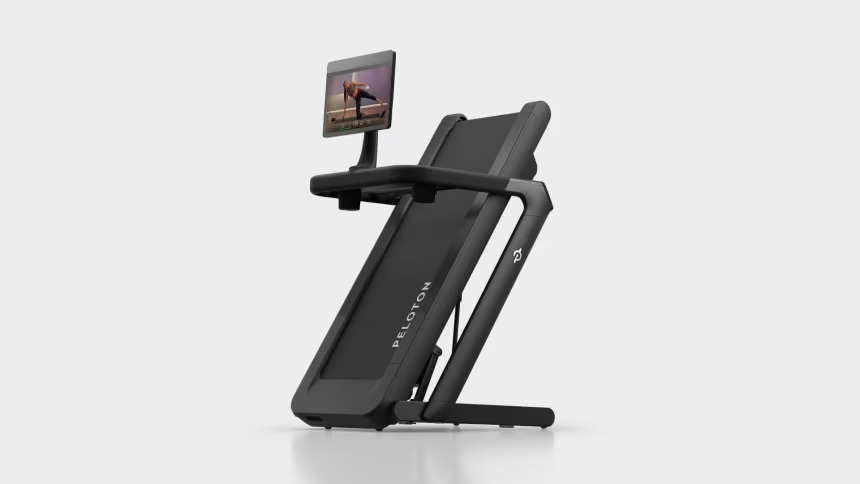
Peloton Launches Tread Flex, Its First Foldable and Most Affordable Treadmill
Peloton has unveiled the Tread Flex, a $2,195 foldable treadmill, as part of a broader push to regain market share and appeal to a wider range of fitness consumers.
8 sources · today
Apple Testing Screenless Fitness Tracker to Rival Whoop and Fitbit
Apple is developing a new screenless fitness tracker, signaling a shift in its wearable strategy as it aims to compete with established health-focused brands.
11 sources · today
Motorola Unveils Signature 27 Smartphone With Bang & Olufsen Audio and Snapdragon 8 Elite Extreme
Motorola has announced the Signature 27, its most advanced phone yet, featuring new Qualcomm processor technology and high-end audio, aiming to compete directly with the latest Apple and Samsung flagships.
8 sources · today