OpenAI Claims Solution to Navier-Stokes Millennium Problem, Sparking Academic Dispute
OpenAI says its AI has solved the Navier-Stokes Millennium Prize Problem, a major mathematical challenge, but the claim is drawing scrutiny and debate from mathematicians over its validity and credit.
By Mei-Ling Chao · First published 8 Sept 2026
In brief
- OpenAI announced it has solved the Navier-Stokes Millennium Prize Problem using advanced AI systems.
- The Navier-Stokes equations have puzzled mathematicians for nearly 90 years due to their complexity in describing fluid dynamics.
- OpenAI's announcement has triggered controversy, with some academics questioning the proof and raising concerns about giving proper credit.
- OpenAI spent an estimated $15 million on AI resources to tackle the problem in less than four days.
- The mathematical community is now reviewing the proof, and debate continues about AI's role in future mathematical research.
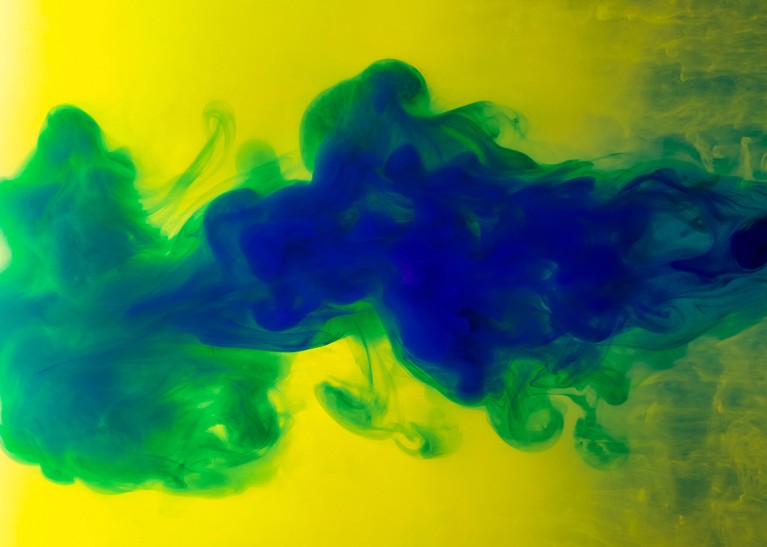
Timeline · 4 moments
OpenAI announces solution to Navier-Stokes Millennium Prize Problem
Nature ↗Rumors circulate about origin and credit for the proof
Scientific American Content: Global Science ↗Questions arise over unpublished work and credit controversy
Axios ↗OpenAI's $15 million AI effort leads to claimed breakthrough
New Scientist ↗How it started
For decades, the Navier-Stokes equations have been one of mathematics' toughest challenges. These equations describe how fluids move, but a full understanding of their behavior, especially in three dimensions, has remained out of reach. The Clay Mathematics Institute designated the Navier-Stokes problem as one of its seven Millennium Prize Problems, each carrying a million-dollar reward for a correct solution.
In early September 2026, OpenAI announced it had used artificial intelligence to crack the problem. The company claimed that its internal AI models produced an analytical proof for the three-dimensional, incompressible Navier-Stokes equations. This announcement arrived after years of speculation about whether AI could tackle such deep mathematical questions.
How it unfolded
On September 8, 2026, OpenAI made its public announcement, stating that its AI system had solved the Navier-Stokes Millennium Prize Problem. According to reports, the effort involved about $15 million in computational resources and took less than four days for the AI to generate the solution.
The news created an immediate stir in the mathematics community and beyond. Some researchers were excited about the potential breakthrough, recognizing the significance for physics and engineering if the proof holds up. Others quickly raised concerns. Online rumors suggested that OpenAI's proof might have overlapped with unpublished work by outside mathematicians, prompting questions about originality and attribution.
OpenAI denied any allegations of impropriety, insisting that its solution was developed in-house and that credit concerns were unfounded. However, the controversy only grew as experts began to scrutinize the details. While some mathematicians praised the technical achievement, others questioned whether the AI-generated proof met the rigorous standards required for such a renowned problem.
The debate also touched on broader issues, such as the role of AI in mathematical discovery and the need for new ways to verify machine-generated proofs. Calls for transparency and even regulation of AI's use in research surfaced as the academic world grappled with the implications.
Where it stands
Currently, OpenAI stands by the validity of its solution and has published a formal account of the result. The mathematical community is actively reviewing the proof and discussing whether it meets the high bar set for Millennium Prize Problems. The controversy over credit attribution and the standards for accepting AI-generated solutions remains unresolved.
As of now, the field is waiting for consensus among mathematicians. If the proof is validated, it could mark a historic moment not just for mathematics but for the use of AI in fundamental research.
What to watch
The next steps depend on the mathematical community's review of OpenAI's proof. If experts confirm its correctness, the Clay Mathematics Institute may formally recognize the result. Ongoing discussions about credit, transparency, and the standards for AI-generated research are also likely to shape future breakthroughs in the field.
More in Science
All →
Germany Records Lowest Scores Ever in Latest PISA Education Study
German students have posted their worst results since PISA testing began, raising urgent debates about the country's education system and calls for swift reforms.
9 sources · over 2 days
Isar Aerospace Rocket Deploys Satellites in First European Private Orbital Flight
Isar Aerospace's Spectrum rocket completed Europe's first private orbital launch and successfully deployed multiple satellites from Norway.
26 sources · over 3 days
ISRO's EOS-05 Reaches Key Orbit After GSLV-F17 Launch
EOS-05, launched by ISRO, was placed in sub-geosynchronous transfer orbit and has completed crucial orbit maneuvers en route to GEO.
12 sources · over 5 days