Rahul Gandhi's Sit-In Pushes Delhi Police to File FIR on Pellet Gun Injury
After weeks of inaction, a high-profile protest led by Rahul Gandhi and Congress leaders forced Delhi Police to register an FIR over a teenager's pellet gun injury during a July demonstration.
By Mei-Ling Chao · First published 21 Aug 2026
In brief
- Delhi Police registered an FIR on August 21 after Rahul Gandhi's protest over a teenager's pellet gun injury from July.
- Sahil Lochab, the injured 19-year-old, reportedly lost his eyesight due to a pellet gun fired during a protest.
- The Congress party, led by Rahul Gandhi, demanded accountability for police actions and highlighted the issue of protest rights.
- The investigation will focus on the use of pellet guns and who authorized their deployment during the July demonstration.
- Future implications may arise regarding police practices and the use of crowd control weapons in protests across India.
Timeline · 6 moments
Rahul Gandhi sits in at Delhi police station with pellet victim
Times of India Top Stories ↗Delhi police register FIR over pellet firing after protest
Indian Express ↗Rahul Gandhi's sit-in with pellet gun victim over FIR demand
Media one ↗Delhi Police registers FIR over student's pellet gun injury
India News ↗Pellet injuries: FIR filed after Rahul Gandhi sits on dharna
Times of India ↗FIR over pellet gun use registered after Congress stir
The Hindu ↗How it started
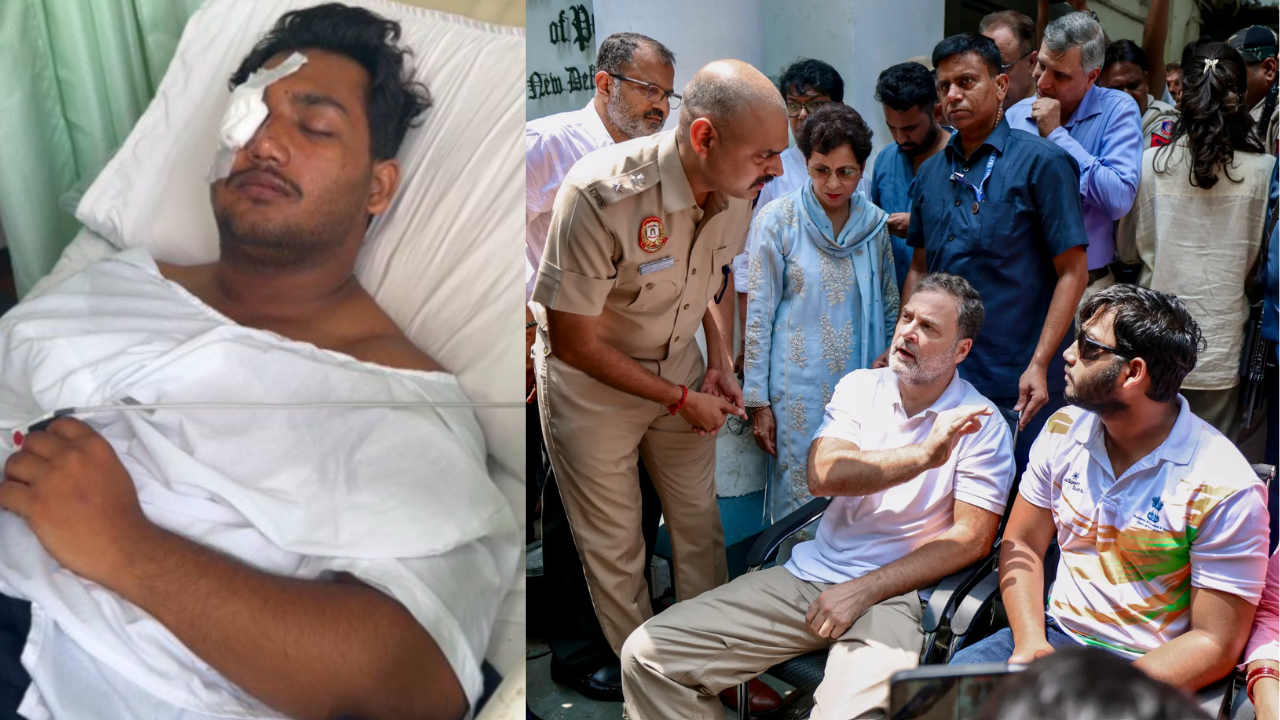
The controversy began after a protest in Delhi on July 20, where a 19-year-old named Sahil Lochab was seriously injured by a pellet gun, reportedly fired during a demonstration involving the Cockroach Janta Party. According to The Hindu, Sahil lost his eyesight because of the incident.
Despite repeated requests, the Delhi Police did not file a First Information Report (FIR) about the injury for nearly a month. The lack of official action drew criticism from opposition parties, who accused authorities of ignoring police excesses and undermining protest rights.
Rahul Gandhi, the Leader of the Opposition, decided to take a public stand, framing the case as part of a broader debate over policing and accountability during protests.
How it unfolded
On August 21, Rahul Gandhi arrived at the Parliament Street police station in Delhi, accompanied by Sahil Lochab and other Congress leaders, including Priyanka Gandhi Vadra. According to the Times of India, they demanded the immediate registration of an FIR for Sahil's injury and refused to leave the premises until their demand was met.
The sit-in lasted for over six hours, attracting significant media coverage and drawing attention to the use of pellet guns by police during demonstrations. Reports from Indian Express and NDTV India described a tense standoff, with Gandhi and his supporters insisting on justice for the injured youth.
During the sit-in, other Congress leaders like Priyanka Gandhi were briefly detained, according to NDTV Top Stories. Senior Congress figure P. Chidambaram also criticized the delay, citing a Supreme Court order on police accountability, as reported by Amar Ujala.
By the evening of August 21, the Delhi Police relented and registered an FIR related to the incident. The Hindu and Mint confirmed that the police acted after sustained pressure from the protest and growing public scrutiny.
Where it stands
With the FIR now registered, the focus shifts to the investigation into the use of pellet guns during the protest and who authorized their deployment. The police have been asked to preserve all evidence related to the incident, including video footage, according to the Times of India.
The Congress party has signaled that it will continue to monitor the investigation and press for accountability. The incident has intensified debate about police practices during protests and the rights of demonstrators in India.
What to watch
Key questions remain about the outcome of the police investigation and whether any officers or officials will face disciplinary action. The case is expected to have implications for how authorities handle future protests, especially regarding the use of crowd control weapons like pellet guns.
More in Politics
All →
One Dead, Six Injured Including Police in Minneapolis Downtown Shooting
A shooting at a downtown Minneapolis apartment building left one person dead and six injured, including two police officers, prompting an ongoing investigation and heightened security in the area.
8 sources · today
Jury in Lindsay Clancy Triple-Murder Trial Deadlocked Over Mental Health Defense
After days of deliberations, jurors remain unable to reach a verdict on whether Lindsay Clancy is criminally responsible for killing her three children, highlighting deep divisions over mental illness and justice.
39 sources · over 19 days
Trump Says He's 'Happy' About Harry and Meghan Leaving the US
Former President Donald Trump publicly welcomed Prince Harry and Meghan Markle's departure from the United States, reigniting debate over the couple's relationship with the UK and the US.
10 sources · today