SpaceX's Starship Completes First Orbital Flight in Major Milestone for Rocket
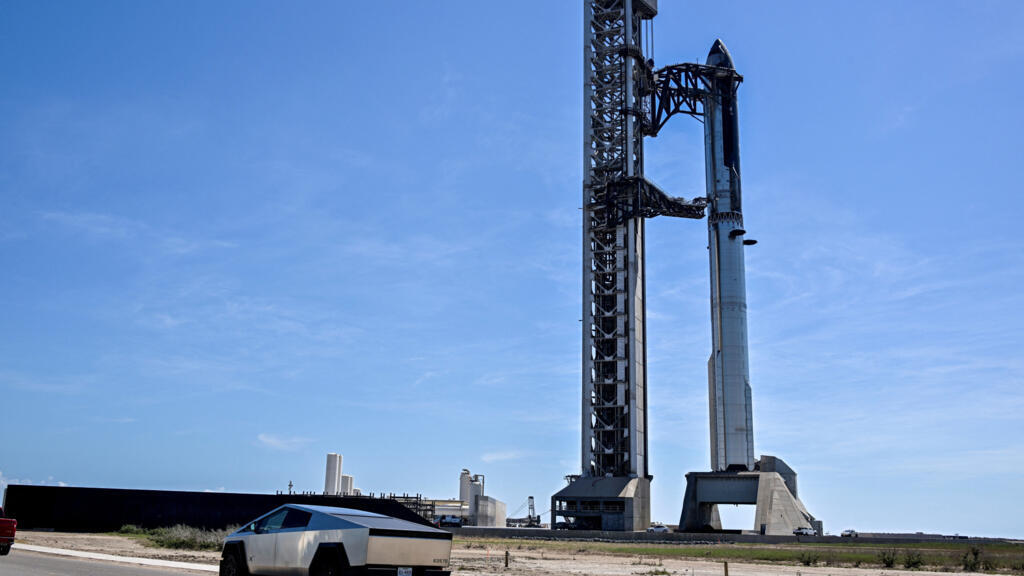
SpaceX has launched its Starship rocket into orbit for the first time, marking a crucial step toward future missions to the Moon and Mars and advancing commercial spaceflight.
By Ethan Cole · First published 28 Sept 2026
In brief
- SpaceX launched its Starship rocket from Texas on September 28, 2026, achieving the rocket's first orbital flight.
- This mission is the 14th test flight for Starship, but the first time the rocket has aimed to complete an orbit around Earth.
- The flight is planned to last about 10 hours and includes deploying 26 Starlink satellites during its journey.
- Starship's successful orbital launch is seen as a significant development for future deep space missions, including NASA's Artemis program.
- The launch was broadcast live, drawing major attention as SpaceX continues to push for reusable, heavy-lift rockets.
Timeline · 5 moments
SpaceX prepares for Starship's first orbital launch attempt
Arab News ↗Starship teams begin loading propellants ahead of launch
BBC - Home ↗Starship launches on 14th test flight, aiming to reach orbit
© Steve Nesius, Reuters ↗Starship completes launch and begins orbital mission
India Today ↗Starship's first orbital flight seen as milestone for NASA and SpaceX
CBS Top Stories ↗How it started
SpaceX began developing the Starship rocket with the goal of enabling ambitious missions to the Moon, Mars, and beyond. The project has gone through years of design changes, setbacks, and test flights, with the first test flight taking place three years ago. Each test has brought the company closer to a fully operational, reusable launch vehicle. The Starship system is designed to be the largest and most powerful rocket ever built, aiming to carry both crew and cargo on deep space missions.
How it unfolded
In the weeks leading up to the planned orbital launch, SpaceX conducted a series of preparations and system checks at its Texas facility. According to the BBC, these preparations built on lessons learned from earlier test flights, some of which ended in explosions or other failures.
By September 27, 2026, coverage highlighted the anticipation around the 14th test flight, with Arab News noting the significance of the upcoming attempt to reach orbit. On September 28, SpaceX confirmed that the mission was on track, and teams began loading about 12 million pounds of liquid oxygen and methane propellants, as the BBC reported.
The official launch took place on the morning of September 28, 2026. Reuters reported that the mission would last around 10 hours and include the deployment of 26 Starlink satellites. The launch marked the first time Starship aimed to complete an orbital mission, a key objective for SpaceX's future plans.
Following liftoff, outlets including CBS and Axios described the flight as a major achievement for SpaceX and a milestone for NASA, which has plans to use Starship for its Artemis lunar missions.
Where it stands
Starship is now in orbit, conducting its planned multi-hour mission around Earth. The rocket's performance is under close observation as SpaceX monitors its systems and prepares for satellite deployment. This success marks a major leap forward for the company's ambitions in commercial and crewed spaceflight, with broad implications for NASA and future interplanetary missions.
What to watch
The next key steps include the successful deployment of Starlink satellites and the safe completion of the orbital flight. SpaceX and its partners will be analyzing data from this mission to inform future launches, including potential missions to the Moon under NASA's Artemis program. The results of this flight will likely shape the timeline for Starship's next test and operational launches.
More in Science
All →
Lian Yunzhi Sets Rubik's Cube Record With 4.52 Second Average
Six-year-old Lian Yunzhi set the women's 3x3 Rubik's Cube world record with a 4.52 second average at a Wuhan competition.
20 sources · over 4 days
Fire Amoeba Survives at 158°F, Breaking Heat Tolerance Record
Scientists confirm a California amoeba thrives at 158°F, raising the heat survival record for complex life.
11 sources · over 2 days
Bolivia's Tilcayo Wild Cat Confirmed as 3-Pound Distinct Species
DNA analysis shows the newly discovered tilcayo wild cat is smaller than a domestic cat and genetically unique.
39 sources · over 6 days