Supreme Court Forms Committee to Probe Police Actions at Delhi Student Protests
The Supreme Court of India has set up a five-member panel, led by ex-Justice R Subhash Reddy, to investigate allegations of police violence during recent student protests in Delhi, including those over the NEET-UG exam leak.
By Elena Petrova · First published 18 Aug 2026
In brief
- The Supreme Court of India has established a five-member committee to investigate police actions during Delhi student protests over the NEET-UG exam leak.
- The committee is led by former Justice R Subhash Reddy and will review evidence, including video footage and testimonies from various parties.
- The Supreme Court has indicated it will quash FIRs against students involved in the protests, providing some relief to the student community.
- The inquiry aims to address allegations of excessive police force and harassment of female protesters during the demonstrations.
- The committee is expected to report its findings in the coming weeks, potentially leading to policy changes regarding police conduct during protests.
Timeline · 7 moments
SC to set up panel including ex-judge, CBI ex-boss
Indian Express ↗SC ready to drop NEET protest charges against students
Business Line - Home ↗Supreme Court ready to quash FIRs for NEET protests
The Hindu ↗SC forms panel to probe police excesses, violence in protests
India Today ↗Justice R Subhash Reddy to lead protest crackdown inquiry
Swarajya ↗SC appoints high-powered committee for protest violence probe
India News ↗SC forms five-member committee to probe NEET protest violence
Business Line - Home ↗How it started
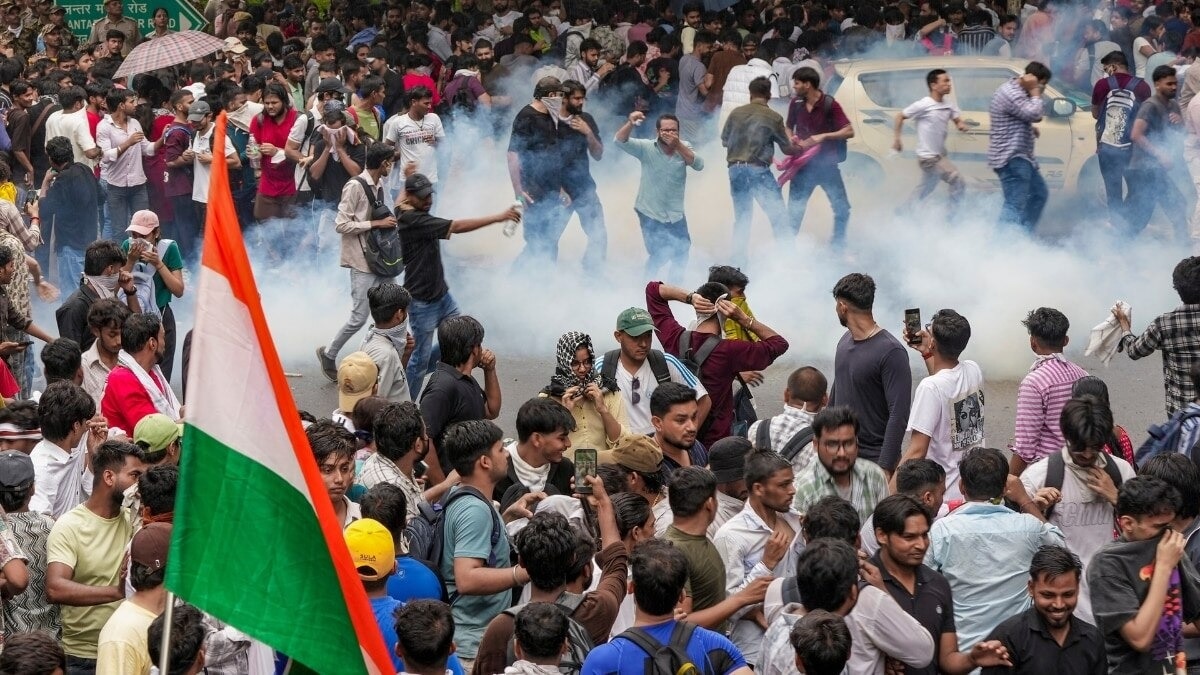
In July 2026, Delhi saw large-scale student protests following allegations of a paper leak in the NEET-UG medical entrance exam. Many students and activists took to the streets, demanding accountability and fair treatment. During these protests, several students alleged that police used excessive force, especially during a march on July 20. The situation became more heated when reports emerged of violence against female protesters and claims of harassment.
Public outcry grew as videos and eyewitness accounts spread on social media, prompting calls for an independent investigation. The issue quickly escalated beyond education, raising broader concerns about police conduct during public demonstrations.
How it unfolded
On August 18, 2026, the Supreme Court of India announced its intention to form a high-powered committee to investigate claims of police excesses during the recent student demonstrations in Delhi, according to Amar Ujala and Indian Express.
The court specified that the committee would include a former Supreme Court judge and a former CBI chief. Media outlets reported that the investigation would review video footage from the July 20 protest and other evidence to determine the extent of police misconduct and violence, including incidents involving female protesters.
On the same day, the Supreme Court also signaled its readiness to quash FIRs filed against students involved in the NEET protests. According to The Hindu and Business Line, this was done under Article 142 of the Constitution, allowing the court to take extraordinary measures in the interest of justice. The Education Minister resigned following the controversy, adding political weight to the situation.
By August 20, several outlets including India Today and Mint confirmed that the committee would be led by former Supreme Court Justice R Subhash Reddy. The panel was given a broad mandate to investigate both police actions and any violence against security personnel during the protests. The committee is expected to examine allegations of excessive force, harassment of female protestors, and property damage.
Where it stands
The Supreme Court's five-member committee, headed by Justice R Subhash Reddy, is now formally established and has begun its inquiry into the events surrounding the student protests. The panel is tasked with reviewing evidence, including video footage, and collecting testimonies from all sides, including protestors, police, and bystanders.
At the same time, the Supreme Court has moved to dismiss criminal charges against students who participated in the NEET-related protests. This has brought some relief to the student community, though questions about police accountability remain.
What to watch
The committee is expected to deliver its findings in the coming weeks. Key questions include whether police used excessive force, how female protesters were treated, and whether new guidelines for handling protests will be recommended. The public and legal observers are watching closely to see if the inquiry leads to policy changes or further legal action against police officials.
More in Politics
All →
One Dead, Six Injured Including Police in Minneapolis Downtown Shooting
A shooting at a downtown Minneapolis apartment building left one person dead and six injured, including two police officers, prompting an ongoing investigation and heightened security in the area.
8 sources · today
Jury in Lindsay Clancy Triple-Murder Trial Deadlocked Over Mental Health Defense
After days of deliberations, jurors remain unable to reach a verdict on whether Lindsay Clancy is criminally responsible for killing her three children, highlighting deep divisions over mental illness and justice.
39 sources · over 19 days
Trump Says He's 'Happy' About Harry and Meghan Leaving the US
Former President Donald Trump publicly welcomed Prince Harry and Meghan Markle's departure from the United States, reigniting debate over the couple's relationship with the UK and the US.
10 sources · today