Trump Rebrands AI as 'Super Intelligence' and Rejects Global Oversight at UN
President Trump has renamed artificial intelligence as 'super intelligence' in US government documents and publicly rejected international regulation, drawing attention to his stance on technology governance.
By Grace Whitfield · First published 22 Sept 2026
In brief
- President Trump announced that the US will now refer to artificial intelligence as 'super intelligence' in official documents.
- He argued that the word 'artificial' makes the technology sound fake, which he believes is misleading.
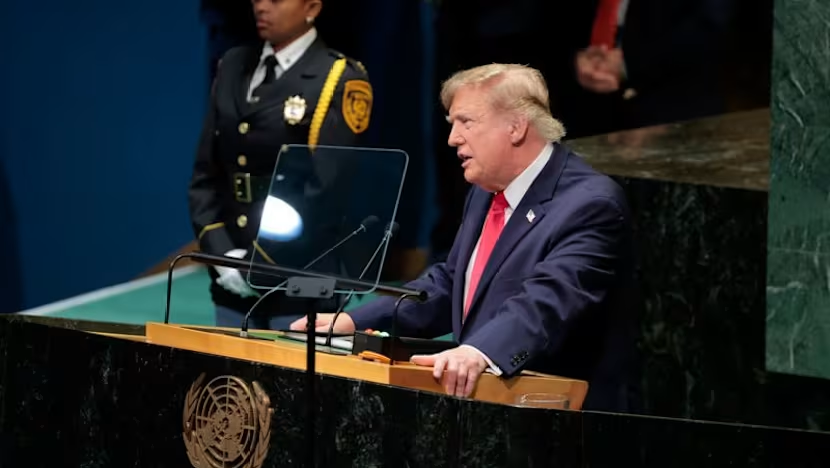
- Trump delivered these remarks during an address at the United Nations General Assembly on September 22, 2026.
- He dismissed calls for international oversight of advanced technology, calling such efforts a 'globalist scheme.'
- This move signals continued US resistance to global regulation of AI, with no immediate plans for new domestic oversight.
Timeline · 4 moments
Trump announces AI renamed to 'super intelligence'
World News CNA ↗President explains reasoning behind new name at UN
New York Post ↗Official government documents to adopt 'super intelligence'
Technology ↗Trump calls international oversight a 'globalist scheme'
NDTV Top Stories ↗How it started
Concerns about the rapid growth and capabilities of artificial intelligence have been a recurring theme in recent years. Policymakers and technologists around the world have debated the need for regulation and global cooperation.
President Trump has long expressed skepticism toward international frameworks, especially those he views as limiting US control over emerging technologies. In the weeks leading up to his United Nations address, he hinted at taking a distinct approach to AI policy.
The announcement comes just days after Trump introduced the 'AI Force,' a group focused on advancing US technology leadership, signaling his administration's growing focus on this field.
How it unfolded
On September 22, 2026, President Trump addressed the United Nations General Assembly in New York. During his speech, he declared that the US would no longer use the term 'artificial intelligence' in official communications, instead adopting 'super intelligence.' He explained that he found the word 'artificial' misleading, as it made the technology appear less real or important.
Trump used the speech to criticize previous warnings about AI, comparing them to concerns raised over climate change. He said these warnings were part of a 'globalist scheme' to control advanced technologies, a position he has taken before on other international issues.
The president made clear that the US would not support any form of international regulation or oversight for AI. He argued that such measures would hinder American innovation and benefit foreign competitors.
His remarks drew immediate attention from both supporters and critics. Supporters praised the move as a defense of US sovereignty, while critics expressed concern over the lack of oversight in a rapidly advancing field.
Where it stands
The US government is now expected to use 'super intelligence' instead of 'artificial intelligence' in all official documents. Trump's position against international oversight remains firm, with no indication of forthcoming regulatory action from his administration.
This policy shift highlights a growing divide between the US and other countries that have called for stronger global cooperation on AI safety and ethics. For now, the US approach emphasizes national control and minimal regulation.
What to watch
Observers are waiting to see how US agencies implement the new terminology and whether other countries respond with their own regulatory actions. The lack of international agreement on oversight could shape discussions at upcoming global technology summits.
More in Technology
All →
OpenAI Unveils Cheaper and More Efficient GPT-6 Sol and Luna Models
OpenAI has introduced the GPT-6 Sol and Luna models, aiming to reduce AI costs and errors while expanding availability across its product lineup.
8 sources · today
Apple Testing Screenless Fitness Tracker to Rival Whoop and Fitbit
Apple is developing a new screenless fitness tracker, signaling a shift in its wearable strategy as it aims to compete with established health-focused brands.
8 sources · today
Anthropic Launches Claude Opus 5.5 AI Model Ahead of Planned IPO
Anthropic has released its new Claude Opus 5.5 model, offering significant cost and speed improvements as the company gears up for a major public offering.
8 sources · today