Trump Seeks Kim Jong Un Meeting as US Scales Back South Korea Drills
President Trump's push to meet North Korea's Kim Jong Un and the early end to US-South Korea military drills have unsettled regional security and raised questions about nuclear threats and alliances.
By Daniel Okafor · First published 17 Aug 2026
In brief
- As of late August 2026, North Korea has not confirmed Trump's proposed meeting with Kim Jong Un.
- North Korea continues missile tests and has rejected the idea of resuming talks despite US-South Korea military drill reductions.
- South Korea estimates North Korea's nuclear arsenal could be as high as 120 warheads, contrasting with Trump's claim of 57.
- The early end to the Ulchi Freedom Shield drills has raised concerns about US security commitments in the region.
- Future diplomatic moves will depend on North Korea's response to Trump's meeting proposal and South Korea's involvement in negotiations.
Timeline · 6 moments
North Korea fires 10 short-range ballistic missiles
Deutsche Welle ↗South Korea says North may have 80, 120 nuclear weapons
ISNA (English) ↗Kim Jong Un's sister denies talks with Trump
NYT World News ↗US and South Korea end military drills early
The Independent ↗Trump says relationship with Kim prompts cut in drills
Mint ↗South Korea backs Trump's outreach but wants role in talks
South China Morning Post ↗How it started
In August 2026, President Donald Trump announced his intention to meet North Korean leader Kim Jong Un, reviving hopes for new diplomatic engagement. This move came as the United States decided to reduce the scale and duration of its annual joint military drills with South Korea. The exercises, known as Ulchi Freedom Shield, are a key part of the US-South Korea defense partnership and have long been opposed by North Korea.
South Korea's government and military were caught off guard by the sudden change. The move was widely seen as an effort by Trump to create space for talks with North Korea, even as Pyongyang continued to expand its weapons programs. Meanwhile, Trump publicly claimed that North Korea possessed 57 nuclear weapons, a figure much lower than South Korean estimates.
How it unfolded
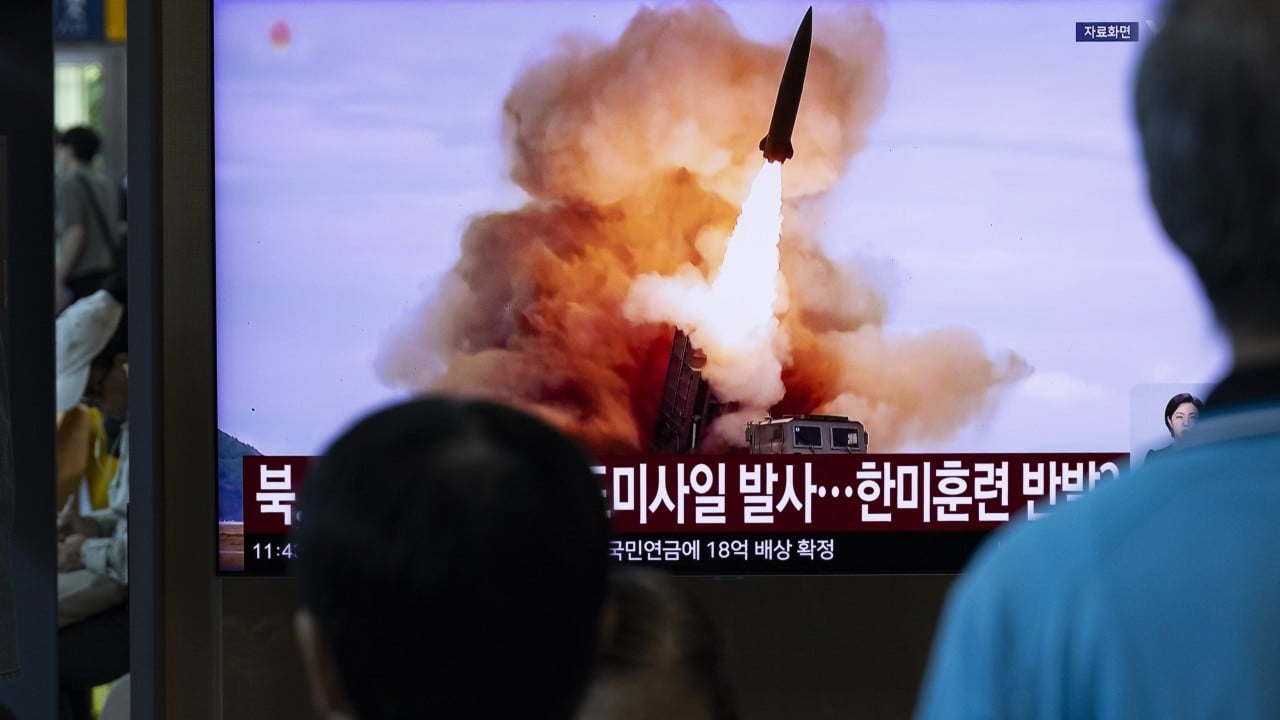
On August 20, 2026, North Korea launched a barrage of approximately 10 short-range ballistic missiles into the sea, according to South Korea's military and multiple international outlets. This show of force came just after Trump's announcement of his plans to meet Kim Jong Un and the reduction of the joint military drills.
South Korea's Defense Minister, Ahn Gyu-back, said North Korea's nuclear arsenal could be as high as 120 warheads, based on private organizations' data. This estimate sharply contradicted Trump's public figure of 57 nuclear weapons. The difference in numbers became a point of contention between Seoul and Washington, with South Korea stressing the continued threat posed by the North.
Despite Trump's overtures, North Korea's official response was frosty. Kim Yo-jong, sister of Kim Jong Un, told state media she was unaware of any communications with Trump, contradicting his claim that he had received a response from Pyongyang. North Korea also dismissed the scaled-back drills as insufficient for resuming talks.
By August 21, the US and South Korea wrapped up their military drills six days ahead of schedule, hoping to encourage North Korea to return to negotiations. However, North Korea maintained its hardline stance and continued to reject the idea that the reduced drills were a meaningful gesture. South Korean officials voiced concerns that their country could be sidelined in US-North Korea diplomacy.
Where it stands
As of late August 2026, Trump's planned meeting with Kim Jong Un remains unconfirmed by North Korea. Pyongyang continues to conduct missile tests and has not agreed to talks. South Korea has publicly backed the idea of renewed negotiations but insists on remaining closely involved and maintaining a strong security alliance with the US.
The early end to the Ulchi Freedom Shield drills has raised alarms in Seoul and among US allies about the reliability of American security commitments. The gap between US and South Korean assessments of North Korea's nuclear capabilities also remains unresolved, adding to the uncertainty.
What to watch
The next steps will depend on whether North Korea formally agrees to Trump's proposed meeting and if further diplomatic moves can lower regional tensions. South Korea's role in any future talks will also be closely watched, as officials there push not to be left out of negotiations that affect their national security.
More in Politics
All →
One Dead, Six Injured Including Police in Minneapolis Downtown Shooting
A shooting at a downtown Minneapolis apartment building left one person dead and six injured, including two police officers, prompting an ongoing investigation and heightened security in the area.
8 sources · today
Jury in Lindsay Clancy Triple-Murder Trial Deadlocked Over Mental Health Defense
After days of deliberations, jurors remain unable to reach a verdict on whether Lindsay Clancy is criminally responsible for killing her three children, highlighting deep divisions over mental illness and justice.
39 sources · over 19 days
Trump Says He's 'Happy' About Harry and Meghan Leaving the US
Former President Donald Trump publicly welcomed Prince Harry and Meghan Markle's departure from the United States, reigniting debate over the couple's relationship with the UK and the US.
10 sources · today