US Completes Troop Withdrawal From Iraq After 23 Years, Shifting Regional Power
The full withdrawal of US forces from Iraq after more than two decades is reshaping regional alliances, raising fears of ISIS resurgence and boosting Iranian influence as Baghdad faces new security tests.
By Hushread Stories, written with AI from 18 outlets · First published 30 Sept 2026
In brief
- US military forces have completed their withdrawal from Iraq, ending a presence that began in 2003.
- The exit is widely viewed as a victory by Iran and its allied groups, who have gained influence in Iraq.
- Concerns are growing about a possible resurgence of ISIS and the activities of Iran-backed armed militias.
- Iraq now assumes full responsibility for its security amid fears of instability and a potential power vacuum.
- Baghdad must balance relations with Washington, Tehran, and powerful domestic groups while managing ongoing security threats.
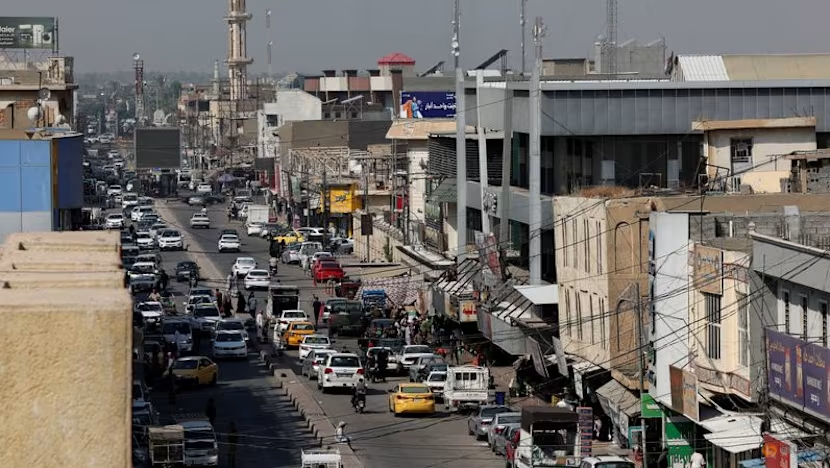
Timeline · 7 moments
US launches invasion of Iraq, toppling Saddam Hussein
NDTV Top Stories ↗First full US withdrawal from Iraq completed
ABCNews.com ↗Operation Inherent Resolve begins against ISIS in Iraq
Deutsche Welle ↗US forces exit final bases in Iraq after 23 years
World News CNA ↗Iran and allied groups celebrate US departure
South China Morning Post ↗Concerns rise over ISIS resurgence and militia power
Times of Israel - Iran ↗US withdrawal complete, Iraq faces security challenges
© Reuters ↗How it started
In 2003, the United States led an invasion of Iraq, toppling Saddam Hussein and beginning a prolonged military presence in the country. Over the years, US forces battled insurgency, sectarian violence, and later the rise of ISIS, suffering over 4,500 American deaths in the process, according to Sky News.
The US mission evolved multiple times, shifting from combat operations to supporting Iraqi forces in the fight against ISIS. Despite previous troop reductions, American troops remained in Iraq as part of Operation Inherent Resolve, mainly focused on advising and assisting local forces, Deutsche Welle reported.
How it unfolded
On September 29, 2026, the United States completed its withdrawal from its last remaining bases in Iraq, finalizing an exit plan that had been in discussion for years. The move was celebrated by Iran and its allies, who now hold significant sway in Iraqi politics, as noted by South China Morning Post.
The withdrawal marked the end of a turbulent chapter, with the Iraqi government declaring a new era of sovereignty, according to Deutsche Welle. However, not everyone viewed the departure as a purely positive development. Sunni leaders and analysts warned that Iraq might not be fully ready to secure itself, especially with the threat of ISIS remnants still present, Times of Israel - Iran reported.
With US troops gone, powerful Iran-backed militias are expected to play a larger role in the country's security dynamics. The government now faces the challenge of asserting control over these groups while preventing a security vacuum, Middle East Eye noted.
The withdrawal was completed as planned by September 30, 2026, closing a 23-year chapter of US military involvement that began with the fall of Saddam Hussein, NDTV Top Stories stated.
Where it stands
Iraq now stands at a crossroads. The US exit is seen by many as a boost for Iranian influence in the country, with Shiite groups and Tehran's allies celebrating the development. Baghdad has declared 'Sovereignty Days,' marking the start of a new era, but the security environment remains tense, Al Jazeera reported.
There are growing fears about the potential resurgence of ISIS and the unchecked activities of armed militias. Iraqi officials and analysts warn that the country must quickly adapt to fill the gap left by the US withdrawal to prevent instability, as highlighted by Reuters.
What to watch
The main questions now revolve around whether Iraq can maintain security and stability without US military support. Observers are watching how Baghdad will manage its relationships with both the United States and Iran, and whether it can keep militias in check.
The ability of Iraqi forces to prevent ISIS attacks and curb the influence of powerful armed groups will be critical in the coming months.
More in World
All →
Supreme Court Allows Trump Third-Country Deportation Policy to Continue for Now
The Supreme Court has cleared the way for the Trump administration to resume deporting migrants to third countries, a move with immediate effects on US immigration policy as legal challenges continue.
21 sources · today
Caleb Flynn, Former 'American Idol' Singer, Found Guilty of Wife's Murder
A jury convicted Caleb Flynn of murdering his wife Ashley in their Ohio home, ending a high-profile trial that drew national attention due to Flynn's music career and claims of innocence.
8 sources · over 2 days
Lindsay Clancy Returns to Court After Triple-Murder Mistrial in Massachusetts
Lindsay Clancy's case has reached a crucial hearing after her murder trial ended in a mistrial, with her legal team now challenging the core evidence.
12 sources · over 3 days