US Treasury Yields Surge to Two-Decade Highs, Triggering Global Market Swings
US Treasury yields have soared to their highest levels since the early 2000s, shaking stock markets and pushing up borrowing costs worldwide as investors brace for further Federal Reserve rate hikes.
By Hannah Lindqvist · First published 24 Sept 2026
In brief
- The yield on the 10-year US Treasury surpassed 5.1 percent, its highest level since 2007, amid strong economic data.
- Five-year Treasury yields also rose above 5 percent for the first time in nearly two decades.
- Rising yields fueled a sharp selloff in US equities, with investors worried about higher borrowing costs and more rate hikes.
- Global bond markets responded, with Japan's 10-year yields reaching a 30-year high following the US Treasury selloff.
- Market watchers are focused on whether the Federal Reserve will raise rates further and how high yields could climb.
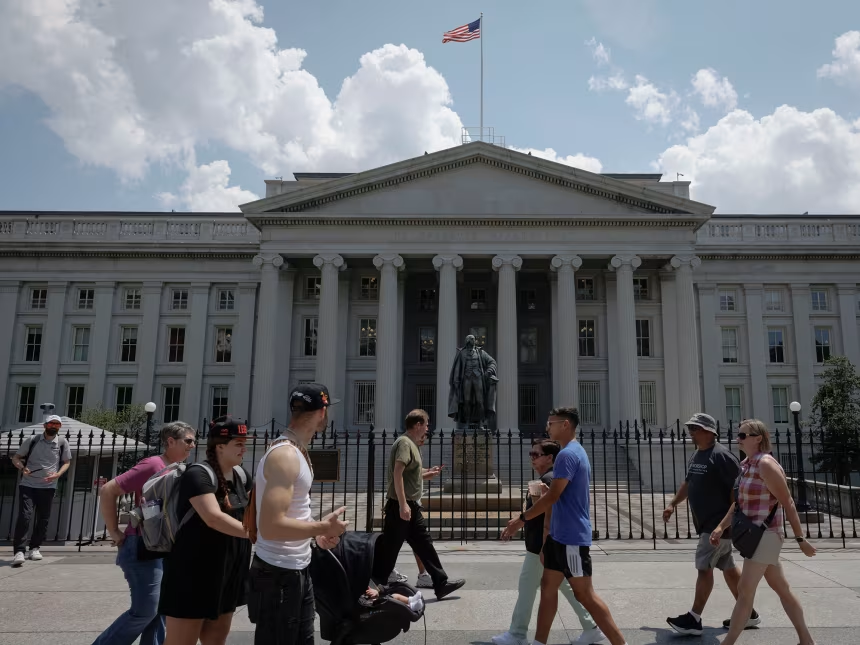
Timeline · 7 moments
10-year US Treasury yield jumps above 5 percent, highest since 2007
Dealbreaker ↗Fresh economic data and oil price surge intensify inflation concerns
cnn.com ↗US equity markets sell off as yields rise sharply
CNBC ↗10-year Treasury note closes at 5.11 percent amid ongoing market volatility
The Hill ↗US 30-year Treasury yield hits highest level since 2004 during global bond selloff
cnn.com ↗Japan's 10-year bond yield rises to 30-year high after US Treasury moves
World News CNA ↗Expectations of another Federal Reserve rate hike reach about 70 percent
Financial Times ↗How it started
The surge in US Treasury yields began as a combination of strong economic data and rising oil prices unsettled investors in late September 2026. New reports showed robust business activity, which stoked concerns about persistent inflation pressures.
As oil prices climbed back above $100 a barrel, expectations grew that the Federal Reserve might need to keep raising interest rates to tame inflation. This backdrop set the stage for a selloff in US government bonds, pushing yields higher and increasing borrowing costs across the economy.
How it unfolded
On September 23, 2026, the yield on the 10-year US Treasury note jumped past 5 percent, reaching 5.06 percent, a level not seen since July 2007. The five-year yield also broke above 5 percent, marking a nearly 20-year high. These moves were closely tied to fresh data indicating strong performance in US services and manufacturing sectors, which reinforced expectations of more rate hikes from the Federal Reserve.
As yields soared, US equity markets reacted sharply. Investors sold off stocks, worried that higher interest rates would hit corporate profits and make borrowing more expensive for businesses and consumers. The 10-year Treasury yield closed at 5.11 percent that day, and market volatility persisted as oil prices remained elevated.
By September 24, the impact had spread globally. Yields on the US 30-year Treasury bond climbed to their highest level since 2004. The selloff in US bonds sparked similar moves elsewhere: Japan's 10-year government bond yield rose to a 30-year high, reflecting the global ripple effects of US market activity.
Market participants grew increasingly convinced that the Federal Reserve would raise rates again, with some estimates putting the likelihood of an October hike at about 70 percent. Investors and economists also began to question how much higher yields could rise before triggering deeper financial stress.
Where it stands
US Treasury yields remain at levels not seen in nearly two decades, with the 10-year and 30-year benchmarks both setting new highs. The stock market has stabilized somewhat after the initial selloff, but uncertainty continues to hang over global financial markets.
Rising yields are increasing pressure on governments, companies, and households by raising the cost of borrowing. The Federal Reserve's next moves are under intense scrutiny as investors try to gauge how much further rates, and yields, might rise.
What to watch
All eyes are on the Federal Reserve's upcoming meetings and economic data releases. Markets are trying to assess whether the central bank will continue to hike interest rates or signal a pause. The path of oil prices and inflation data will also be key, as they directly impact the outlook for monetary policy and bond yields.
More in Business
All →
National Stock Exchange of India Debuts on BSE and MSEI After Record IPO
The National Stock Exchange of India became a listed company after a $2.4 billion IPO, marking a major shift in India's financial sector.
8 sources · over 2 days
Starbucks to Close 250 North American Stores in Strategic Adjustment
Starbucks is shutting down about 1 percent of its cafes across the US and Canada this week, signaling a shift in its business approach.
9 sources · today
US Considers 90-Day Diesel Export Ban as Fuel Prices Hit Records
The US government is weighing a temporary diesel export ban to address soaring fuel prices, raising concerns about potential economic and international impacts.
20 sources · over 3 days