US Considers 90-Day Diesel Export Ban as Fuel Prices Hit Records
The US government is weighing a temporary diesel export ban to address soaring fuel prices, raising concerns about potential economic and international impacts.
By Claire Dubois · First published 23 Sept 2026
In brief
- US diesel prices have surged to record highs, prompting the government to consider a 90-day export ban.
- President Trump has publicly supported the idea, hoping to lower domestic fuel costs for American consumers.
- Industry experts warn that restricting exports could backfire, potentially increasing prices and harming refinery operations.
- The White House and Energy Secretary have denied that a formal plan to implement a ban is currently underway.
- The proposal has sparked debate, with stakeholders divided on whether it would help or worsen fuel market volatility.
Timeline · 4 moments
US diesel prices reach record highs, raising economic concerns
The Conversation ↗White House reportedly considers 90-day diesel export ban
Bloomberg ↗President Trump voices public support for export ban proposal
Global News ↗Energy Secretary warns ban could backfire and raise other fuel prices
Mint ↗How it started
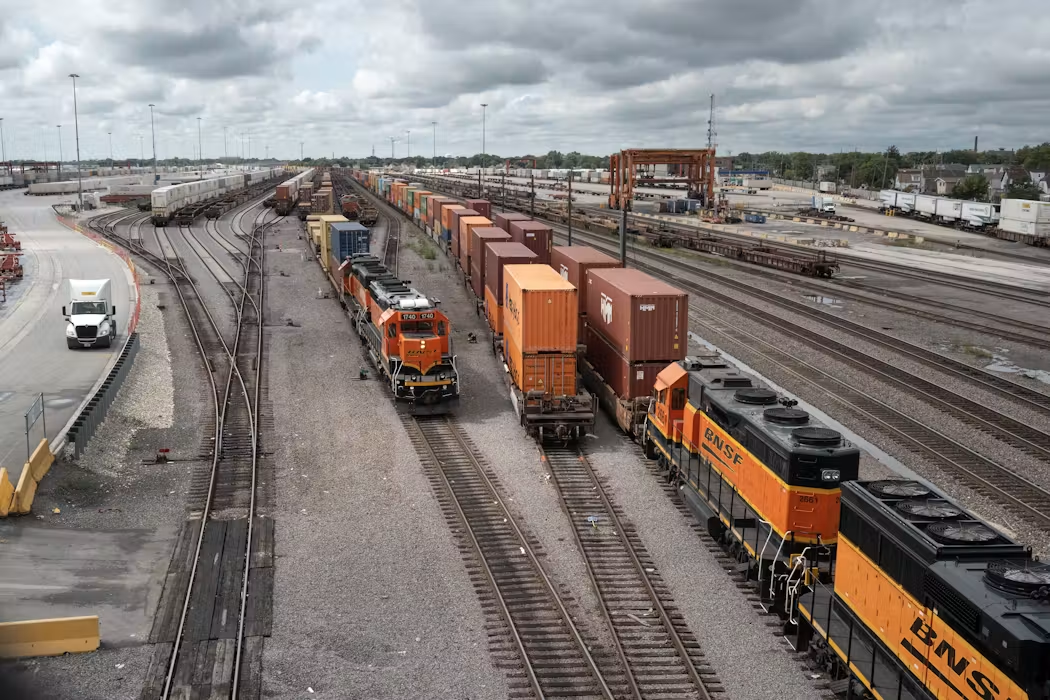
Diesel prices in the United States have climbed sharply throughout 2026, reaching record levels as international conflicts and supply disruptions strain the market. With trucking and rail freight costs rising, the issue quickly became a political and economic concern.
President Trump began to publicly consider a temporary ban on diesel exports as a way to bring relief to American consumers. The idea was met with immediate debate, drawing attention from industry analysts and policymakers who questioned its potential effects.
How it unfolded
On September 23, 2026, reports emerged that the White House was preparing a plan for a 90-day ban on diesel exports, citing unnamed sources. This news triggered widespread response among energy experts and industry leaders, many of whom voiced concerns that such a move could ultimately raise prices and disrupt refinery operations.
President Trump confirmed his support for the export ban on the same day, saying he believed it was necessary to address high prices. However, some within his own administration, including Energy Secretary Chris Wright, pushed back. Wright argued that a blanket ban could have unintended consequences, such as raising prices for other fuels like gasoline and jet fuel.
The oil industry strongly opposed the proposal, warning that limiting exports could only offer brief relief before causing further price spikes. Analysts pointed out that US refineries rely on both domestic and international markets to balance supply and demand efficiently.
As the discussion grew, the White House publicly denied that it was actively preparing to implement the ban. Officials stated that, while all options were being considered to address high fuel costs, no final decision had been made.
Where it stands
As of now, there is no official plan or timeline for a diesel export ban in the United States. The White House and Energy Secretary have both denied that a 90-day ban is imminent, despite ongoing internal discussions and public debate.
Stakeholders remain divided. Supporters hope the idea will bring price relief, while critics argue it could worsen the situation for both American consumers and international trade partners. The proposal continues to be a topic of heated discussion among policymakers, industry leaders, and economic analysts.
What to watch
Observers are watching for any formal policy announcement from the White House or Department of Energy regarding diesel exports. The situation remains fluid, and further price increases or political pressure could influence the administration's next steps.
More in Business
All →
Italy Confirms 3.1% Deficit for 2025, Stays Under EU Fiscal Oversight
Italy's public deficit for 2025 has been confirmed at 3.1 percent, meaning the country will remain under the European Union's corrective measures for another year.
8 sources · over 2 days
DoorDash to Pay $131.5 Million in NYC Worker Settlement
DoorDash agreed to pay $131.5 million to settle claims it underpaid over 260,000 New York City delivery workers.
20 sources · over 2 days
Indian Banks Prepare for Three-Day Nationwide Strike Set for September 28-30
A three-day strike called by major bank unions threatens to disrupt services across India, prompting banks and the government to issue advisories and urge last-minute preparations.
9 sources · over 3 days