Australia Bans Student Visa Holders From Bringing Families Amid Migration Crackdown
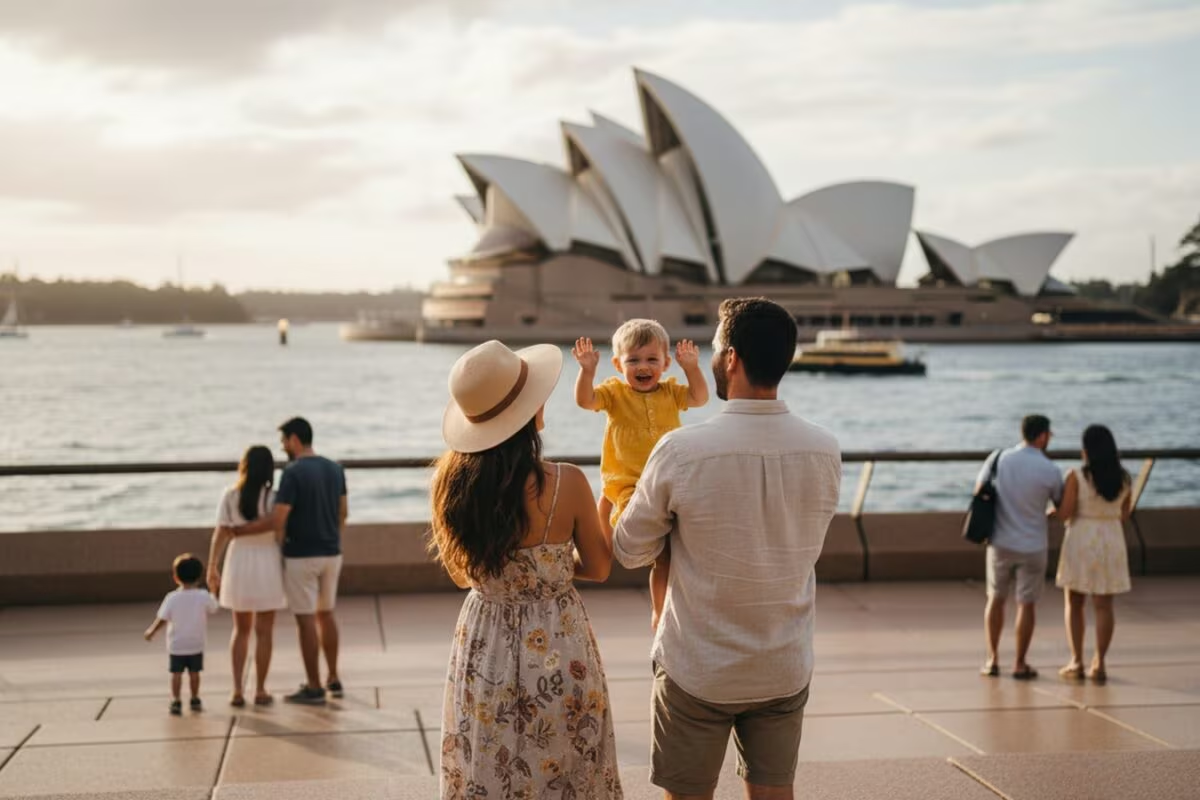
Australia has introduced strict new migration rules targeting international students and backpackers, aiming to lower migration numbers and ease housing pressures while sparking debate over economic and social impacts.
By Ravi Menon · First published 18 Sept 2026
In brief
- Australia has announced that international students will no longer be allowed to bring partners or children while studying.
- The government aims to reduce net overseas migration from over 300,000 to 225,000 people by 2028.
- New rules also target 'visa hopping' by students and introduce a ballot for backpackers extending working holiday visas.
- The crackdown is part of a broader response to housing shortages and increased political pressure from right-wing parties.
- Critics warn the changes could harm universities, charities, and the economy, especially given Australia's reliance on international students.
Timeline · 7 moments
One Nation proposes 750,000 visa cut to migration
Sydney Morning Herald ↗One Nation's 'net-negative' migration plan sparks national debate
The Conversation ↗Political opponents challenge One Nation on migration policy costs
Sydney Morning Herald ↗Government announces ban on students bringing families
Top World News- News18.com ↗New rules target visa overstayers and backpackers
BBC World ↗Student and backpacker visa restrictions confirmed
Deutsche Welle ↗Government to detain visa overstayers as crackdown expands
Al Jazeera ↗How it started
Debate over migration levels in Australia has intensified in recent months, with rising rents and a housing shortage fueling public concern. One Nation, a right-wing party, proposed a dramatic cut to migration, calling for a reduction of 750,000 visas and targeting international students and skilled migrants' families. Their plan was pitched as a way to ease pressure on the rental market, drawing comparisons with policies in other Commonwealth countries, according to Sydney Morning Herald.
The proposal was met with criticism from both major parties and experts, who questioned its economic impact and feasibility. Nevertheless, the political conversation shifted, putting migration at the center of policy debates ahead of the next federal election.
How it unfolded
On September 13, One Nation unveiled its plan to achieve 'net-negative' migration for three years, aiming to have more people leaving Australia than entering. This proposal specifically targeted temporary visa holders, including international students, and prompted immediate backlash from political opponents who demanded details on costs and practicalities.
Over the next few days, the government faced increasing pressure to address migration and its links to housing. By September 17, the Labor government announced a major crackdown on international student visas. Under the new rules, foreign students would be barred from bringing partners and dependent children to Australia while studying, a significant change from the previous policy.
Authorities also introduced measures to prevent students from repeatedly switching visa categories, known as 'visa hopping,' and set up a ballot system for backpackers seeking to extend their working holiday visas. These changes were framed as necessary to reduce migration numbers and alleviate housing shortages, as explained by the interior minister.
The government further announced plans to detain tourists and others who overstay their visas, citing a sharp increase in the number of overstayers. This broader immigration overhaul was presented as a response to both practical and political pressures, including a surge in support for far-right parties and growing frustration over housing costs.
Where it stands
The new migration rules are now in effect, making it much harder for international students to bring their families to Australia. The government has set a target to lower net overseas migration to 225,000 by 2028, down from over 300,000.
Universities, student groups, and some charities have criticized the changes, warning they could damage Australia's reputation as a study destination and hurt the economy. The debate continues over whether these measures will actually ease housing pressures or simply shift the problems elsewhere.
What to watch
Observers are watching for how international student numbers respond to the new restrictions, and whether universities experience a significant decline in enrollments. The government may face further political pressure if housing shortages persist or if the economic impact of lower student migration becomes more pronounced.
More in Politics
All →
US Approves $24.3 Billion Sale of F-35 Fighter Jets to Saudi Arabia
Washington has cleared a major deal to sell 48 advanced F-35 jets to Saudi Arabia, raising strategic questions about technology security and regional stability amid ongoing tensions.
27 sources · over 2 days
Election Commission Freezes Trinamool Congress Name and Symbol Amid Party Split
India's Election Commission has blocked both factions of the Trinamool Congress from using the party's name and symbol in upcoming West Bengal bypolls, forcing rival camps to adopt new identities.
8 sources · over 2 days
Russia Holds Parliamentary Elections Amid Ukraine War and Tightened Controls
Russians are voting in their first parliamentary election since the Ukraine invasion, as the Kremlin seeks a show of support and opposition voices face heavy restrictions.
18 sources · over 2 days