US Approves $24.3 Billion Sale of F-35 Fighter Jets to Saudi Arabia
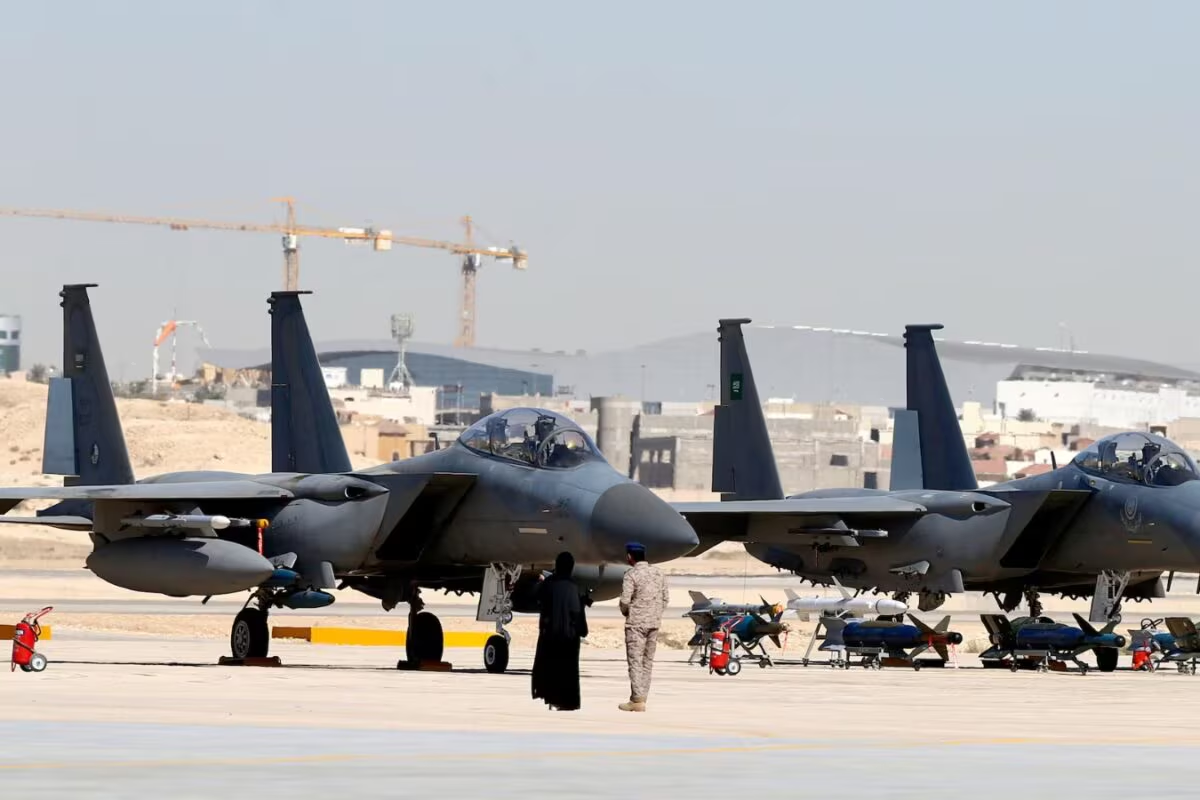
Washington has cleared a major deal to sell 48 advanced F-35 jets to Saudi Arabia, raising strategic questions about technology security and regional stability amid ongoing tensions.
By Fatima Al-Rashid · First published 18 Sept 2026
In brief
- The US has approved a $24.3 billion sale of 48 F-35 fighter jets to Saudi Arabia, pending Congress.
- US intelligence agencies have renewed warnings about possible Chinese attempts to access F-35 technology via Saudi Arabia.
- The deal is moving forward as Houthi attacks on Saudi Arabia intensify and regional conflict escalates.
- Israeli officials and some US lawmakers continue to express concerns about the sale's impact on regional security.
- Saudi officials describe the agreement as a sign of strong ties with the US, while final Congressional approval remains pending.
Timeline · 8 moments
US intelligence warns of China theft risk in F-35 deal
NYT Politics ↗State Department approves $24.3B F-35 sale to Saudi Arabia
Top World News- News18.com ↗Trump administration announces F-35 jet sale amid Iran tensions
Financial Times ↗Concerns raised over Israeli security and regional balance
South China Morning Post ↗Saudi embassy welcomes proposed F-35 deal as strengthening ties
Arab News ↗Deal awaits Congressional review and possible restrictions
The Hill ↗US intelligence warns of China risk in F-35 sale
NYT World News ↗Israel voices concern over Saudi F-35 purchase
© Claudia Greco, Reuters ↗Update 18 Sept 2026, 9:49 am UTC
Recent coverage highlights renewed US intelligence concerns that China could access F-35 technology through Saudi Arabia. The deal is advancing amid increased Houthi attacks on Saudi Arabia and ongoing regional instability, but no final Congressional approval has been reported.
Update 18 Sept 2026, 6:39 am UTC
US intelligence agencies have issued new warnings that China could try to access F-35 technology through Saudi Arabia. Israel's concerns about the sale have also become more prominent in recent coverage.
How it started
Talks about a major arms sale from the US to Saudi Arabia began amid growing instability in the Middle East. Saudi Arabia, seeking to modernize its air force, expressed interest in acquiring the F-35, the US military's most advanced stealth fighter jet.
Internal US discussions quickly flagged concerns about the security of sensitive technology, especially given Saudi Arabia's expanding ties with China. Intelligence officials warned that Beijing could try to access or steal classified jet technology, referencing China's previous attempts to obtain military secrets.
How it unfolded
On September 16, 2026, reports surfaced that US intelligence agencies were worried about the risk of China obtaining F-35 technology through Saudi Arabia, according to NYT Politics. The Pentagon's Defense Intelligence Agency was among those raising alarms.
The next day, the Trump administration officially announced approval of the $24.3 billion deal for 48 F-35 jets and related equipment. The State Department notified Congress, highlighting the benefits of improved defense cooperation and interoperability with Saudi Arabia, as reported by Top World News- News18.com.
Concerns persisted about how the sale might affect the balance of power in the region and whether it could compromise Israel's technological edge, given Israel's established use of the F-35, according to South China Morning Post.
Saudi officials and the embassy in Washington publicly praised the deal, framing it as a testament to the enduring partnership between the two countries, Arab News noted. The sale was also seen as a move to strengthen Saudi defenses at a time of heightened tensions with Iran.
Where it stands
The F-35 sale to Saudi Arabia has cleared a key hurdle with US State Department approval and notification to Congress. Saudi Arabia has welcomed the agreement, citing it as a milestone in their strategic partnership with the US.
However, the deal is not finalized. It still requires Congressional review, where lawmakers may raise further questions about technology security and regional impacts. Intelligence officials remain cautious about the risk of Chinese espionage linked to the transfer of advanced military hardware.
What to watch
Congress will review the proposed sale and could place conditions or even block the transfer, depending on debates over security and regional stability. Ongoing US intelligence monitoring will likely influence whether additional safeguards or restrictions are added to the deal.
More in Politics
All →
Election Commission Freezes Trinamool Congress Name and Symbol Amid Party Split
India's Election Commission has blocked both factions of the Trinamool Congress from using the party's name and symbol in upcoming West Bengal bypolls, forcing rival camps to adopt new identities.
8 sources · over 2 days
Russia Holds Parliamentary Elections Amid Ukraine War and Tightened Controls
Russians are voting in their first parliamentary election since the Ukraine invasion, as the Kremlin seeks a show of support and opposition voices face heavy restrictions.
18 sources · over 2 days
Australia Bans Student Visa Holders From Bringing Families Amid Migration Crackdown
Australia has introduced strict new migration rules targeting international students and backpackers, aiming to lower migration numbers and ease housing pressures while sparking debate over economic and social impacts.
15 sources · over 5 days