
Italy Approves New Electoral Law After Final Secret Parliamentary Vote
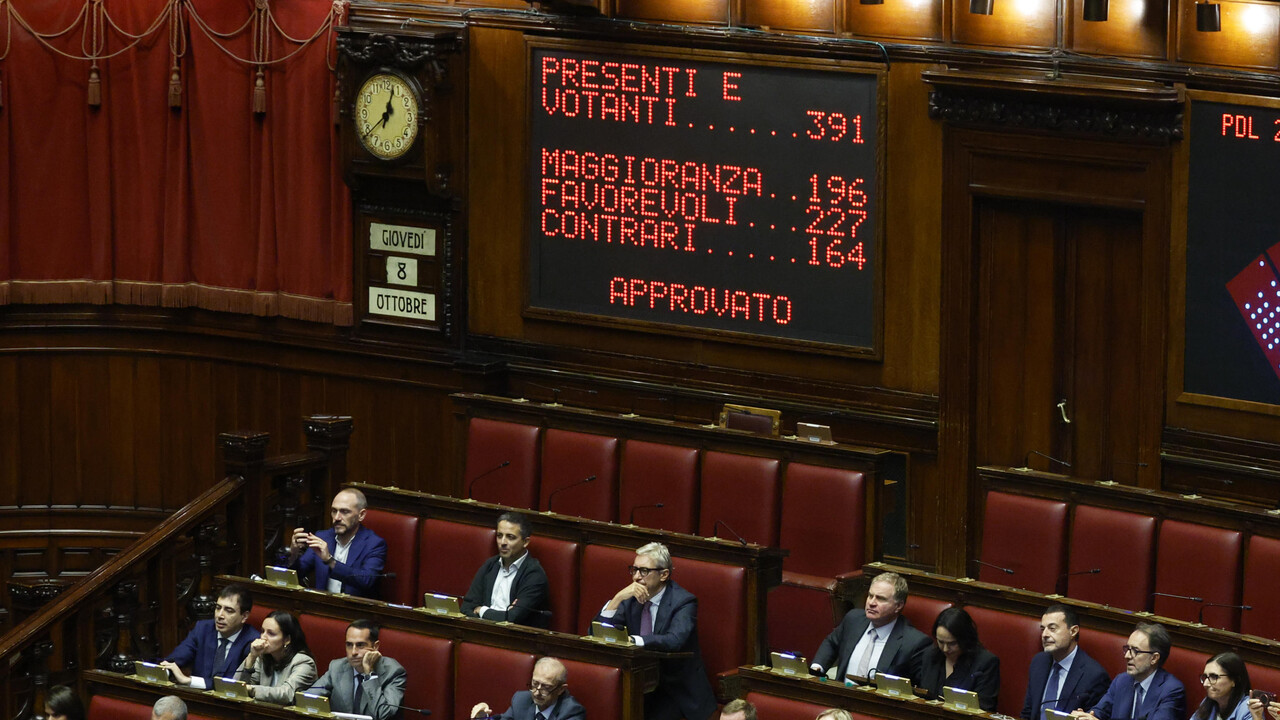
The Chamber approved the reform by 227 votes to 164, keeping Prime Minister Giorgia Meloni's majority together ahead of the 2027 election despite opposition protests.
By Hushread Stories, written with AI from 10 outlets · First published 8 Oct 2026
In brief
- Italy's Chamber gave final approval to the new electoral law on October 8 in a secret ballot.
- The final vote passed with 227 lawmakers in favour and 164 against, keeping the governing majority together.
- Prime Minister Giorgia Meloni had threatened to resign if lawmakers rejected the overhaul in the final vote.
- The reform guarantees a parliamentary majority to any alliance winning more than 42 percent of the vote.
- Opposition parties say the government pushed through the reform to improve its chances in the 2027 election.
Timeline · 5 moments
Final secret ballot approves reform by 227 to 164
Adnkronos - ultimoratop ↗Meloni threatens resignation if lawmakers reject electoral overhaul
Financial Times ↗Third and final confidence vote passes without difficulty
TGcom24 ↗Chamber approves confidence votes on first two articles
RSS di - ANSA.it ↗Government puts confidence questions on three electoral law articles
RSS di - ANSA.it ↗How it started
Italy's electoral reform reached its final parliamentary stage with more than voting rules at stake. According to Il Post, approval was also tied to the government's survival and the possibility of early elections.
The proposal would introduce a fully proportional system while guaranteeing a parliamentary majority to any alliance winning more than 42 percent of the vote, The Hindu reported. Opposition parties argued that Prime Minister Giorgia Meloni's government was pushing the changes to improve its chances of winning re-election in 2027, according to The Local.
How it unfolded
On October 5, the government put confidence questions on articles 1, 2 and 3 of the electoral law. Article 8 also required approval but was not subject to a confidence vote, TGcom24 reported. The final ballot on the whole text was scheduled for October 8.
On October 6, the Chamber approved the confidence votes on the first two articles. Article 2 passed with 227 votes in favour, following approval of article 1, according to ANSA. Opposition parties called the reform unconstitutional, Adnkronos reported.
On October 7, the third and final confidence vote passed without difficulty, according to TGcom24. By the end of that stage, the Chamber had approved all the articles still under discussion, leaving only the final vote, Il Post reported.
The secret ballot nevertheless carried political risk. On October 8, the Financial Times reported that Meloni had threatened to resign if lawmakers rejected the overhaul.
The Chamber approved the final text that day by 227 votes to 164. The governing majority held together in the secret ballot, according to ANSA, while opposition lawmakers protested against what they called a fraudulent law.
Where it stands
The reform has received definitive parliamentary approval. TGcom24 reported that this was its third parliamentary passage, following Senate changes introducing preference voting alongside fixed list leaders.
Meloni presented the result as evidence that the centre-right remained united, according to Adnkronos. Opposition objections remain political claims, including accusations that the reform is unconstitutional and designed to benefit the government. The supplied coverage reports no court ruling on those claims.
What to watch
The next electoral test identified in the coverage is the 2027 vote. The central issue will be how the new rules affect competition between alliances, particularly the majority guarantee for an alliance exceeding 42 percent, described by The Hindu. The Local reported the opposition's claim that the changes favour the government's re-election prospects.
More in Politics
All →
Protests Against Election Chief Gyanesh Kumar Bring Detentions and Police Cases
Opposition leaders face repeated detentions and fresh police cases as demands for Gyanesh Kumar's resignation intensify, with another major protest planned for October 10.
19 sources · over 7 days
AfD Speaker Election in Saxony-Anhalt Triggers Dispute Over Possible CDU Support
Tobias Rausch's election marks Germany's first far-right statehouse speaker since 1945, while unexplained extra votes raise questions about the AfD's prospects of leading the state government.
16 sources · over 7 days
Trump Shifts Ad Costs to Super PAC as Democrats Sue
Trump says public funding for promotional ads will end, but taxpayers will not be reimbursed, and Democrats have sued over the administration's use of government money.
26 sources · over 6 days