
Russian lab worker's death prompts plague fears, but outbreak remains unconfirmed
Russian authorities report no plague cases among the worker's contacts, while international health officials seek clearer evidence about her death and assess the risk of spread.
By Hushread Stories, written with AI from 68 outlets · First published 6 Oct 2026 · Chapter 2 of 2
Earlier: Daria Chipilova Dies in Siberia as Russia Denies Plague Infection
In brief
- A worker at a plague research institute in Siberia died after developing pneumonia of an unknown cause.
- Reports described a hospital quarantine and nearly 200 contacts under monitoring after the laboratory worker's death.
- Russian authorities say no plague cases have been detected among people who had contact with the researcher.
- The World Health Organization assesses epidemic risk in Russia as low, with no sign of a further outbreak.
- US officials are monitoring the suspected case, while questions remain about laboratory results and the circumstances of exposure.

Timeline · 7 moments
WHO assesses Russian plague epidemic risk as low
Guardian Health ↗Russia reports no detected plague cases among contacts
CNN Brasil ↗Russian agency denies reports of strict regional restrictions
Le Monde ↗WHO seeks laboratory results and contact tracing details
Top World News- News18.com ↗Trump offers US help over potential plague case
Axios ↗Hospital quarantined and 200 contacts monitored after suspected death
Al Jazeera ↗Officials describe researcher's fatal pneumonia as having unknown cause
Forbes ↗How it started
The death of a worker at the Irkutsk Anti-Plague Research Institute in Siberia has triggered fears of pneumonic plague. Russian officials described her illness as "pneumonia of unknown etiology", meaning pneumonia with an unknown cause, according to Forbes.
That distinction matters. Working at a plague institute does not establish that plague caused her death. CBC News described fears that the 28-year-old woman may have been exposed at work, while NPR reported that the cause remained unknown.
How it unfolded
By October 5, reports described precautions around the worker's contacts. Al Jazeera reported that Russian authorities had quarantined a hospital and were monitoring 200 contacts. Forbes put the number under monitoring at nearly 200. Monitoring contacts is not the same as identifying infections.
The case also drew US attention on October 5. BBC World reported that the US was monitoring the death. President Trump said the United States would help Russia, although he had not spoken with Russian President Vladimir Putin about it, according to Axios.
On October 6, the World Health Organization was seeking details about the circumstances of the death, laboratory tests and results, contact tracing, and the health of identified contacts, News18 reported.
Russian authorities also challenged accounts of wider restrictions. Le Monde reported on October 6 that Russia's public health agency denied claims that an enhanced sanitary regime and strict restrictions had been introduced in the Irkutsk region. Franceinfo, meanwhile, said local media had reported a three-week quarantine. The coverage gives conflicting accounts of the measures imposed.
Where it stands
The latest reports do not establish a confirmed plague outbreak. On October 6, CNN Brasil reported that Russian health authorities said no plague cases had been detected among the researcher's contacts. CNBC International reported that authorities described the situation as stable, with no reports of secondary cases.
The World Health Organization said the risk of an epidemic in Russia was low and that there was no sign of a further outbreak, according to the Guardian. The Independent reported its assessment that the possible case posed a "very low" risk outside Russia. Those assessments do not settle what caused the worker's death.
What to watch
The central unanswered questions concern the worker's test results and whether any workplace exposure occurred. Reports of plague ingestion remained unconfirmed, according to Discover Magazine, and CBS reported Russian pushback against accounts involving a broken test tube. Axios reported on October 6 that missing details were preventing a determination of whether travel advisories, precautions at US ports of entry or other measures were warranted.
More in World
All →
Spain approves new housing measures after protests and snap election call
The government has approved fresh emergency housing decrees after parliament rejected its earlier measures, while protests have turned violent in Barcelona and Spain prepares for a November election.
52 sources · over 7 days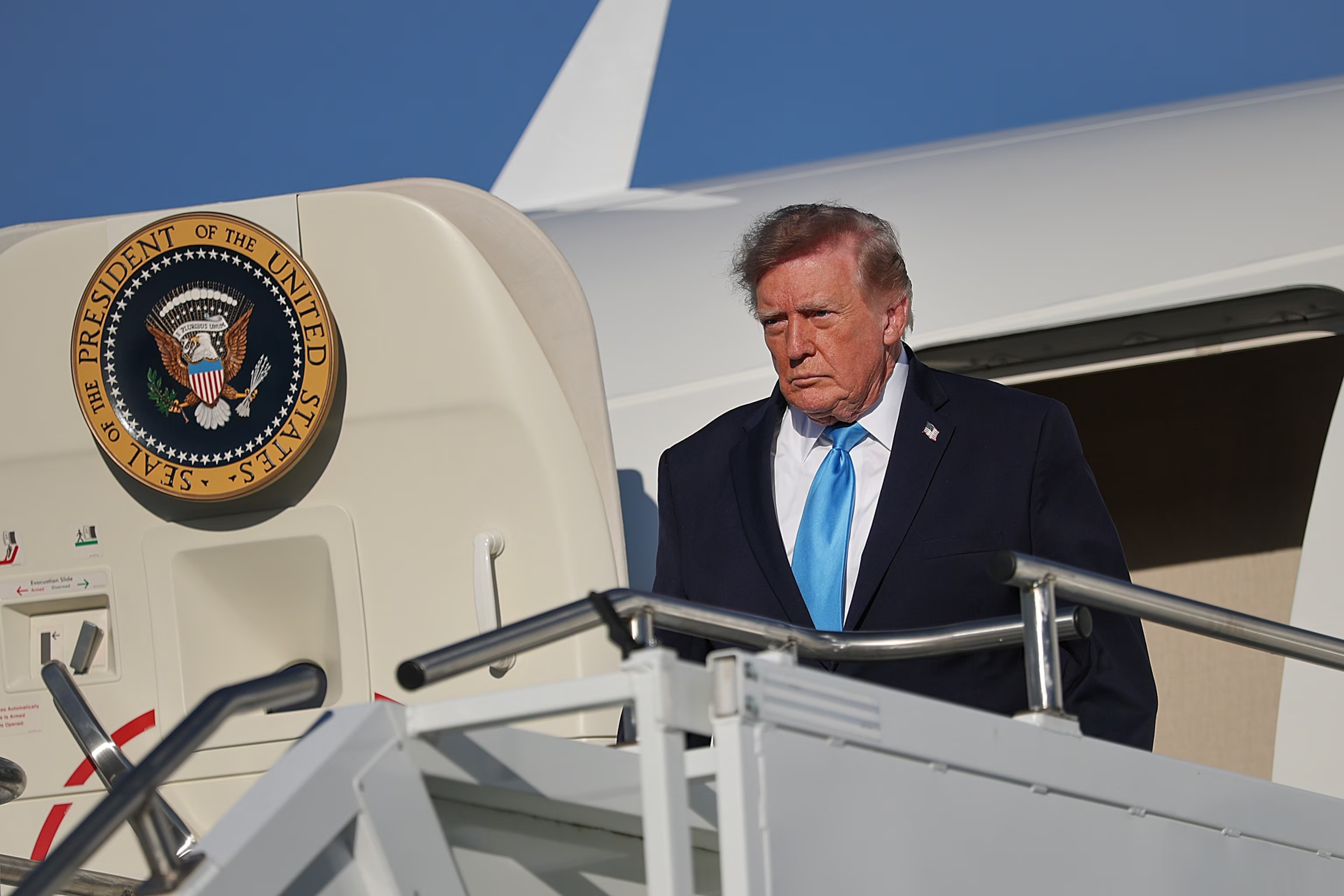
Trump Draws California Backlash After Suggesting Iran Could Attack US Cities
President Donald Trump's remarks about Los Angeles and San Diego at a Nebraska rally have drawn condemnation from California officials, who accuse him of inviting attacks on American soil.
16 sources · today
Seventh Man Arrested in Counter Terror Investigation Into RAF Fairford Incident
A 22-year-old British national has been arrested in Westminster as police investigate the September 27 incident near RAF Fairford, with six earlier suspects reported bailed.
8 sources · today