
AfD Wins First German State Assembly Presidency, Putting CDU Under Pressure
Tobias Rausch's election in Saxony-Anhalt gives the far right a historic parliamentary post and raises questions about support beyond its ranks before December's vote for state premier.
By Hushread Stories, written with AI from 16 outlets · First published 7 Oct 2026 · Chapter 3 of 3
Earlier: AfD Wins First German State Parliament Presidency in Saxony-Anhalt
In brief
- Tobias Rausch became the first AfD politician elected president of a German state parliament, in Saxony Anhalt.
- The AfD won nearly 44 per cent of the state vote last month but lacked a governing majority.
- Rausch received four more votes than expected, raising suspicions of support from conservatives without establishing who backed him.
- Chancellor Friedrich Merz condemned the election, saying it was incompatible with the values of the CDU.
- The election of the state premier is expected in December, with the AfD seeking to lead the government.

Timeline · 7 moments
Report raises possibility of CDU and AfD coordination
DIE ZEIT | Nachrichten, News, Hintergründe und Debatten ↗Merz condemns Rausch election as incompatible with CDU values
Deutschlandfunk - Fortlaufende Nachrichten vom 24. August 2026 ↗Four unexpected votes raise suspicions of conservative support
Le Monde ↗Rausch elected first AfD president of a state parliament
Deutsche Welle ↗Saxony-Anhalt assembly convenes following AfD state election victory
Deutschlandfunk - Fortlaufende Nachrichten vom 24. August 2026 ↗Schulze rules out CDU backing for AfD state premier
ARD Tagesschau ↗Rhein argues against blocking AfD committee chairs in Bundestag
DIE ZEIT | Nachrichten, News, Hintergründe und Debatten ↗How it started
The AfD's breakthrough began with its September election victory in Saxony-Anhalt. It won nearly 44 per cent of the vote, comfortably ahead of Chancellor Friedrich Merz's CDU, according to NDTV Top Stories.
That result did not give the party a governing majority. On October 4, ARD Tagesschau reported that CDU parliamentary group leader Schulze had ruled out CDU support for the AfD in the election of the state premier. He also said no CDU members would switch to the AfD.
The assembly presidency presented a separate test. Tobias Rausch sought to become the AfD's figurehead in the state parliament, as the Financial Times described him. The position is largely symbolic, according to BBC World, but winning it would give the party a parliamentary office it had never held.
How it unfolded
The wider argument over how other parties should treat the AfD was already underway. On October 3, DIE ZEIT reported that Hesse's Minister-President Boris Rhein said the CDU should not block AfD committee chairs in the Bundestag. He argued for distinguishing the CDU from the party without excluding it.
On October 5, Deutschlandfunk reported that the Saxony-Anhalt parliament was convening in Magdeburg for its inaugural session, a month after the election, with the assembly presidency on its agenda.
Ahead of the vote, Euronews reported on October 6 that the outcome hinged on five deputies from BSW. It described the contest as an initial test of relations between BSW and the AfD before the latter's bid to lead the state government in December.
Rausch was elected on October 6. Deutsche Welle reported that this was the first time since the end of World War II that a German state parliament had chosen a speaker from the far right. Telegraaf reported that support from BSW helped secure the result.
The vote also produced an unresolved question. Rausch received four more votes than expected, according to Le Monde, prompting suspicions that some conservatives had backed him. The reported surplus did not establish who cast those votes.
Where it stands
Rausch now holds the assembly presidency, but the AfD has not thereby secured control of the state government. ARD Tagesschau described his election as evidence that the party could organise majorities for its candidates.
On October 7, Chancellor Friedrich Merz condemned the result as a historic turning point and said it was incompatible with CDU values, according to Deutschlandfunk. ARD Tagesschau reported that he also suggested the additional votes could have come from another party.
The source of that support remains contested. DIE ZEIT reported that its research suggested the CDU and AfD might have coordinated in Saxony-Anhalt. That is a possibility reported by the outlet, not an established account of how individual deputies voted.
What to watch
The next major test is the election of the state premier, expected in December according to Le Monde. Whether the AfD can assemble another majority, and whether BSW supports it again, will matter more directly for control of the government than the assembly presidency.
The CDU's internal dispute is also consequential. DER SPIEGEL reported that the AfD wanted to exploit divisions within the CDU to help bring Ulrich Siegmund into office as Minister-President. The open question is whether Schulze's earlier refusal of CDU support holds when that vote arrives.
More in Politics
All →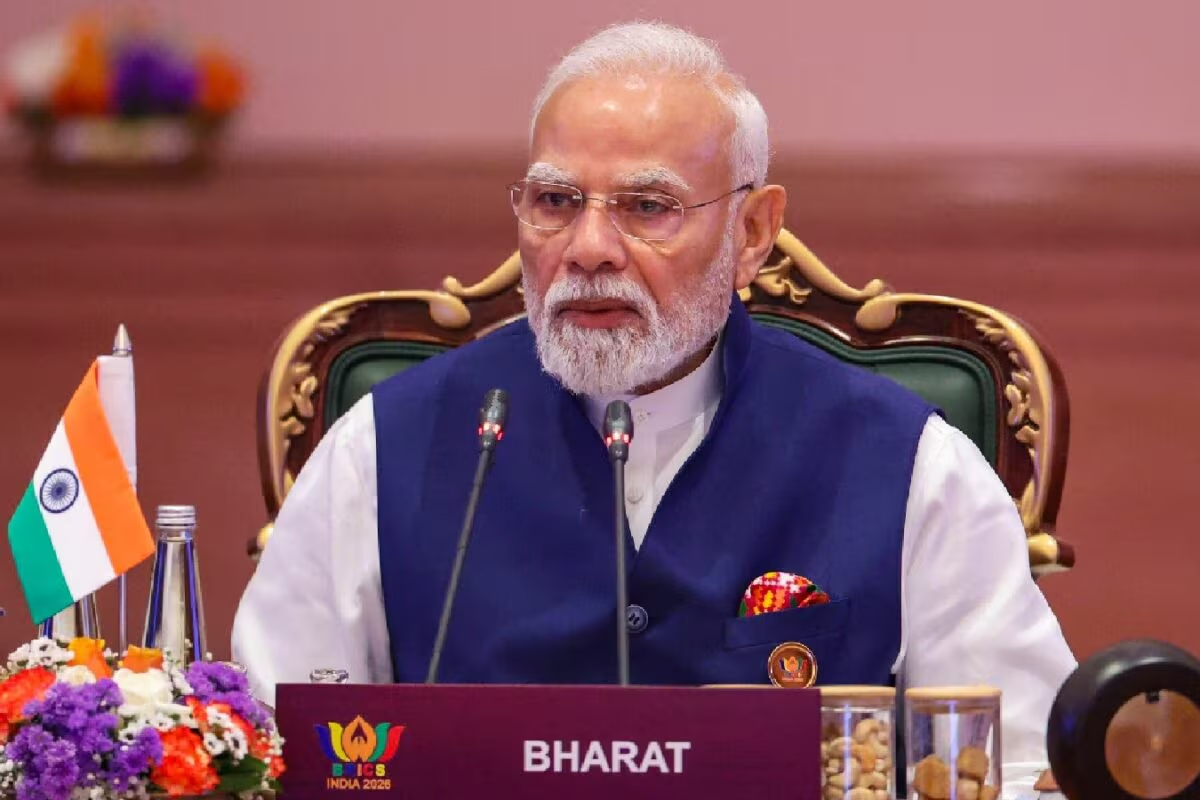
Union Cabinet Honours Modi's 25 Years as Head of Government
The Cabinet's resolution marks a milestone spanning Modi's leadership in Gujarat and as prime minister, as he renews his service pledge and promotes his vision for 2047.
9 sources · today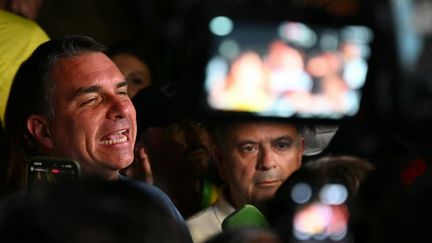
Brazil Presidential Election Heads to Runoff After Flávio Bolsonaro Outpolls Lula
Flávio Bolsonaro's first-round lead over President Luiz Inácio Lula da Silva has shifted attention to endorsements, televised debates and an October 25 runoff that will decide Brazil's presidency.
61 sources · over 8 days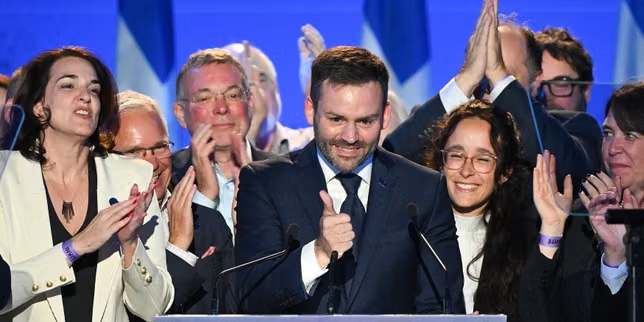
Parti Québécois Wins Quebec Election but Falls Short of Majority
Quebec's separatists are returning to power with a referendum pledge, but their minority victory leaves uncertainty over the independence push and creates a new test for Canadian unity.
20 sources · over 7 days