
Delhi CJP Protest Leaders Freed as Supreme Court Orders Limits on Crackdown
Three CJP leaders were released on October 11 as protests continued, while Supreme Court directions put Delhi's detentions, transport restrictions and internet shutdown under scrutiny.
By Hushread Stories, written with AI from 39 outlets · First published 11 Oct 2026 · Chapter 4 of 4
Earlier: Delhi Protest Leaders Released as Supreme Court Limits Security Crackdown
In brief
- Delhi police detained thousands on October 10 as the CJP sought to protest against electoral roll revisions.
- Abhijeet Dipke, Saurav Das and Ashutosh Ranka were detained after their aircraft landed in Delhi.
- A court released the three leaders on October 11, but parts of Delhi remained under lockdown.
- The Supreme Court directed authorities to prevent illegal detention and restore internet and metro services.
- The CJP says protests demanding Chief Election Commissioner Gyanesh Kumar's resignation will continue beyond the Delhi crackdown.
Timeline · 7 moments
CJP vows nationwide protests after leaders are released
NDTV India ↗Delhi protests continue amid barricades and heavy security
BBC - Home ↗Supreme Court directs restoration of internet and metro
Business Line - Home ↗Court orders release of three CJP leaders
South China Morning Post ↗Mass detentions draw scrutiny over stated legal grounds
The Hindu ↗Three CJP leaders detained after aircraft lands
Business Line - Home ↗Security forces deploy across Delhi to block protest
Japan Times ↗How it started
The Cockroach Janta Party, or CJP, called protesters to Delhi over alleged irregularities in revisions to electoral rolls. The youth movement is demanding the resignation of Chief Election Commissioner Gyanesh Kumar, according to Mint. The allegations are the protesters' claims, not established findings in the supplied coverage.
The planned demonstration targeted the Election Commission, with Jantar Mantar as its gathering point. France24 described the movement as a satirical online campaign whose protest call prompted strict security measures.
How it unfolded
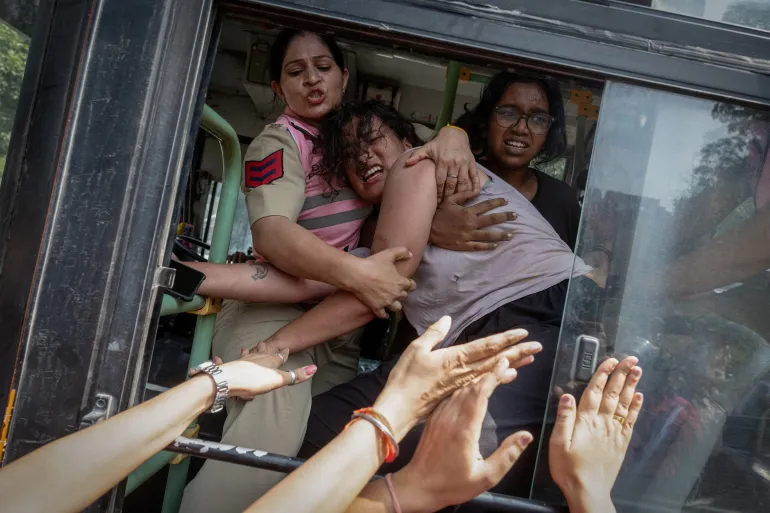
On October 10, police and paramilitary personnel were deployed across Delhi to prevent the election chief protest, according to Japan Times. The New York Times reported that thousands of young people tried to gather and security forces hauled many away.
CJP leaders Abhijeet Dipke, Saurav Das and Ashutosh Ranka were detained from their aircraft shortly after it landed in Delhi, Business Line reported. Its account put the number detained since that morning at at least 4,000.
Reports differ substantially on the scale of detention. CNN Brasil reported more than 2,000 people held, Mint reported more than 7,000, and The Guardian reported tens of thousands. The supplied coverage does not resolve those conflicting totals.
The detentions also drew legal scrutiny. The Hindu reported that some people taken away in buses alleged they had not been told the grounds for their detention.
On October 11, a New Delhi court ordered the release of the three CJP leaders, their lawyer told South China Morning Post. Protests continued for a second day, with thousands of security personnel deployed and roads barricaded, according to the BBC.
The Supreme Court directed authorities to prevent illegal detention and restore internet and metro services, Business Line reported. It also asked Solicitor General Tushar Mehta to ensure lawyers, journalists and others could carry out their professional duties without obstruction.
Where it stands
The leaders' release has not ended the confrontation. Parts of New Delhi remained under lockdown for a second straight day as the CJP renewed its protest call, according to Bloomberg. Dipke said protests against Gyanesh Kumar would continue, Mint reported.
The terms of release have become another point of contention. According to NDTV India, the CJP said the leaders had not signed any bond promising to stop protesting, and that the bond concerned refraining from a breach of peace.
Press access remains under scrutiny too. Indian Express reported that its journalists were detained by Delhi police and released 12 kilometres away. Separately, The Hindu reported detentions and blocked access to Azad Maidan during a CJP protest in Goa.
What to watch
The immediate test is whether restrictions are lifted in line with the Supreme Court's directions. India Today reported that the court told the government metro services should run normally and barricades should not be used unless warranted. The supplied coverage does not establish that services have been fully restored.
The CJP has vowed nationwide protests, according to NDTV India. Further demonstrations will test both the movement's ability to sustain turnout and authorities' compliance with the court's limits on detention and restrictions.
More in World
All →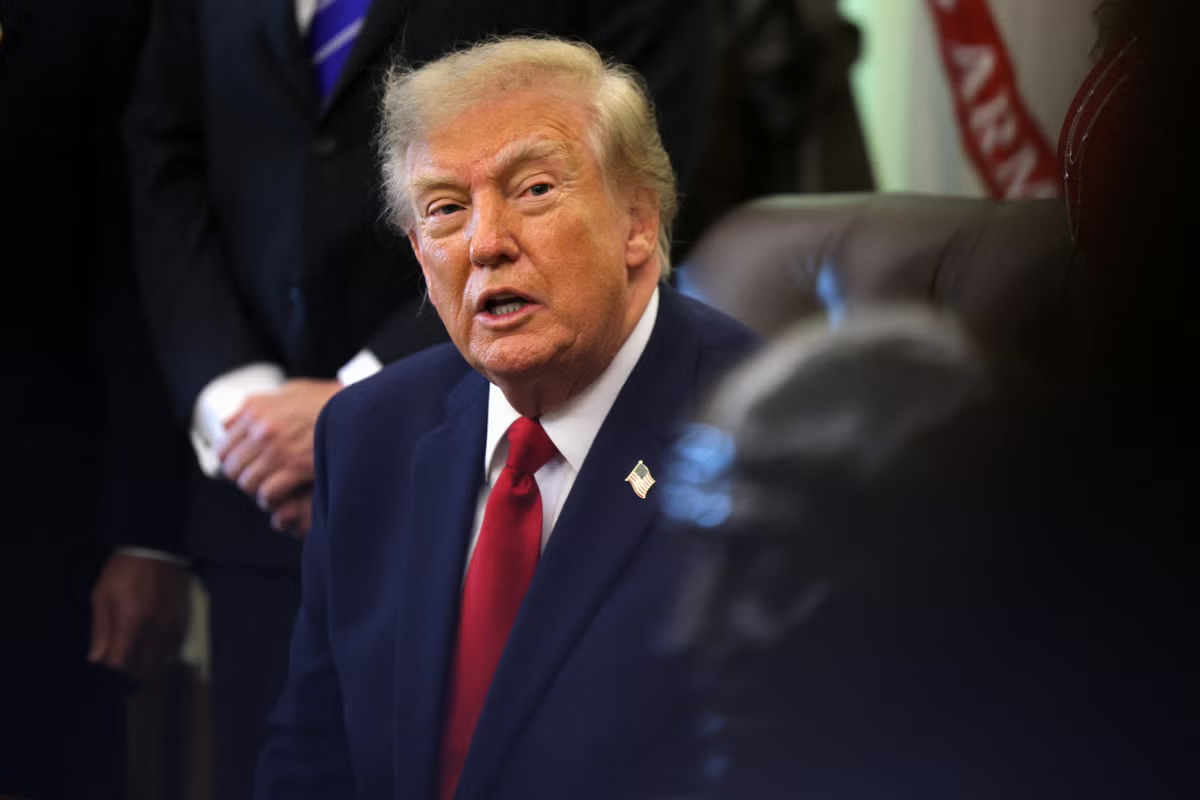
Trump's Nobel Peace Prize Bid Ends in Snub as Navi Pillay Wins
South African human rights lawyer Navanethem "Navi" Pillay won the 2026 Nobel Peace Prize, prompting Trump to criticize the decision.
41 sources · over 4 days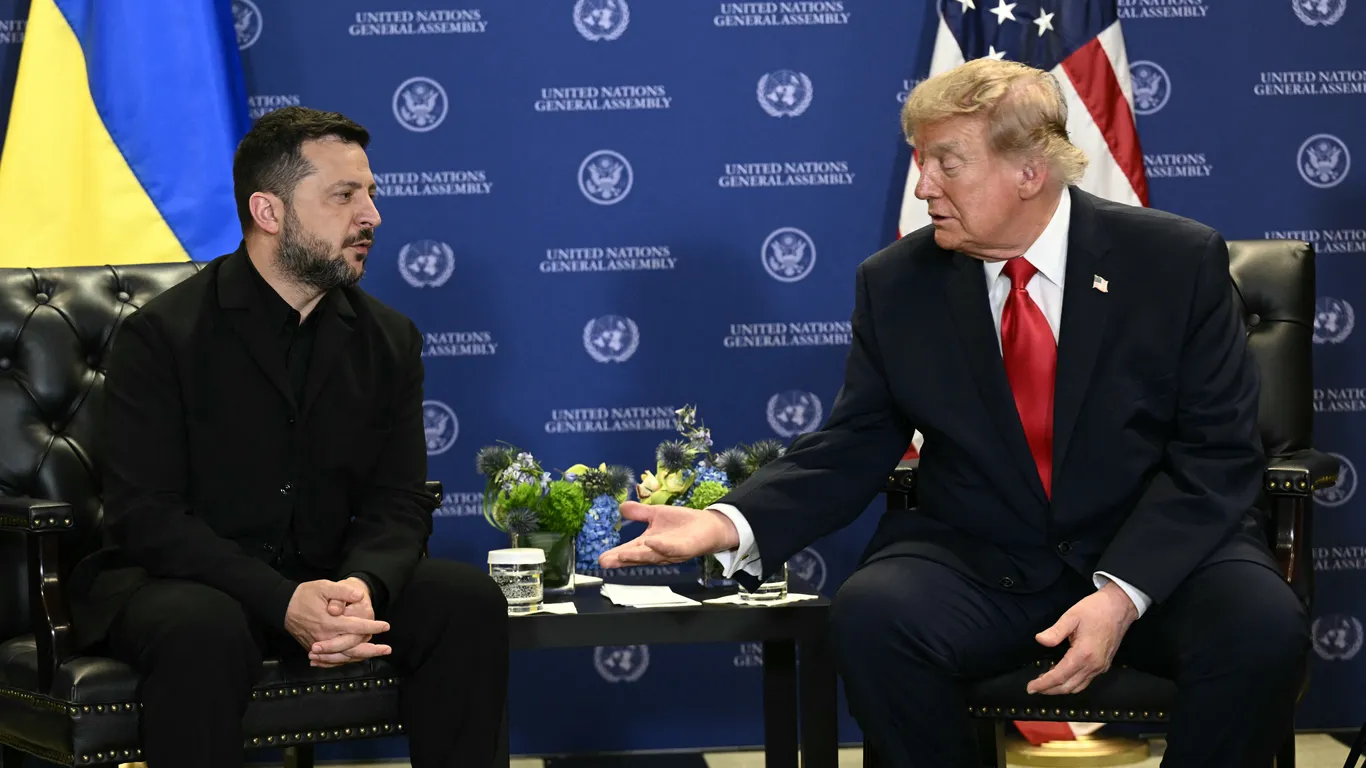
Trump defends Russian diesel deal and calls for Ukraine leadership change
A fuel agreement intended to ease high prices has triggered a clash with Ukraine over Russia's war funding, while analysts doubt it will significantly lower American prices.
84 sources · over 5 days
Ukraine Drone Strikes Hit Three Yandex Data Centers in Russia
Yandex said a drone attack shut down its data center in the Vladimir region, the third strike on the company's facilities in four days.
26 sources · over 4 days