
Emergency PHP Patches Trigger Website Shutdowns Across Europe and Beyond
Two critical flaws could let attackers run code on web servers, prompting precautionary shutdowns as operators install emergency fixes and Dutch websites begin returning online.
By Hushread Stories, written with AI from 49 outlets · First published 21 Oct 2026 · Chapter 2 of 2
Earlier: PHP releases emergency patches for two critical PHP2Shell security flaws
In brief
- PHP developers released emergency updates on October 21 to fix two critical vulnerabilities collectively known as PHP2Shell.
- The flaws could allow attackers without accounts to run their own code on affected web servers.
- European cybersecurity officials warned organisations unable to apply the fixes to consider taking their websites offline.
- Dutch government, municipal and hospital websites began returning online after precautionary shutdowns and the security update.
- Exploit attempts have emerged, leaving website operators under pressure to install the fixes as quickly as possible.
Timeline · 5 moments
Cloudflare announces protections against the PHP2Shell vulnerabilities
The Cloudflare Blog ↗Websites across several European countries go offline
Latest news, sport and opinion from the Guardian ↗EU officials advise unpatched websites to consider shutdowns
Sky News ↗PHP releases emergency patches as exploit attempts emerge
The Hacker News ↗Flaw details leak ahead of emergency PHP updates
Mashable Tech ↗How it started
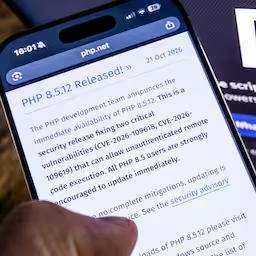
PHP developers released emergency security updates on October 21 after the discovery of two critical vulnerabilities collectively called PHP2Shell. The flaws could let an attacker without an account run code on a web server, according to The Hacker News.
The vulnerabilities are tracked as CVE-2026-109618 and CVE-2026-109619. The Cloudflare Blog said they affect all web servers running PHP 5.4 or later and identified Calif.io, Wiz, OpenAI and Quarkslab as the organisations that disclosed them.
The potential reach is unusually broad. CNET News Tech reported that up to 70% of websites could be affected. That is an estimate of potential exposure, not a count of websites successfully attacked.
How it unfolded
Details about the flaws leaked online on October 20, a day before the emergency updates, according to Mashable Tech. TechRadar reported that the premature disclosure prompted an early security advisory and an urgent upgrade warning.
On October 21, PHP issued fixes in versions 8.5.12, 8.4.27, 8.3.36 and 8.2.35, The Hacker News reported. Its coverage also described emerging exploit attempts, adding urgency to the patching effort.
European cybersecurity officials warned that organisations unable to apply the fixes should consider taking their websites down, according to Sky News. Germany's Federal Office for Information Security described the risk as extraordinarily high, DIE ZEIT reported.
Precautionary shutdowns followed across Europe. The Guardian reported that Belgian, Dutch, Finnish, French and German websites were among those taken offline. CBC Top Stories also reported Canadian government websites going offline.
By later coverage on October 21, Dutch websites were gradually returning. nu.nl reported that government, municipal and hospital websites were coming back online after being taken down as a precaution.
Where it stands
Patches are available, but the immediate task remains getting them installed. Deutsche Welle reported that PHP developers were urging immediate updates, while The Cloudflare Blog announced that it had deployed protections against PHP2Shell.
The reported outages should not automatically be read as evidence of successful attacks. Le Monde described websites being placed into maintenance following the emergency fixes, and Telegraaf reported precautionary shutdowns. Separately, The Hacker News reported exploit attempts, making the distinction between preventive disruption and actual compromise important.
What to watch
The next practical measure is how quickly operators apply the updates and restore services taken offline. Dutch sites have begun returning, according to nu.nl, but the supplied coverage does not establish how many websites remain unavailable or how many have been compromised.
There is also a question about the repair process before this week's emergency. The Next Web reported that the PHP Foundation said it had identified one of the flaws in 2024 but spent months unable to agree on a fix. That account raises a separate issue from today's patch rollout: why a known vulnerability remained unresolved.
More in Technology
All →
Eight eMudhra Certificate Keys Compromised, Prompting Browser Blocks and Indian Probe
Major technology companies are blocking compromised eMudhra certificates after researchers recovered dangerously weak private keys, exposing a flaw that could let attackers forge trusted web credentials.
15 sources · over 2 days
Anthropic introduces Claude Duet, a work-focused AI agent launching in preview
Claude Duet brings background tasks and connected apps to Anthropic's push into AI agents, but access remains limited as the company opens a research preview.
9 sources · today
Google brings Gemini Personal Intelligence to Android Auto for personalized driving help
Google is connecting its in-car assistant to personal information across its apps, adding tailored driving help as the Android Auto rollout begins and support for built-in systems approaches.
11 sources · today