
European Prosecutors Open Second Fraud Inquiry Into Spain's AVE Rail Funds
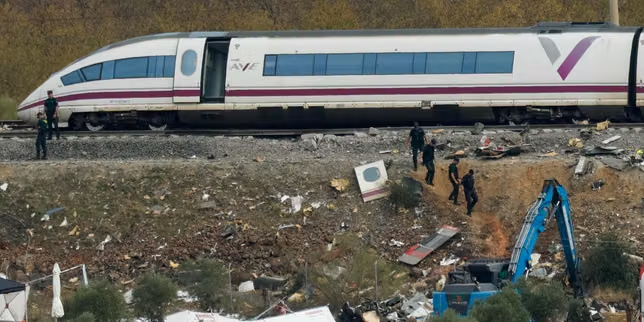
The investigation concerns EU money intended to improve the Madrid-Sevilla line's safety and signalling, following an October crash that killed 69 people.
By Hushread Stories, from 10 outlets · First published 6 Nov 2026
In brief
- The European Public Prosecutor's Office is investigating possible fraud involving European funding for Spanish railway infrastructure.
- The inquiry examines how €86 million in EU funds was used for work on the Madrid to Sevilla AVE line.
- An October crash on the railway line killed 69 people, according to reporting published on Friday.
- Separately, UGT has filed a complaint against Adif over leaked communications between railway controllers and train drivers.
- The investigation must establish whether funding was misused, and the supplied coverage reports no findings of fraud.
Timeline · 3 moments
European prosecutors examine use of €86 million
ABC ↗European prosecutors announce second inquiry into railway funding
ABC ↗UGT files complaint over leaked Urda accident recordings
Infobae ↗Update 7 Nov 2026, 0:39 am UTC
The latest ABC report says the inquiry is examining how €86 million in EU funding was used for work on the Madrid to Sevilla AVE line. The supplied coverage does not report findings of fraud or establish a link between funding and the crash.
How it started
An October train crash brought renewed scrutiny to Spain's railway infrastructure. The accident killed 69 people on a line whose renovation funding is now under investigation, according to Arab News.
The funding inquiry concerns the Madrid-Sevilla high-speed line. Le Monde reported that prosecutors are examining possible fraud affecting European funds intended for renewal and improvements to safety, signalling and communications systems.
How it unfolded
On November 4, Infobae reported that UGT had filed a complaint against Adif over the leaking of recordings between the Atocha railway traffic control centre and train drivers following the Urda accident.
That complaint concerns the handling of recorded communications, rather than the use of European funding. ABC described the leaks as a source of anger among Renfe workers and unions after the accident.
On November 6, the European Public Prosecutor's Office announced a second investigation into possible fraud involving EU funds for renewal of the Madrid-Sevilla high-speed line, according to ABC.
EL PAIS reported that the inquiry covers funding for renewal work and improvements to safety, signalling and communications. The supplied reports do not detail the first investigation or explain how the two inquiries connect.
Where it stands
The case remains an investigation into possible fraud, not an established finding that money was stolen or misspent. elEconomista.es described it as a second inquiry focused on European funding for Spanish railway infrastructure.
The inquiry follows the Urda accident, but the supplied coverage does not establish that any misuse of funds caused the crash. It also gives no amount allegedly misused, names no suspects and provides no timetable for findings.
What to watch
The central unresolved issue is whether EU money allocated to the line's renewal and safety systems was used as intended. The scope described by Le Monde makes the funding for signalling and communications part of that examination, alongside other safety improvements.
Further disclosures would need to clarify which expenditure is under scrutiny and how this second inquiry relates to the first. The supplied coverage does not identify specific investigative steps or forthcoming court dates.
More in World
All →
Pope León XIV Begins South America Tour Ahead of Argentina and Peru
The pope has begun his journey weeks after lung cancer surgery, as Argentina tightens security and Peru prepares for major public events and an expected economic boost.
36 sources · over 5 days
Russell Brand convicted of rape and sexual assault, with sentencing next
The London jury convicted Brand of four offences involving four women, while police continue investigating two further rape allegations and a judge has warned of a significant prison term.
55 sources · over 5 days
Kenyan cult leader Paul Mackenzie sentenced to 200 years for murders
The sentence covers the murders of 190 children and one adult, while reports link Mackenzie's cult to hundreds of other suspected deaths.
24 sources · today