
Five EU countries unveil Rwanda return hub for rejected asylum seekers
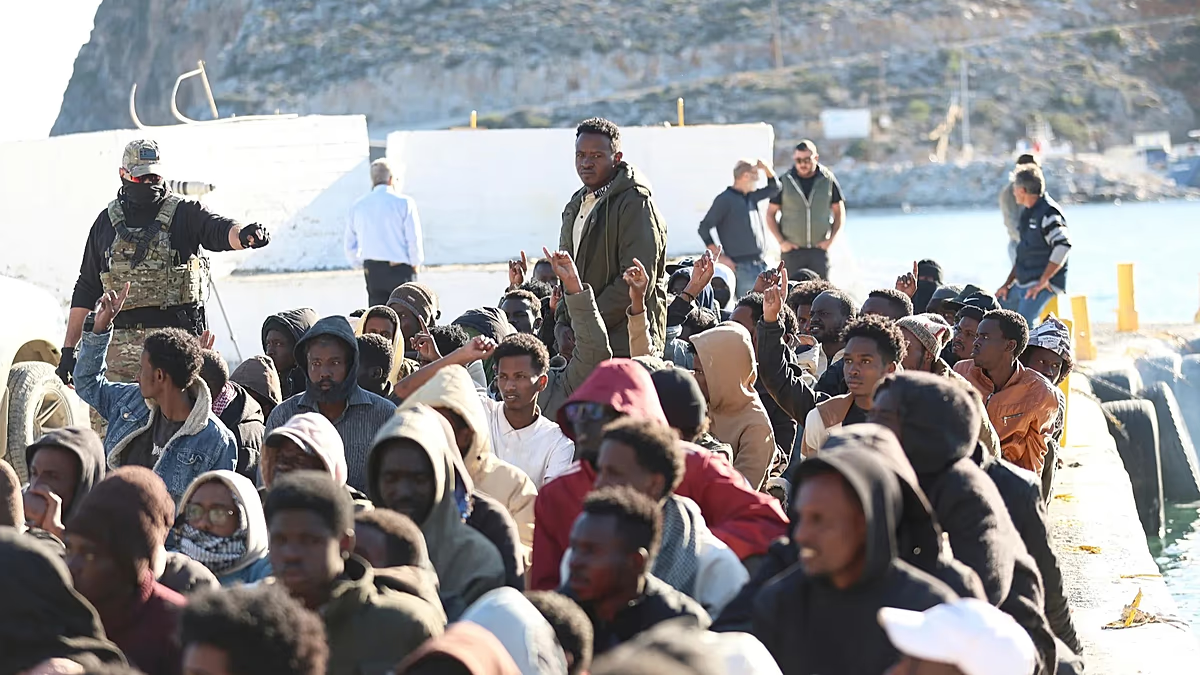
Germany, Austria, Denmark, Greece and the Netherlands plan a joint centre in Rwanda, expected to open by mid-2027 amid rights group criticism.
By Hushread Stories, from 42 outlets · First published 16 Nov 2026
In brief
- Germany, Austria, Denmark, Greece and the Netherlands plan a joint return hub in Rwanda for rejected asylum seekers.
- Coverage reports that an agreement with Rwanda has been reached, though it is not yet a finished deal.
- The five countries aim for the hub to begin receiving people from 2027.
- SPD lawmakers oppose the plan, citing a cost of 20 million euros for 40 places, and development minister Alabali Radovan has criticised it.
- The UN International Organization for Migration has offered operational support, while UN and human rights groups voice serious concern; the UK has not ruled out taking part.
Timeline · 14 moments
CBS reports agreement with Rwanda reached but not yet a done deal
CBS Top Stories ↗Al Jazeera reports five EU nations look to Rwanda for asylum seekers
Al Jazeera ↗Human Rights Watch condemns five-country plan to expel migrants to Rwanda
Le Monde ↗Dobrindt plans 20 deportations to Rwanda of non-Rwandan asylum seekers
DIE ZEIT | Nachrichten, News, Hintergründe und Debatten ↗UN rights chief Türk expresses concern over Rwanda return centre
Deutschlandfunk - Fortlaufende Nachrichten vom 24. August 2026 ↗Rights groups and Pro Asyl urge five EU states to drop Rwanda plan
DIE ZEIT | Nachrichten, News, Hintergründe und Debatten ↗Five EU countries confirm plans and open talks with Rwanda
CBC News ↗Rights groups and UNHCR warn against Rwanda deportation centre
Business Line - Home ↗SPD lawmakers oppose plan, citing 20 million euro cost
DER SPIEGEL - Schlagzeilen – Tops ↗Diplomats cite agreement, German government declines to confirm
DIE ZEIT | Nachrichten, News, Hintergründe und Debatten ↗Update 18 Nov 2026, 9:43 pm UTC
New coverage from Al Jazeera and CBS Top Stories on 18 November 2026 confirms the five-country plan but adds that an agreement with Rwanda has reportedly been reached, though CBS describes it as far from a done deal. The core facts in the published piece still hold: the hub is for rejected asylum seekers, the countries are Germany, Austria, Denmark, Greece and the Netherlands, and the deal is unsigned. Since the headline still matches the subject, no change to the title is needed.
Update 18 Nov 2026, 2:16 pm UTC
Coverage has moved on since the piece was written. A Deutschlandfunk interview from late August 2026 has Germany's development minister, Alabali Radovan of the SPD, criticising the return hub concept, and ZeroHedge News frames the plan as a revival of Britain's abandoned Rwanda scheme. The agreement is still unsigned and its details remain undisclosed, so the key points now note the political pushback inside Germany rather than treating the plan as settled.
Update 18 Nov 2026, 5:40 am UTC
New coverage from German and French outlets shows the plan has narrowed in one respect: German Interior Minister Dobrindt wants to send 20 rejected asylum seekers to Rwanda, and DIE ZEIT points out that the Bamf counts 367 people from Rwanda itself who are obliged to leave, while the 20 in the plan come from elsewhere. Le Monde reports that Human Rights Watch calls the five-country project a flagrant abandonment of responsibility and humanity. The core facts of the hub (five countries, Rwanda, 2027 start) still stand, so the headline and dek need no change.
Update 17 Nov 2026, 11:39 pm UTC
The five-country plan has moved from announcement toward active planning. GazetaPrawna.pl reports that Poland is only watching for now, and Arab News frames the hub as a deterrent to unauthorised entry. The UN International Organization for Migration has offered operational support, according to Expresso, which also notes the UN's concern about the centre. GB News reports the UK opposition's criticism that Labour scrapped its own Rwanda scheme. The headline and core facts still hold, so only the key points are revised below.
Update 17 Nov 2026, 5:30 pm UTC
The scheme has moved from an announced intention toward active talks. Five countries (Germany, Austria, Denmark, Greece and the Netherlands) have opened discussions with the Rwandan government, and the hub is now targeted to receive people from 2027. Internazionale reports that the agreement itself has not yet been signed and that costs and details remain undisclosed. Criticism has also sharpened, with UN human rights chief Türk voicing concern (Deutschlandfunk) and Pro Asyl urging Germany and the other four countries to drop the plan (DIE ZEIT).
Update 17 Nov 2026, 11:22 am UTC
The story has moved from a planned announcement to a confirmed joint initiative. Germany, Austria, Denmark, Greece and the Netherlands now say they are starting talks with Rwanda on a return hub, and CBC News and France24 both report the countries aim to begin sending rejected asylum seekers from next year. The core facts in the published piece still hold, but the framing of the scheme as an unfinished deal is now out of date, so the key points have been revised to reflect that the talks are underway.
Update 17 Nov 2026, 5:21 am UTC
The announcement has now moved from expectation to a formal joint statement. Coverage from Euronews, Al Jazeera and CNN Brasil reports that Germany, Austria, Denmark, Greece and the Netherlands have unveiled the plan, with the centre expected to open in mid-2027 following final talks with Kigali. The Independent and Il Post both noted the arrangement is still being negotiated in detail, and Der Spiegel reported SPD lawmakers object to the cost. The headline and key points below are updated to reflect that the deal is now announced, not merely expected.
How it started
For several years, European governments have looked for somewhere to send rejected asylum seekers who cannot be returned to their home countries. The idea of processing or holding them outside the bloc has moved from fringe proposal to serious policy.
A recent change in EU rules helped. Deutsche Welle reported that new EU regulations ease deportations and allow return hubs to be set up outside the bloc. That gave interested governments a legal footing to start talks.
There was also a cautionary precedent. Several outlets pointed to the UK's earlier Rwanda plan, which according to Deutsche Welle fell apart over legal issues. GB News noted that the Labour government scrapped it on its first day in office.
How it unfolded
By 16 November 2026, a wave of reports said five countries were in the final stage of negotiations with Rwanda. Euronews named Denmark, Austria, Germany, the Netherlands and Greece, and said a first pilot could be announced on Monday and run from mid-2027.
Yahoo UK News reported that the five would unveil the deal on Monday afternoon, describing it as a migrant deportation camp. Deutschlandfunk said the countries want to send their first rejected asylum seekers to a special return centre in Rwanda next year, and attributed the announcement to the German interior minister.
Not everyone confirmed it. Die Zeit wrote that diplomats said several EU states had agreed on the hubs, but the German government would not confirm this and said it was still examining the option.
Opposition surfaced quickly inside Germany. Der Spiegel reported that SPD members of the Bundestag oppose the project, calling it questionable and pointing to a price of 20 million euros for 40 places. The SPD is part of the governing arrangement, which makes the dissent notable.
Rights groups and legal experts also weighed in. Reuters said critics argue Rwanda's human rights record makes it unsuitable, and that the facilities built for the UK's abandoned scheme could be repurposed. The Times likewise suggested the UK's Rwanda asylum hostel might get a new lease of life under the EU plan.
Where it stands
As of the latest reports, the scheme has not been formally detailed. Coverage describes an announcement that was expected rather than a finished agreement, and the German government's reluctance to confirm details suggests the text is still being settled.
The Independent reported that the UK failed to rule out taking part in the EU scheme, a notable turn given Britain's own abandoned attempt. TGcom24 added that the project is also meant to counter human traffickers, while noting that criticism of the strategy is building.
What to watch
The first test is the announcement itself. Readers should look for the actual terms: how many people the hub would hold, who pays, and what legal status those sent there would have. The 40-place, 20-million-euro figure reported by Der Spiegel is a number to check against official detail.
The second is politics and law. The SPD resistance in Germany could complicate approval, and legal experts have already raised questions about whether the arrangement can survive court challenges, as the UK's version did not. Whether the mid-2027 start date holds will depend on both.
More in Politics
All →
Musk Says He Feels 'Pretty Foolish' After Nearly $500 Million Midterm Spending
The billionaire said he is not MAGA as reported figures for his Republican midterm spending range from about $440 million to nearly $500 million.
46 sources · today
House Democrats Nominate Hakeem Jeffries for Speaker, 251 Votes to 11
Jeffries is set to become the first Black Speaker in U.S. history when the new Congress convenes in January.
43 sources · over 4 days
Judge Ana Reyes temporarily blocks closure of East Potomac Park golf course for Trump redevelopment
A federal judge stopped the planned 15-month closure of a public D.C. park hours before it was due to start, putting Trump's golf course makeover on hold while the lawsuit continues.
24 sources · over 6 days