
French Students Resume School Protests Despite Government Pledge to Act
School blockades and marches continued on Thursday after the government suspended police stun grenades and promised an education response, without offering additional funding.
By Hushread Stories, written with AI from 63 outlets · First published 8 Oct 2026 · Chapter 5 of 5
Earlier: France's Student Protests Continue After Government Suspends Police Stun Grenades
In brief
- French students are demanding action on teacher shortages, deteriorating school buildings, overcrowding and inadequate education funding.
- A fifteen year old boy lost his hand in Lens, prompting a suspension of police stun grenades.
- More than 6,500 people, most of them minors, have been arrested since the student movement began.
- Students resumed marches and school blockades on Thursday despite government promises to improve their learning conditions.
- Prime Minister Sébastien Lecornu promised a response by the end of October, but offered no additional money.
Timeline · 7 moments
Police use tear gas outside barricaded Paris school
The Independent ↗Students resume school blockades and marches across France
South China Morning Post ↗Lecornu promises response by the end of October
World News CNA ↗School heads call for negotiations and support students
Franceinfo ↗France suspends stun grenades after teenager loses hand
BBC - Home ↗Damaged schools leave thousands without classroom lessons
Adnkronos - ultimoratop ↗Nationwide demonstrations draw hundreds of thousands into streets
The Conversation ↗How it started
The protests began with complaints about the basics of schooling: missing teachers, overcrowded classrooms and buildings in poor condition. Students have been demanding more resources for education, according to The Hindu.
Paul Éluard High School, in a suburb of Paris, was among the first schools where students blockaded their campus over poor classroom conditions, NYT World News reported. nu.nl said students had been demanding solutions to teacher shortages and investment in deteriorating buildings for weeks.
The movement widened beyond students. Parents, teachers and trade unions joined the nationwide demonstrations, according to The Conversation.
How it unfolded
On October 6, hundreds of thousands of people demonstrated across France. The turnout figures differ: The Conversation reported 450,000 participants, while giving the French government's count as 250,000. TGcom24 put participation above 400,000.
By October 7, the consequences extended well beyond interrupted classes. Adnkronos reported that 24 schools could not reopen after fires and looting, leaving almost 30,000 students without in-person lessons. Euronews reported more than 6,500 arrests since the movement began, most involving minors.
On October 7, France suspended police use of stun grenades at student protests after a 15-year-old boy lost his hand earlier that week in Lens. Interior Minister Laurent Nuñez requested the pause, the BBC reported. The boy had been handling a police grenade, according to Euronews.
That evening, Prime Minister Sébastien Lecornu denied that police had been ordered to confront students and promised a plan addressing their concerns by the end of October, World News CNA reported. He offered better learning conditions but no additional financial support, according to ARD Tagesschau.
On October 8, students again blockaded schools and marched through cities, despite the government's pledge to address teacher shortages and dilapidated buildings, South China Morning Post reported. Police used tear gas outside a barricaded high school in northeastern Paris, according to The Independent.
Where it stands
The government's announcements have not ended the movement. Thursday brought another nationwide day of action after Lecornu announced five areas of work in his Wednesday evening address, according to Franceinfo. Deutschlandfunk reported that protests continued, although fewer schools were blockaded.
The stun grenade suspension is temporary. Amnesty International has called for a permanent ban on all stun grenades in protest policing. Meanwhile, the education dispute remains unresolved: the government has promised improvements, but has not offered additional money, according to ARD Tagesschau.
What to watch
The next concrete deadline is the end of October, when Lecornu has promised a response to students' concerns, according to World News CNA. The main unresolved issue is what those measures will deliver for staffing and school buildings without additional funding.
School leaders are also pressing for talks. The principal union representing school heads formally called on the government to open negotiations on October 7 and backed students' demands, Franceinfo reported.
More in World
All →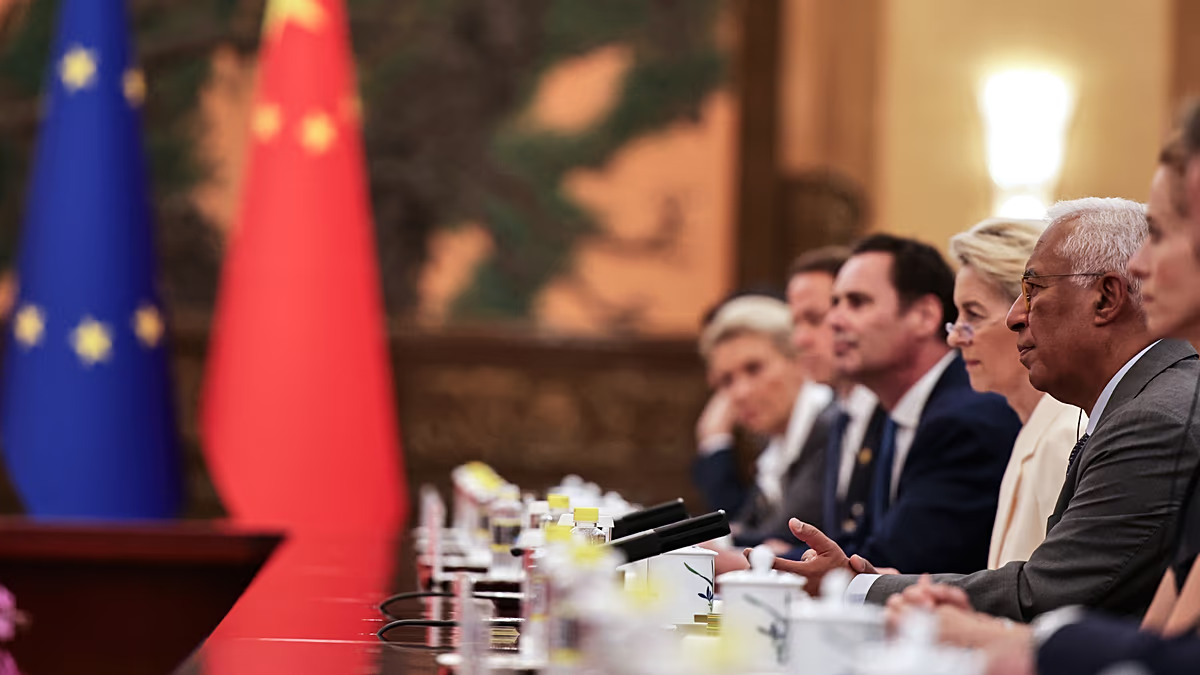
EU and China Begin Beijing Talks as Trade Tensions Rise
Maros Sefcovic opened two days of talks in Beijing, calling the trade deficit unsustainable and pressing for better market access and stronger economic security.
20 sources · over 4 days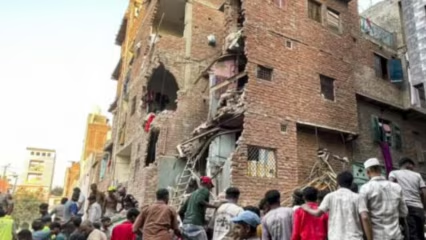
Five Killed as Seemapuri Building Collapses in Delhi, Rescuers Search Debris
Two more bodies were recovered on the second day of rescue operations after a building collapsed in Delhi's Seemapuri.
8 sources · today
South Korea recalls ambassador from Ukraine over North Korean prisoners
Seoul's decision escalates a dispute over Kyiv's public disclosure that two North Korean prisoners were transferred to South Korea, which Seoul says put their families at risk.
8 sources · today