
Hormuz Ship Attacks Reach Record High as Iran Claims Control
A container ship sinking and another reported tanker fire have deepened shipping risks, while Iran and the United States dispute control of the waterway and oil exports slow.
By Hushread Stories, written with AI from 38 outlets · First published 16 Oct 2026 · Chapter 5 of 5
Earlier: Hormuz Shipping Threat Remains Severe After Ship Sinkings and Tanker Fire
In brief
- Twelve vessels were struck near Hormuz in one week, according to analysis of British maritime agency data.
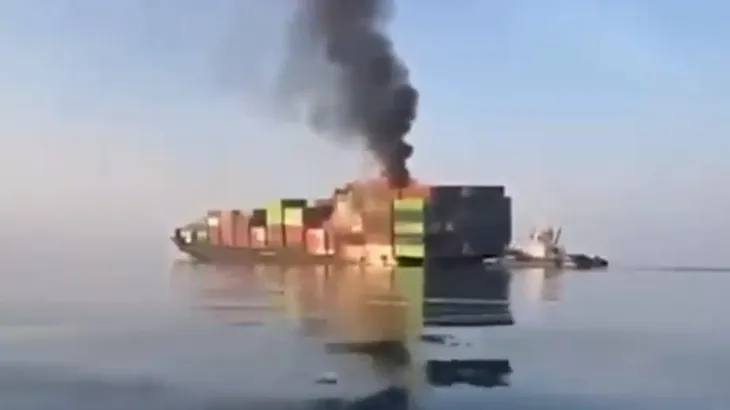
- Singapore authorities confirmed a container ship sank after a projectile strike, with all 21 crew members evacuated.
- Iranian forces attributed a container ship sinking to a naval mine, conflicting with Singapore's account of a projectile.
- Iran says passage requires coordination, while US Central Command has rejected Iranian claims of control over Hormuz.
- Further attacks threaten commercial shipping and oil exports, while some Singapore vessels are expected to continue transiting.
Timeline · 8 moments
Analysis finds twelve vessels struck in one week
BBC News - World News ↗US Central Command rejects Iranian claims of control
Middle East Eye ↗Iran declares strait closed and demands transit coordination
Mehr News (English) ↗Iran reports burning tanker in restricted waters near Hormuz
The Independent ↗Iranian officials describe strategy to keep oil prices high
Japan Times ↗Singapore confirms container ship sinking after projectile strike
BBC - Home ↗IRGC Navy threatens US warships approaching Hormuz
Middle East Monitor ↗UK maritime agency reports missile hits on two ships
NDTV News - World-news News ↗How it started
The latest attacks follow months of wartime restrictions and strikes on shipping. According to NDTV, the war began in late February with US and Israeli strikes against Tehran. Iran has since claimed control of the Strait of Hormuz and regularly targeted ships attempting passage without its permission.
The recent escalation has focused attention on commercial vessels. Middle East Eye reported on October 13 that Iranian missile and drone attacks on ships in and around the strait had reached their highest wartime intensity during the two weeks to October 11.
How it unfolded
On October 13, NDTV reported that two ships had been hit by missiles in the strait, citing a UK maritime agency. Separately, Middle East Monitor reported an IRGC Navy threat to sink US warships approaching the waterway.
On October 14, Singaporean authorities said the Singapore-flagged container ship GFS Pride had sunk after being struck by an unknown projectile, according to the BBC. All 21 crew members were evacuated. CNA reported that two Singapore-registered container vessels had been struck and that everyone aboard both ships was safe.
Iranian accounts described a different cause. IRNA reported the IRGC Navy's statement that a container ship carrying more than 2,500 containers had hit a naval mine, caught fire and sunk south of the strait. The supplied reports do not resolve the discrepancy between the mine claim and Singapore's account of a projectile.
The same day, The Japan Times reported that two senior Iranian officials described a strategy intended to keep oil prices high. Experts quoted by Iran International said the escalation might be an attempt to exploit US restraint before the midterm elections and disrupt recovering Gulf oil shipments. Those explanations are attributed assessments, not established motives for each attack.
On October 15, Iran's army reported an oil tanker burning while attempting passage through a restricted area, according to The Independent. Euronews reported Iran's claim that the unnamed vessel had entered a prohibited zone with its tracking systems disabled. Those accounts did not establish what caused the fire.
Also on October 15, Mehr News reported that Iran's deputy army coordinator had declared the strait closed and said transit required coordination. Middle East Eye reported that US Central Command rejected Iranian claims of control.
Where it stands
By October 16, the scale of the escalation was clearer. BBC Verify, analysing data from a UK maritime agency, found that 12 vessels had been struck in a week. Its report described ship attack reports near Hormuz as reaching a record high while oil exports slowed.
Control remains disputed. Iran's Army Commander-in-Chief Amir Hatami said the strait was under the "full supervision" of the army and IRGC, according to Middle East Eye. That assertion sits alongside the US rejection of Iran's control claims, rather than establishing who can guarantee safe passage.
The danger has not ended commercial transit altogether. Maritime experts told CNBC that Singapore vessels were expected to continue using the strait despite the attacks on two container ships.
What to watch
Further vessel reports will help establish whether attacks remain at their recent intensity and whether oil shipments continue to slow. The causes of the reported sinking and tanker fire also need clarification, particularly where Iranian claims differ from Singaporean authorities' account.
The practical test of the competing control claims is whether commercial ships can pass safely. Iran has demanded coordination, but the continued transit anticipated by experts in CNBC's reporting leaves shipping exposed to the risk of further attacks.
More in World
All →
Imran Khan Told to Leave India After Mumbai Election Protest
The Bollywood actor faces an October 28 departure deadline and plans a court challenge, putting the immigration consequences of his participation in a political protest under scrutiny.
14 sources · over 6 days
Delhi Central Park Shut Ahead of CJP March as Police Restrict Gathering
Central Park will close on October 16 and 17 as police warn against gathering for CJP's Tiranga march, while offering to allow only 11 people carrying flags.
9 sources · today
China and North Korea Open Yalu River Bridge After 12-Year Delay
The new road crossing opens as China and North Korea expand trade, ending a prolonged wait over infrastructure intended to strengthen links between the neighbours.
20 sources · over 3 days