
India Rejects Hague Court Order on Indus Waters Treaty With Pakistan
India has dismissed a Permanent Court of Arbitration ruling requiring it to uphold the Indus Waters Treaty with Pakistan, escalating a long-running dispute over water rights and regional stability.
By Hushread Stories, from 17 outlets · First published 31 Aug 2026
In brief
- India rejected a Hague court ruling on August 31, 2026, regarding the Indus Waters Treaty with Pakistan.
- The court stated India must uphold treaty obligations and limit hydroelectric projects in Kashmir.
- India claims the court lacks jurisdiction and labeled the ruling 'illegal' and the panel 'illegally constituted'.
- Pakistan insists the treaty remains binding and seeks international support for its interpretation.
- Future negotiations and the impact on water-sharing projects remain uncertain amidst ongoing tensions.
Timeline · 7 moments
India's rejection casts doubt on treaty's future
Deutsche Welle ↗Pakistan PM: Water cannot be weaponised
India Today ↗Pakistan says Indus Waters Treaty remains fully in force
Trend News Agency ↗India calls arbitration panel 'illegally constituted'
Mint ↗India rejects Hague court ruling, cites lack of jurisdiction
India Today ↗Court orders India to limit hydroelectric work in Kashmir
South China Morning Post ↗Permanent Court of Arbitration rules India must uphold treaty
Deutsche Welle ↗How it started
The Indus Waters Treaty was signed in 1960 between India and Pakistan, brokered by the World Bank. It governs the use and distribution of the Indus River system, which is crucial for both countries' agriculture and drinking water.
Disputes have emerged over the years, especially related to India's construction of hydroelectric projects in Kashmir. Pakistan has repeatedly sought third-party arbitration, arguing that some Indian projects violate the treaty.
Tensions escalated further after India suspended parts of the treaty following a deadly attack it attributed to Pakistan. This led to renewed legal and diplomatic efforts by Pakistan to enforce the treaty through international mechanisms.
How it unfolded
On August 31, 2026, the Permanent Court of Arbitration in The Hague issued a ruling that India must uphold its obligations under the Indus Waters Treaty and limit work on certain hydroelectric projects in Kashmir, according to Deutsche Welle and the South China Morning Post. The court stated the treaty remains fully in force and India cannot unilaterally withdraw from it.
India immediately rejected the ruling, arguing that the court lacks jurisdiction over the matter. Outlets such as India Today and Mint reported that Indian officials called the arbitration panel 'illegally constituted' and said India never recognized the court's authority in this dispute.
Pakistan responded by insisting that the treaty remains binding and in force, according to Trend News Agency and Al Jazeera. Pakistani Prime Minister Shehbaz Sharif publicly warned that water should not be used as a weapon and called for responsible management of shared water resources.
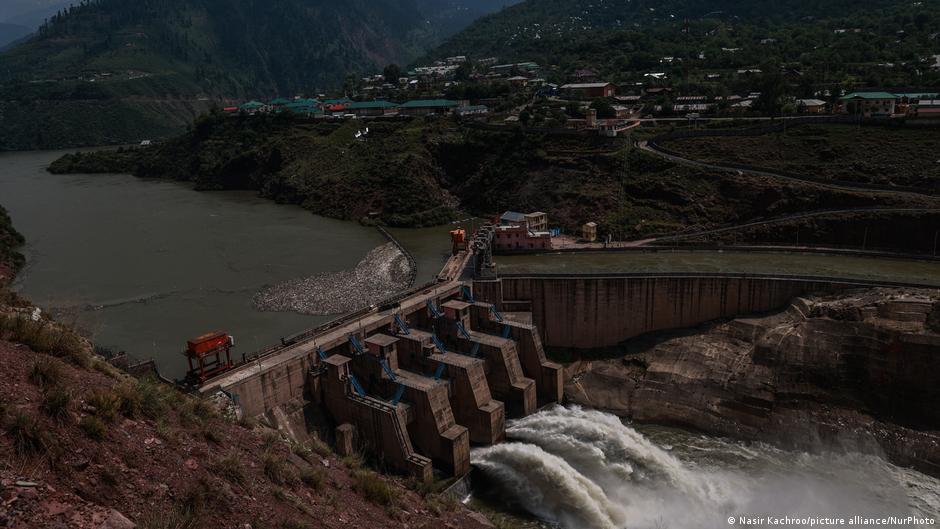
The issue has gained added significance as India develops major hydropower projects on the Chenab River and its tributaries, with both sides using international forums to press their positions. Despite the court's directive, India has maintained its position against third-party arbitration.
Where it stands
India continues to reject the Hague court's ruling, maintaining that it will follow the treaty's obligations on its own terms but not accept outside arbitration. The government has labeled the court's award 'illegal' and reiterated that the court has no jurisdiction.
Pakistan, meanwhile, asserts that the Indus Waters Treaty is still fully in effect and continues to seek international support for its interpretation of the agreement. The standoff has heightened uncertainty around ongoing and future water-sharing projects between the two countries.
What to watch
It remains to be seen whether either side will change its approach or agree to new talks. The future of major hydropower projects in Kashmir, and whether international mediation will have any practical effect, are still open questions. Diplomatic and legal maneuvering is likely to continue, with potential impact on millions who depend on the Indus river system.
More in Politics
All →
Trump Backs Ramaswamy Ad as Ohio Governor Calls for Its Removal
An attack ad featuring Amy Acton's estranged mother has split Republicans, with President Donald Trump defending it as Ohio Gov. Mike DeWine urges its removal before November's election.
36 sources · over 5 days
Milei's Madrid Visit Sparks Sánchez Clash as Argentine Opposition Seeks Unity
Javier Milei's attacks on Pedro Sánchez turned his Madrid visit into a political confrontation, while Argentina's opposition moved toward a common congressional strategy ahead of the 2027 elections.
13 sources · over 6 days
Lula and Flávio Bolsonaro Take Brazil's Election Fight From Debate to Court
Days before Brazil's October 25 runoff, the rivals are seeking each other's disqualification after a bitter televised debate, while polls show a closely contested race.
37 sources · over 8 days