
India Supports UN World Map Resolution but Objects to J&K, Ladakh Portrayal
India has backed a United Nations resolution for a new world map but raised strong objections to how Jammu and Kashmir and Ladakh are depicted, demanding corrections to align with its official stance.
By Hushread Stories, written with AI from 8 outlets · First published 6 Sept 2026
In brief
- India voted in favor of a United Nations resolution proposing a new world map projection.
- The Indian government expressed concerns about the inaccurate depiction of Jammu and Kashmir and Ladakh on the draft map.
- India insists that any global map must represent Jammu and Kashmir and Ladakh according to its official national boundaries.
- The Ministry of External Affairs warned that any misleading representation of these regions would be unacceptable to New Delhi.
- India is seeking clarification from the United Nations over the map's depiction of its sovereign territories before final adoption.
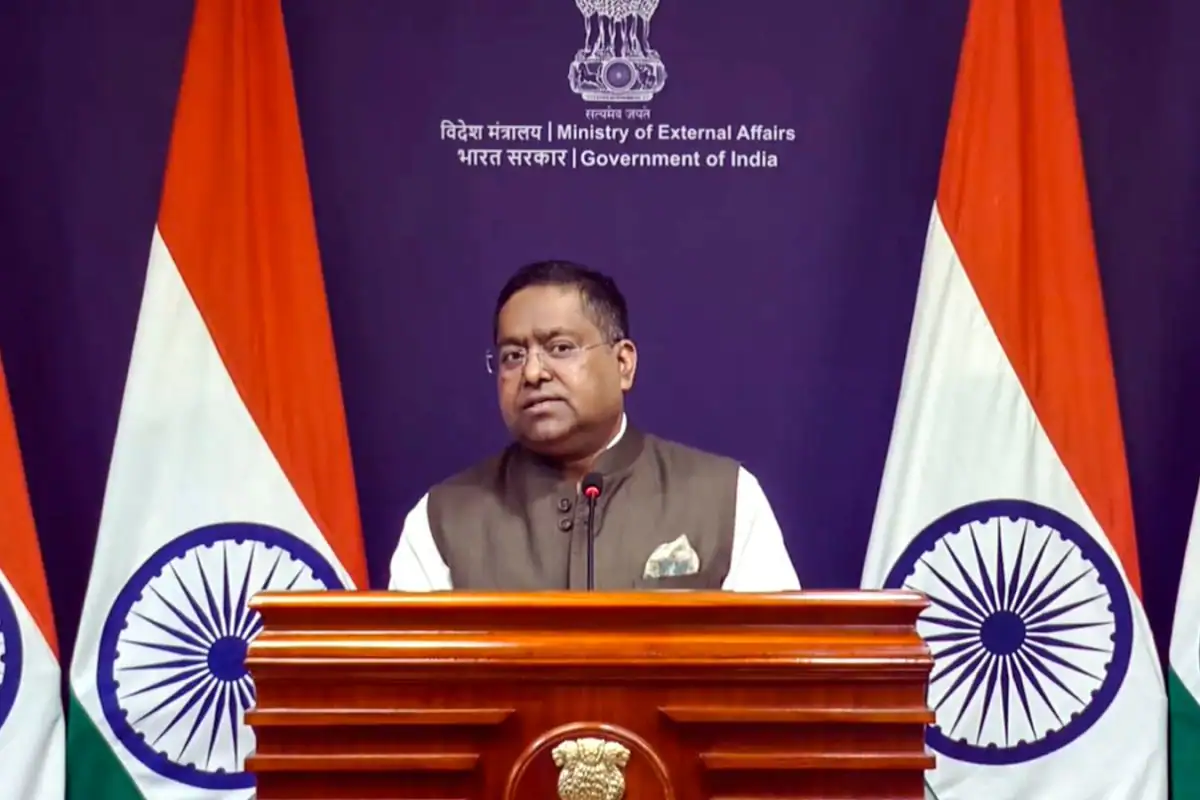
Timeline · 4 moments
India backs African Union's map reform initiative
India News ↗Ministry of External Affairs issues official clarification
Mint ↗India raises objection to J&K and Ladakh depiction
Top World News- News18.com ↗UN proposes new world map, India votes in favor
Times of India Top Stories ↗How it started
The United Nations recently proposed a new world map, aiming to address concerns over current map projections and their distortions. This initiative received broad support from several countries, including India, which has a longstanding interest in how its national boundaries appear on international platforms.
For India, the portrayal of its territory, especially Jammu and Kashmir and Ladakh, has always been a sensitive issue. The Ministry of External Affairs has consistently maintained that any international map must align with its official boundaries. This context set the stage for India's response when the new UN-backed map was introduced.
How it unfolded
On September 6, 2026, the United Nations put forward a resolution to adopt a new world map projection, which is part of a broader effort to correct perceived imbalances in global cartography. India joined other nations in supporting the resolution, emphasizing the importance of fair and accurate mapping.
Shortly after the vote, India's Ministry of External Affairs issued a statement clarifying its position. While supporting the resolution in principle, India strongly objected to the way Jammu and Kashmir and Ladakh were depicted on the draft map. Officials stated that any misrepresentation of these union territories would not be acceptable to New Delhi.
India's position was echoed across major national outlets. Reports highlighted that India had also backed the African Union's push to rebalance the world map, which involves using an equal-area projection that changes the relative size of continents. However, Indian officials reiterated that support for such reforms must not come at the cost of misrepresenting its territorial claims.
The Ministry of External Affairs called on the United Nations to ensure that any final version of the map accurately reflects India's official boundaries. India also sought further clarification from the UN regarding how its sovereign territory would be depicted if the map is formally adopted.
Where it stands
As of now, India has made its position clear: it supports the idea of a corrected, more equitable world map but will not accept any depiction that challenges its territorial claims over Jammu and Kashmir and Ladakh. The Indian government has communicated these concerns directly to the United Nations.
The UN has not yet finalized the new map, and discussions are ongoing. India is awaiting a response to its request for clarification and is closely monitoring the process to ensure its concerns are addressed before the map is officially adopted.
What to watch
The next steps will hinge on how the United Nations responds to India's objections and whether changes are made to the draft map. The final adoption of the map could see further debate if India's concerns are not resolved, especially given the sensitivity around the depiction of Jammu and Kashmir and Ladakh.
More in Politics
All →
Lula and Flávio Bolsonaro Take Brazil's Election Fight From Debate to Court
Days before Brazil's October 25 runoff, the rivals are seeking each other's disqualification after a bitter televised debate, while polls show a closely contested race.
36 sources · over 7 days
Ramaswamy's Campaign Makes Amy Acton Ad and Plans $4 Million Buy
Vivek Ramaswamy confirmed his campaign produced the attack ad featuring Amy Acton's estranged mother and plans to spend $4 million airing it.
27 sources · over 4 days
Iran's Parliament Approves Mehrdad Akhlaghi Ketabchi as New Defense Minister
The parliamentary vote confirms a veteran defense industry official as minister after his predecessor's killing, with Akhlaghi already addressing military capabilities and issuing warnings to the United States.
22 sources · over 5 days