
Iran and US Trade Strikes as Hormuz Tanker Attacks and Gulf Base Raids Escalate
Tankers are burning in the Strait of Hormuz and Iranian drones are hitting US sites in Bahrain and Kuwait, ending a two-month lull while diplomacy with mediators continues.
By Hushread Stories, from 89 outlets · First published 20 Nov 2026 · Chapter 3 of 3
Earlier: US and Iran trade strikes as Gulf attacks and Hormuz tanker blasts mount
In brief
- Iran fired on a US air base in Kuwait and targets in Bahrain on 18 November after a US strike on Qeshm Island.
- Kuwait said its air defences intercepted the drones with no damage reported, the third interception of Iranian attacks there in a week.
- Iran's navy and the IRGC say several tankers caught fire after hitting mines on what they call unauthorized routes through Hormuz.
- Iranian outlets reported two supertankers carrying more than 4 million barrels of crude exploded after hitting mines near the strait's southern coast.
- Trump is weighing renewed strikes, while Iran readies a tanker convoy at Kharg Island to test a US naval blockade.
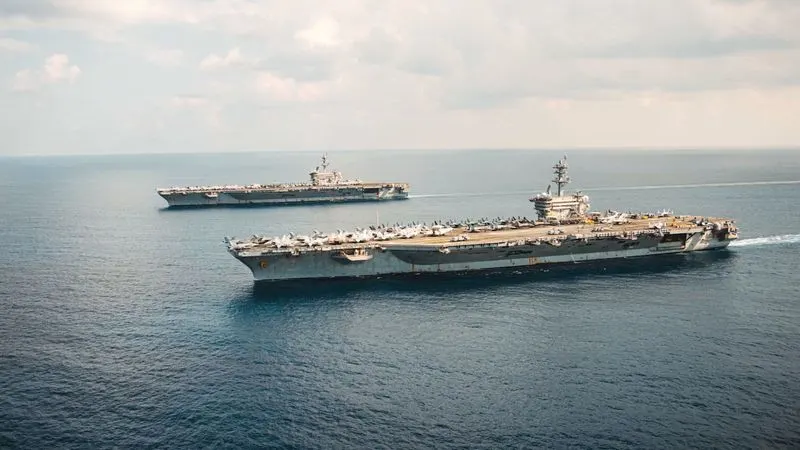
Timeline · 8 moments
Iran readies tanker convoy at Kharg Island
Euronews ↗IRGC warns Bahrain monarchy over US Fifth Fleet
foxnews ↗IRGC says two supertankers with 4 million barrels exploded
Press TV (English) ↗Trump weighs new strikes as Israel presses
NYTimes.com Home Page (U.S.) ↗Iran says three tankers burn after hitting mines
Middle East Eye ↗Iran fires on US air base in Kuwait
Reuters ↗US strikes Qeshm Island after Iran targets Bahrain radar
France24 ↗Trump says Hormuz should be American territory
News ↗How it started
The current confrontation sits inside a war that Reuters describes as nine months old, with Iran and the US still locked in a fight over who controls the Strait of Hormuz.
The argument over the waterway has been building since late summer. On 23 August, Trump said the strait should be declared American territory, which drew a sharp response from Iranian officials. Two days later the US made claims about clearing mines, and Iran replied that the strait would reopen only if Washington met its conditions.
By the end of August the rhetoric had turned physical. The US struck the Iranian island of Larak on 31 August, and on 2 September Iran's IRGC launched strikes on US bases after an American attack on a wedding ceremony in Iran. In mid-September an oil tanker hit mines in the strait and exploded, and the IRGC claimed a separate attack on a Panama-flagged tanker that the US disputed.
How it unfolded
The latest round began in the days before 18 November, when Iran repeatedly targeted US facilities in Bahrain. AP, via Top Stories, reported that Iran had gone about two months without such attacks before that.
On Tuesday 17 November, France24 reported, Iran said it had targeted a US military radar system in Bahrain, and the US responded by striking an Iranian missile launch site on Qeshm Island. This happened despite talks involving mediators Oman and Qatar.
Iran answered early on Wednesday. Reuters reported that Tehran said it hit US drone and missile sites in Kuwait overnight. Hereford Times reported that Kuwait's air defences intercepted drones aimed at Ali Al Salem air base with no damage, and that Bahrain also intercepted several attacks. SBS noted this was the third time in a week Kuwait had intercepted Iranian aerial attacks, and the first known Iranian attack on the country since September.
At sea, Middle East Eye reported that Iran's navy said three oil tankers caught fire and were disabled after hitting naval mines east of Hormuz on Wednesday. NDTV added that the IRGC said passage through the waterway must be coordinated with Iranian authorities. On 19 November the IRGC said two supertankers carrying more than 4 million barrels of oil exploded after hitting mines, according to Press TV and Tasnim. GB News reported a tanker crewed by 24 Indian nationals was engulfed in flames.
The rhetoric hardened as well. Fox News reported the IRGC warned that Bahrain's monarchy faces an existential threat as Iranian drones and missiles targeted US installations there. Gulf News reported a Riyadh skyscraper was damaged and a tanker hit near Oman.
By 20 November Al-Monitor reported fresh IRGC threats of infrastructure attacks beyond the Middle East, and ZeroHedge reported another tanker attacked in Hormuz.
Where it stands
The fighting has not tipped into all-out war. Al Jazeera reported that analysts warn the current status quo could break into full conflict, even though both sides have so far avoided it.
Shipping remains badly disrupted. Accounts of who is responsible differ. Iranian outlets describe the tanker fires as vessels striking mines on unauthorized routes, while The New York Times described unrelenting Iranian attacks on ships, including a strike on a vessel that had already been disabled. The Jerusalem Post quoted a US source saying Iran is using deadlier missiles against ships.
Small vessels are still moving oil. ZeroHedge, citing OilPrice.com, reported that smaller tankers moved the most crude out of the strait in October since the war began, even as Iran targets supertankers.
What to watch
The first question is Washington's next move. The New York Times reported that Trump is weighing new strikes as Israel presses for action, and that warnings about Iran rebuilding its missile stockpile have divided his administration.
The second is the blockade. Euronews reported that more than 14 tankers have been assigned crews and Iranian flags at Kharg Island, which handles up to 90 percent of Iran's crude exports, with a convoy expected to head out to test the US blockade. Times Now reported Iran has warned that any US Navy move against the convoy will be met with attacks on oil and gas infrastructure.
More in World
All →
Indian national Nikhil Gupta sentenced to over 19 years in US plot to kill Sikh separatist
A New York judge has handed down a 235-month term in a murder-for-hire case that US prosecutors tied to an Indian government official, putting a diplomatic fault line back in the spotlight.
15 sources · today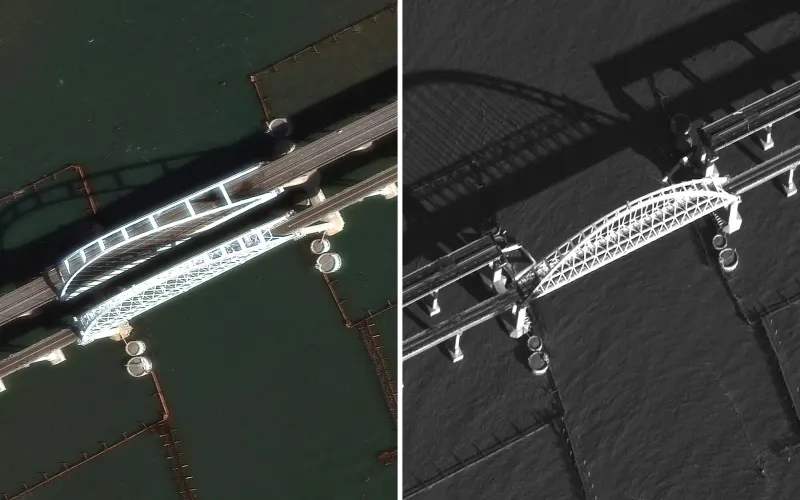
Ukraine hits Crimea bridge three times in a week; Russia strikes Kyiv bridges
Russia's retaliation on Kyiv has now killed at least eight civilians according to Zelenskyy, as Moscow and Kyiv trade heavy strikes.
65 sources · over 5 days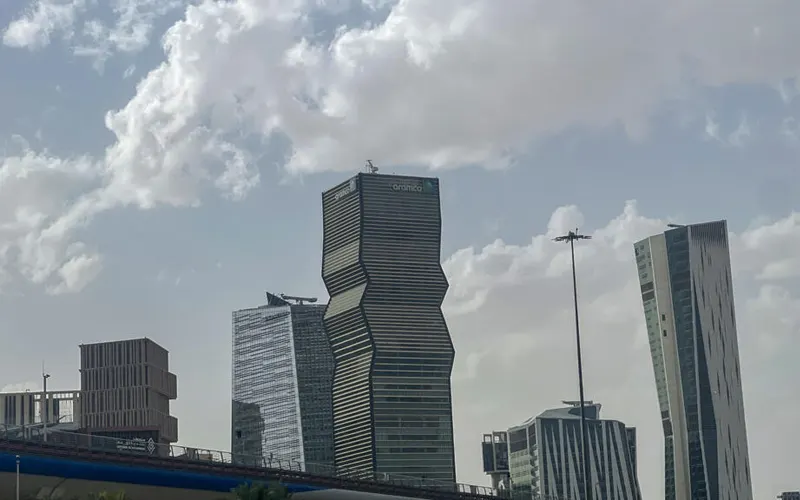
Houthis Close on Aden and Hit Riyadh Wealth Fund Tower
Houthi forces are pressing toward Yemen's interim capital while striking Saudi Arabia's financial heart, and both sides are now threatening each other's ports, raising the risk of a wider Red Sea conflict.
36 sources · over 6 days