
Iran Reports Four Tankers Ablaze as Hormuz Attack Accounts Diverge
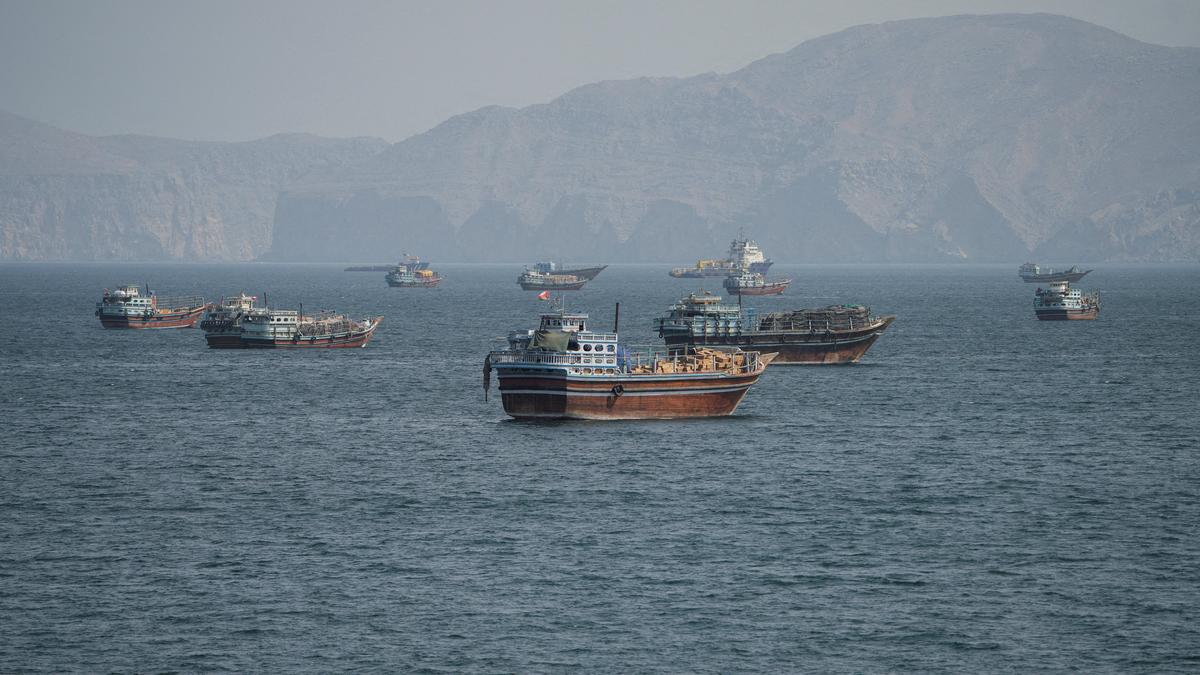
Iran reports four tankers burning in the Strait of Hormuz, while separate accounts describe attached explosives and rescues, challenging US claims that shipping routes are clear.
By Hushread Stories, from 28 outlets · First published 31 Oct 2026 · Chapter 2 of 2
Earlier: Iran Reports Tankers Hitting Mines as Hormuz Attack Accounts Multiply
In brief
- Iran's Revolutionary Guard says four tankers caught fire after striking mines in the Strait of Hormuz.
- Reports give different tanker counts, and it remains unclear which incidents overlap or when they occurred.
- A British maritime agency says attackers attached explosives to one tanker, causing an engine room fire.
- Oman rescued 25 people from a burning tanker, while another report says a crew extinguished its vessel's fire.
- US commanders say shipping routes are clear, but reported attacks leave the safety of transits unresolved.
Timeline · 9 moments
Report says tanker crew extinguished engine room fire
Top World News- News18.com ↗CENTCOM chief says main Hormuz routes remain clear
CBS Top Stories ↗Qatari mediators return to Tehran for further talks
Euronews ↗Oman rescues 25 people from burning oil tanker
Al Jazeera ↗Maritime agency describes explosives attached to a tanker
Iran International (English) ↗IRGC claims US drone shot down east of strait
Trend News Agency ↗Iranian account raises burning tanker count to four
The Hindu ↗IRGC Navy says three tankers struck naval mines
ISNA (English) ↗Iranian army reports tanker fire after mine strike
Mehr News (English) ↗How it started
The latest sequence of reports began on October 27, when the Iranian army said an oil tanker had struck mines and caught fire while crossing the Strait of Hormuz. According to Mehr News, the army said the vessel was using a route not authorized by Tehran.
That account established a recurring Iranian claim: tankers were encountering mines after taking unauthorized routes. It did not establish the full scale of the incidents. By October 29, NDTV reported that the timing of the incidents and the tankers' flags were not immediately clear.
How it unfolded
On October 29, the IRGC Navy said three tankers had exploded and caught fire after striking naval mines south of the strait, according to ISNA. Later coverage from The Hindu put the number at four and carried an Iranian statement alleging that the vessels had switched off radar and navigation systems and ignored warnings.
Reports that day also described an aerial confrontation. Trend News Agency carried an IRGC claim that a US MQ-1 drone had been shot down east of the strait. Separately, IRNA reported an IRGC claim that it had captured a US reconnaissance and decoy drone intact west of the strait by taking control of its systems. The supplied accounts do not establish whether those claims concern related operations.
On October 30, Arab News reported an IRGC statement about two tankers that had encountered an incident and stopped south of the strait. Euronews reported that the Guard said two tankers had caught fire, while Qatari mediators returned to Tehran for talks aimed at ending the war. It remains unclear how these vessels relate to the earlier tanker counts.
A more specific account of one attack emerged the same day. According to Iran International, the United Kingdom Maritime Trade Operations agency said a small boat had attached two explosive devices to a tanker, causing an engine room fire and temporarily disabling it. Bloomberg also described explosives attached by fighters in a speedboat, a different mechanism from a vessel striking mines along its route.
Also on October 30, Al Jazeera reported that Oman had rescued 25 people from a burning oil tanker. By October 31, News18 reported that the crew of a tanker carrying 27 Indians had extinguished an engine room fire caused by attached mines and restored the vessel's operations.
Where it stands
The latest headline count remains four tankers on fire, a claim attributed to Iran's Revolutionary Guard by Al Jazeera on October 31. But the coverage contains counts of two, three and four vessels, without enough identifying information to reconcile them. Those figures should not be added together as separate confirmed losses.
US assessments present a sharply different picture of conditions in the waterway. CBS reported on October 30 that the head of US Central Command said Iran's navy was destroyed and the main routes were clear. On October 31, Business Line reported the CENTCOM chief's claim that shipping routes had been cleared of Iranian sea mines and vessels were transiting freely.
Commercial traffic has not stopped altogether. CNBC reported that high freight rates were giving tankers a strong financial incentive to keep carrying crude through the strait despite escalating attacks. Continued passage, however, does not resolve the conflicting accounts of route safety.
What to watch
The immediate gaps are vessel identities, incident times and crew outcomes. CNA reported on October 30 that the timing and flags of the tankers in Iran's four-vessel account were still unclear. Those details are needed to determine whether successive statements describe new attacks or repeat earlier incidents.
The talks involving Qatari mediators, reported by Euronews, are another development to follow. So is whether subsequent maritime reports support the US claim of cleared routes or identify further attacks, particularly after the account of explosives being attached directly to a tanker.
More in World
All →
Theni Jailbreak Prompts Staff Action as Another Prisoner Escapes in Coimbatore
All 17 Theni escapees are back in custody, but another escape in Coimbatore has sharpened scrutiny of prison security as Tamil Nadu orders audits and staff action.
8 sources · over 5 days
Trump weighs renewed Iran strikes after midterms while saying talks continue
Washington has warned regional allies about possible renewed attacks after the November 3 elections, while Trump says talks continue and Iran warns of economic consequences.
29 sources · over 7 days
Fairfield Spirit Halloween Store Shooting Leaves One Dead and Six Injured
Police are searching for a shooter after seven people were shot at a Fairfield costume store Friday night, with three injured victims reported in critical condition.
15 sources · today