
Iran Reports Hormuz Tanker Mine Strikes and Offers Conditional Reopening Plan
Iran says two tankers carrying millions of barrels of crude hit mines, while Washington disputes its control of Hormuz and Tehran offers a conditional reopening timetable.
By Hushread Stories, written with AI from 47 outlets · First published 18 Oct 2026 · Chapter 7 of 7
Earlier: Iran reports supertanker mine strike as Hormuz shipping attacks intensify
In brief
- Iran's Revolutionary Guard Corps says two tankers caught fire after striking mines while using an unauthorised route through Hormuz.
- Each tanker carried about two million barrels of crude oil, according to the Revolutionary Guard Corps.
- A British maritime monitoring agency reported at least ten vessels attacked in or near Hormuz since last Sunday.
- Washington says 97% of ships transit safely, contradicting Iran's claim that the strait remains closed to uncoordinated traffic.
- Iran proposes reopening shipping on day six and resuming negotiations on day seven if Washington meets its conditions.
Timeline · 7 moments
Iran outlines conditional reopening and negotiations timetable
ISNA (English) ↗US says 97% of ships transit safely
Business Line - Home ↗Two ships reportedly attacked off Saudi coast
ARD Tagesschau ↗IRGC reports first supertanker mine strike and fire
ISNA (English) ↗Two US carriers deployed in Arabian Sea
Euronews ↗Iran ties reopening to US departure from region
CBS Top Stories ↗Iranian navy reports burning tanker east of Hormuz
Middle East Eye ↗How it started
The Strait of Hormuz has become a contested shipping route in the war between the United States and Iran. The conflict has severely disrupted oil flows through Hormuz and, more recently, the Bab al-Mandeb Strait, CNN reported.
Iran has asserted control over which vessels can pass. On October 16, Tehran Times reported that Iranian military officials considered the strait closed to uncoordinated maritime traffic and linked any easing of restrictions to respect for Iran's rights. Washington now disputes that account of the waterway's status.
How it unfolded
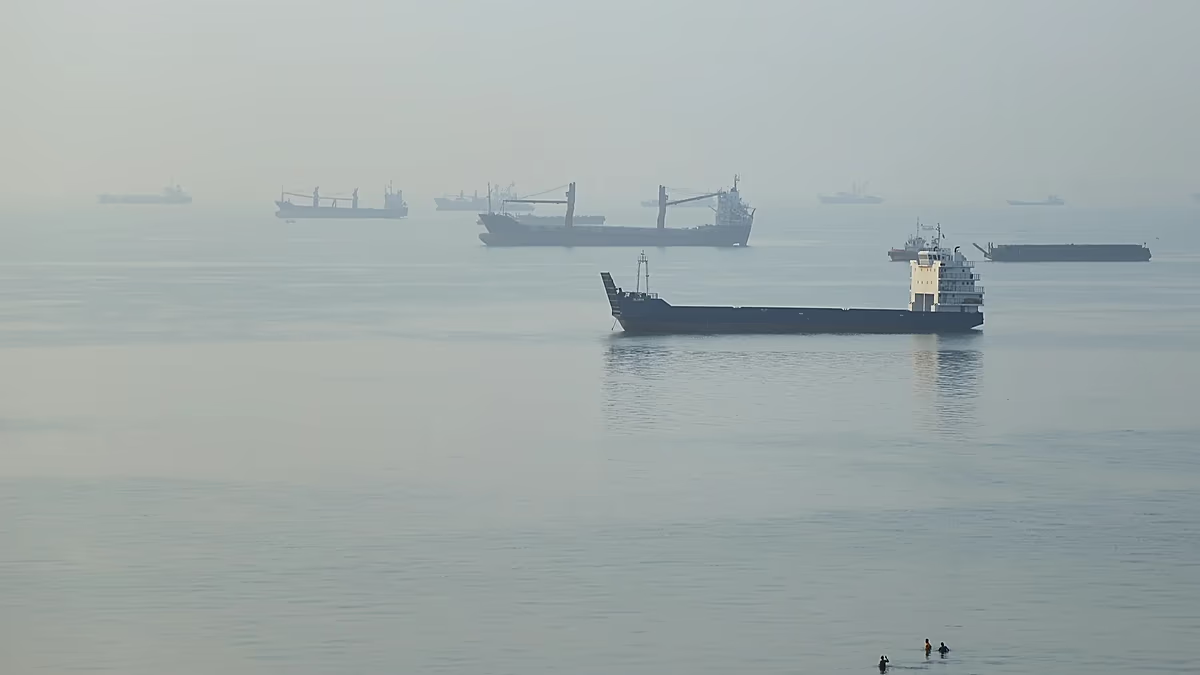
On October 16, Iran's navy said it had detected an oil tanker on fire while attempting to cross a prohibited area east of Hormuz in the Gulf of Oman, according to Middle East Eye. The report relayed the navy's account rather than an independently established cause of the fire.
That day, Iran also said the strait would reopen if the United States left the Middle East, adding that it would otherwise expel it, CBS Top Stories reported. Meanwhile, Euronews reported two US aircraft carriers in the Arabian Sea and tanker sorties running 50% above September's rate.
On October 17, the Revolutionary Guard Corps Navy said a supertanker carrying more than two million barrels of crude had struck a mine while attempting an unauthorised route through Hormuz, according to ISNA. Later coverage from IRNA relayed its report of an explosion aboard a second supertanker after a mine collision.
The wider attack count was also rising. CBS News reported on October 17 that the UKMTO monitoring agency had recorded at least ten vessels attacked in or near Hormuz since the previous Sunday, a weekly high since the war began. Attacks on two ships were also reported off the Saudi coast, far from Hormuz, according to ARD Tagesschau.
On October 18, Al Jazeera reported the Revolutionary Guard Corps' account that two tankers, each carrying about two million barrels of crude, had caught fire after hitting mines on an unauthorised route. Separately, Middle East Eye reported that Iranian Foreign Minister Abbas Araghchi said Tehran had presented a concrete seven-day reopening proposal.
Where it stands
Iran's closure claim and Washington's account remain sharply at odds. Business Line reported on October 18 that the United States says 97% of ships transit Hormuz safely, crediting naval protection. A day earlier, Middle East Eye reported the US military's claim that the vast majority of Iranian attempts to attack shipping had failed and that the waterway remained open.
The tanker mine strikes remain attributed to Iranian accounts in the supplied coverage. Al Jazeera reported that Iranian state television aired footage said to show a tanker exploding after hitting a naval mine. That footage does not, on its own, settle the competing claims about control of the strait.
What to watch
The immediate diplomatic test is whether Washington accepts Iran's conditions. ISNA reported that Iranian Foreign Minister Seyyed Abbas Araghchi said the strait would reopen on the sixth day if the United States complied, with negotiations potentially resuming on the seventh. The supplied coverage does not establish US acceptance or a start date for that timetable.
At sea, the next shipping reports will test Washington's claim of broadly safe passage against the rising attack count. The reported incidents off Saudi Arabia also make the geographic spread of attacks important to follow, not just events inside Hormuz, according to ARD Tagesschau.
More in World
All →
No Kings Rallies Across US Shift Focus to Early Voting
The protest coalition is turning demonstrations into a voter turnout drive ahead of November 3 midterms, with thousands of events as early voting begins in many states.
20 sources · today
Kolkata Durga Puja Stampede Kills at Least 19, Seven Arrested
Police cite confusing announcements and mismanagement in the Chorbagan pandal stampede, where at least 19 people died.
24 sources · today
Rubio Plans India Energy Talks and Visit to Reliance Refinery
A confirmed October 20 meeting with S. Jaishankar puts diplomacy alongside refinery and business discussions, as rising US diesel prices sharpen attention on energy cooperation.
19 sources · over 5 days