
Jon Ossoff Wins Second Senate Term in Georgia, Defeating Mike Collins
Ossoff's victory protects a key Democratic Senate seat in a state Donald Trump carried in 2024, while drawing fresh attention to his possible political future.
By Hushread Stories, from 26 outlets · First published 5 Nov 2026 · Chapter 2 of 2
Earlier: Jon Ossoff Wins Reelection as Democrats Flip Senate Control
In brief
- Democratic Senator Jon Ossoff won a second term in Georgia, defeating Republican Representative Mike Collins.
- Ossoff began the election cycle as the only Senate Democrat defending a state Donald Trump carried in 2024.
- The race was initially considered a major battleground, but several outlets described Ossoff's eventual victory as comfortable.
- Democrats needed a net gain of four Senate seats to regain control, making Georgia an important defensive hold.
- Ossoff's victory has prompted speculation about 2028, though the supplied coverage reports no presidential campaign announcement.
Timeline · 5 moments
Ossoff leads presidential prediction market after Georgia victory
The Independent ↗Democrats reported to have flipped Senate and House
The Hindu ↗Ossoff delivers victory speech after reelection projection
CBS Top Stories ↗Ossoff projected to defeat Collins and retain seat
NBC News ↗Georgia voters choose senator for next six years
The Hill ↗How it started
Jon Ossoff entered the election cycle with an obvious vulnerability: he was the only Senate Democrat seeking reelection in a state Donald Trump carried in 2024, according to NDTV News - World-news News. Republicans initially viewed Georgia as a leading opportunity to gain a seat.
His first Senate victory had been close. The Hill reported that Ossoff won his seat by defeating then-Senator David Perdue in a razor-thin January 2021 runoff. This time, he faced Republican Representative Mike Collins.
The stakes extended beyond Georgia. Democrats needed a net gain of four seats to regain the Senate, according to Forbes. Holding Ossoff's seat would protect their starting position, not itself count as a gain.
How it unfolded
On November 3, Georgians voted to choose their senator for the next six years, The Hill reported. The contest had once been expected to rank among the cycle's most competitive Senate races.
By November 4, the result looked considerably less close than that early billing suggested. NBC News projected Ossoff's victory over Collins, describing a nationally watched campaign marked at times by heated personal attacks. NPR Politics also reported that Ossoff had easily defeated Collins after the race began as a marquee showdown.
Ossoff's campaign drew attention well beyond the state. In its November 4 account, The Hollywood Reporter highlighted his "Epstein class" stump speech as a driver of national interest and discussion about 2028. The Nation framed his campaign as an example of channeling voters' anger about corruption and corporations, an interpretation of his success rather than a demonstrated explanation for every voter's choice.
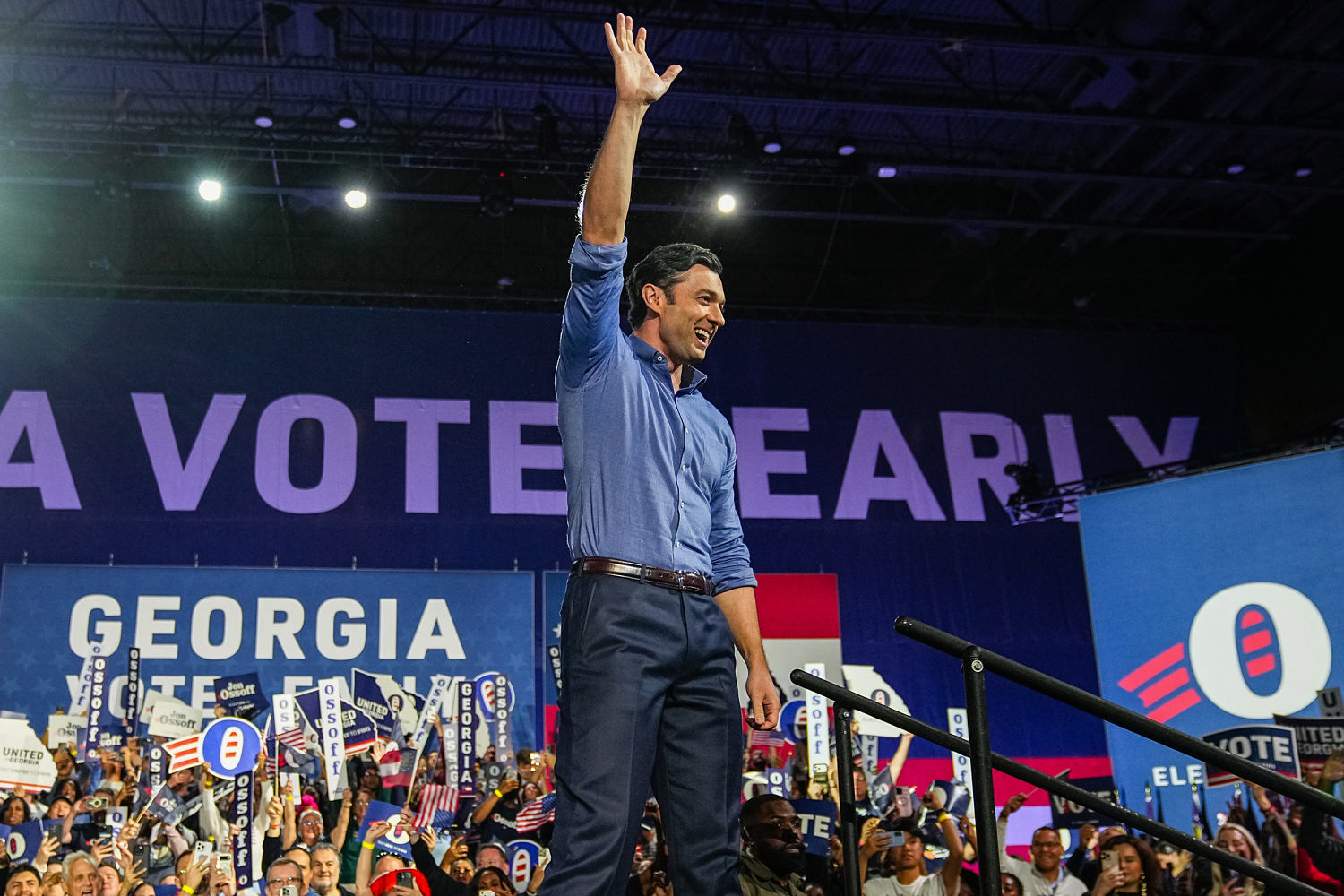
On November 4, CBS Top Stories reported that Ossoff delivered his victory speech as its projection confirmed his win. The result secured a second term and kept the Georgia seat in Democratic hands.
Where it stands
Ossoff has won reelection, with victory projections reported by NBC News and The Hill. The supplied coverage does not establish a final certified vote total or winning margin, so descriptions of a comfortable victory should not be mistaken for a precise final tally.
The broader congressional picture also moved beyond the early election-night stakes. The Hindu reported on November 4 that Democrats had flipped both the Senate and House. That is a later report of the outcome, distinct from Forbes describing the four-seat net gain Democrats needed to regain the Senate. Georgia was a hold within that wider contest, not a Republican seat Democrats flipped.
What to watch
The immediate open question is the final vote count and margin. Beyond that, attention has turned to Ossoff's future: The Independent reported that he led the 2028 presidential field on Polymarket, while Times now continued discussing his nomination prospects on November 5. Prediction-market positioning is not a nomination or a campaign announcement, and the supplied coverage reports no announced presidential bid.
More in Politics
All →
Trump Touts White House Ballroom After Republican Losses in Midterm Elections
President Donald Trump focused his first appearance after Republican losses on White House construction, while arguing his absence from the ballot helped explain the party's defeat.
18 sources · over 2 days
US Midterm Elections 2026: Democrats Win Control of Both Chambers
Democrats flipped Republican-held seats to win the House and Senate in a sweeping rebuke to President Trump and his party.
103 sources · over 4 days
Mike Johnson Leaves House Republican Leadership Race After Midterm Defeat
Johnson will not seek to lead House Republicans in the next Congress, opening a contest between Steve Scalise and Jim Jordan as Democrats prepare to take control.
16 sources · today