
Leaked Deutsche Bank files show $582 million in suspicious Epstein payments
A leak of more than 15 million internal documents has drawn new scrutiny to the bank's dealings with Russian oligarchs, Epstein and Donald Trump.
By Hushread Stories, from 40 outlets · First published 17 Nov 2026
In brief
- More than 15 million leaked internal Deutsche Bank documents are being analysed by dozens of media outlets.
- Forbes reports about $582 million in Epstein-linked payments that the bank itself later called suspicious.
- The files span roughly 20 years and name Russian oligarchs, Jeffrey Epstein and Donald Trump among clients and contacts.
- Germany's finance minister has called for authorities to investigate, and the bank's chair has backed chief executive Christian Sewing.
- Deutsche Bank shares fell roughly 5 to 6 percent, and the full scale of any wrongdoing is still being assessed.
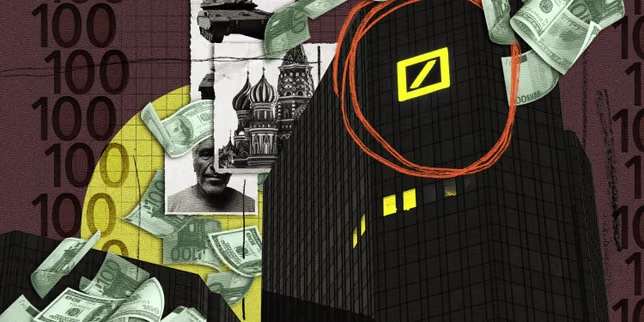
Timeline · 8 moments
Questions mount over whether chief executive Sewing can survive
Finanzen - FAZ.NET ↗Joint investigation says bank ignored clients' criminal activity
France24 ↗Deutsche Bank shares fall over six percent after leak revelations
El Colombiano | noticias de Medellín, Antioquia, Colombia y el mundo. ↗Deutsche Bank chair backs CEO as leaked records draw scrutiny
News ↗Epstein payments and Trump tax blunder detailed
CNBC ↗Records show bank courting Russian oligarch clients before sanctions
NYT World News ↗Coordinated reports published under "Inside Deutsche Bank" name
Le Monde ↗Whistleblowers leak 15 million files to over 50 newsrooms
GazetaPrawna.pl - biznes, podatki, prawo, finanse, wiadomości, praca ↗Update 19 Nov 2026, 0:57 am UTC
A German state data protection regulator has opened an investigation into Deutsche Bank over the leak of about 15 million internal documents, according to Euronews, which says the probe concerns possible data protection violations. The Globe and Mail reported the same investigation. The regulatory step is new since the original piece, but the coverage does not yet say what the bank has responded or what sanctions, if any, could follow. The leaked-document allegations remain claims drawn from the records, not findings by an authority.
Update 18 Nov 2026, 6:56 pm UTC
Coverage has now moved past the initial leak to the market and political reaction. El Colombiano reports Deutsche Bank shares fell more than 6 percent after the revelations, and FAZ describes the bank under stress with questions about whether chief executive Christian Sewing can hold his position. France24 reports a joint investigation concluding the bank turned a blind eye to clients' criminal activity, though these remain allegations drawn from the leaked records. The headline and core figures still hold, so no correction is needed; the key points below are updated to reflect the market fall and the leadership questions.
Update 18 Nov 2026, 10:31 am UTC
The story has moved from the leak itself to the bank's response. n-tv and Reuters describe a chair publicly backing the chief executive after the reports exposed past lapses, and Reuters reports that Germany's finance minister has called for authorities to investigate. The published headline and key points still stand on the leaked records and the $582 million figure, so the core facts are unchanged, but the bank's defence and the official call for an inquiry are new since the piece was written.
Update 18 Nov 2026, 0:38 am UTC
Coverage from November 17 adds the Financial Times investigation, which La Repubblica says exposed weaknesses in Deutsche Bank's internal controls and cast doubt on the turnaround led by CEO Sewing. Deutsche Welle reports the bank has tried to deflect criticism by saying the problems are old. Bloomberg reports the bank is working to contain the fallout, and German finance minister Klingbeil has demanded consequences from the leak, while Deutschlandfunk notes possible money laundering allegations and comments from US President Trump. Shares fell about 5 percent. The headline and key points still hold, so only the timeline and key points are updated.
Update 17 Nov 2026, 6:30 pm UTC
Coverage has broadened since the first write-up. Franceinfo and Il Post describe the consortium of media outlets, and Forbes reports that the files show $582 million in payments linked to Jeffrey Epstein that the bank later called suspicious, along with details of how Trump's tax statements were handled. Deutschlandfunk reports that Germany's finance minister Klingbeil has demanded clarification of serious lapses in internal controls. Der Spiegel is not in the index, so the fuller German reaction is attributed to ZDF and Die Zeit, which describe continued pressure on the bank. The fact that the bank defends itself, with its chief executive Christian Sewing backed by supervisory board chair Wynaendts according to FAZ, is now also reported.
How it started
On 17 November, a coordinated wave of reporting landed across Europe and the United States. The common source was a leak of more than 15 million internal documents from Deutsche Bank, published by a consortium of media outlets under the name "Inside Deutsche Bank".
Gazeta Prawna reported that around 9 million of the files are emails handed over by whistleblowers, and that the material reached more than 50 newsrooms. Renascença said the whistleblowers describe their disclosure as being made in the public interest.
Der Spiegel called it an unprecedented data leak, one that allows deep insight into the inner workings of the country's most important bank.
How it unfolded
The first reports went out on 17 November, and they were broad. Le Monde said the investigation touches sanctioned Russian oligarchs, Jeffrey Epstein, arms sales and money laundering, and argued that the bank knowingly ignored its own compliance systems.
The Russian angle drew particular attention. The New York Times quoted an analyst who wrote, as the bank braced for sanctions against wealthy clients, "As you know we have a large Russian Oligarchs client population." The paper's headline said the records show the bank courting those clients.
CNBC highlighted other strands of the leak: Epstein-linked payments, a mishandled Trump tax matter described as a blunder, and bets on Russia. Der Spiegel added that German politicians also appear in the files.
Die Zeit summarised the picture as a documented failure of controls, with business relationships to Epstein and Trump among the examples. AFP said the reports describe questionable practices over the past 20 years.
Markets reacted the same day. AFP reported that shares plunged on Tuesday, Diário do Grande ABC put the fall at about 6 percent, and the New York Times page cited the Wall Street Journal reporting a drop of 5 percent as the bank defended itself against the media reports.
Where it stands
The story is only a day old, and most of the material has yet to be examined in public. n-tv reported that dozens of media houses are still evaluating the huge trove, and that the documents in part go back decades and concern some of the bank's most controversial customers.
The coverage available so far does not set out the bank's detailed response, and it does not describe any regulatory or legal action. Allegations in the reports are claims drawn from leaked records, not findings by an authority.
What to watch
The main open question is how Deutsche Bank answers the specific allegations, since the coverage only says it is defending itself. Regulators and prosecutors have not been reported to act yet, so any official reaction would be a significant next step.
The newsrooms involved are still working through millions of files, so further stories are likely, as is more movement in the bank's share price.
More in Business
All →
Anthropic Opens at $111.50 After Record $83 IPO Price on Nasdaq
Shares jumped about 34 percent in early trading after the AI company priced its offering at $83, the largest IPO on record.
107 sources · over 4 days
Nvidia's board rules out Jensen Huang's return as earnings beat forecasts
Nvidia's founder resigned over affairs, one with an alleged Chinese spy, and now wants his job back. The board says no, just as export controls and a Senate appearance loom.
196 sources · over 11 days
Chase software bug disrupts online banking and Zelle payments at major US banks
A software bug at JPMorgan Chase slowed transactions across several big US banks on November 16, and days later the bank confirmed a separate vendor hack that exposed customer names and emails.
69 sources · over 4 days