
Mass Migration Into Ceuta Sparks Crisis, Protests, and Diplomatic Fallout
Tens of thousands of migrants crossed from Morocco into Spain's Ceuta enclave in late July, triggering humanitarian strain, political controversy, and rising tensions between Spain, Morocco, and other European countries.
By Hushread Stories, from 52 outlets · First published 16 Aug 2026
In brief
- Over 70,000 migrants crossed from Morocco into Ceuta in late July 2026, leading to a humanitarian crisis.
- As of early September, around 5,000 migrants remain in Ceuta, with local authorities reporting daily sexual assaults.
- Spain announced a €309 million aid package to improve security and public services in Ceuta amid ongoing protests.
- Italy suspended the Schengen agreement for travelers from Spain, citing risks from uncontrolled migration, affecting travel and commerce.
- The Spanish government faces pressure to clarify Morocco's role in the migrant surge, impacting diplomatic relations.
Timeline · 8 moments
Thousands protest against Spanish government in Ceuta
Deutschlandfunk - Fortlaufende Nachrichten vom 24. August 2026 ↗Leaked police report accuses Morocco of permissiveness
France24 ↗Sexual assaults reported daily among migrants in Ceuta
BBC News ↗Spanish government announces €309 million aid for Ceuta
DIE WELT ↗PM Sánchez blames Russia, Israel for Ceuta disinformation
CBS News ↗Clashes erupt in Ceuta as police disperse migrants
Adnkronos - ultimoratop ↗Italy extends Schengen suspension with Spain for 15 days
Euronews ↗Over 70,000 migrants cross from Morocco to Ceuta
Fanpage ↗How it started
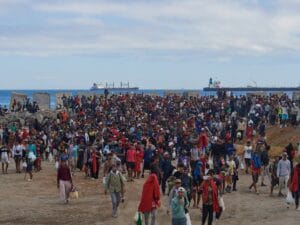
In late July 2026, an unprecedented number of migrants crossed from Morocco into the Spanish enclave of Ceuta in North Africa. According to multiple reports including the South China Morning Post and Fanpage, over 70,000 people entered Ceuta between July 30 and 31. Many of the migrants were Moroccan, but others came from different African countries.
The sudden surge put immediate pressure on Ceuta's capacity to respond. Tragically, around 100 people lost their lives during the attempt, as reported by Fanpage and Franceinfo. Spanish authorities and humanitarian groups scrambled to provide shelter, food, and medical care to the new arrivals.
How it unfolded
As the humanitarian crisis unfolded in early August, the Spanish government began relocating migrants to temporary shelters and called for European support. The EU backed efforts to repatriate unaccompanied minors, according to CBS News and Anadolu Ajansı.
Spain's handling of the crisis quickly became a political flashpoint at home and abroad. By late August, anti-migrant protests erupted in Ceuta, with thousands demonstrating against Madrid's response, as Deutschlandfunk reported on September 2. Clashes between police and migrants broke out, including incidents where police fired shots in the air to disperse crowds near government shelters (Adnkronos).
The crisis also triggered diplomatic consequences. Italy suspended the Schengen agreement for travelers from Spain on August 1 and extended the suspension by another 15 days at the end of August, citing the risk of uncontrolled migration (Euronews, Deutsche Welle). Spain responded with its own tightened border checks for Italian travelers (Anadolu Ajansı).
A major controversy erupted over the origins of the migrant surge. Spanish Prime Minister Pedro Sánchez repeatedly accused Russian and Israeli networks of spreading disinformation that contributed to the crisis, as reported by CBS News, France24, and The Hill. Sánchez dismissed claims that Morocco directly facilitated the crossings, but a leaked Spanish police report later alleged that Moroccan security forces showed "total permissiveness" during the mass entry (France24, AFP News Agency).
Current situation
By early September, most migrants had returned to Morocco, but as many as 5,000 remained in Ceuta, according to the BBC and Anadolu Ajansı. The city is still under pressure, with local authorities reporting sexual assaults occurring almost daily among the remaining population (BBC News).
Public anger in Ceuta and across Spain has not subsided. Protests against the government's handling of the crisis continue, and the Spanish government faces criticism for both its preparedness and its communications, especially after conflicting reports about Morocco's role (Euronews, Deutschlandfunk).
Madrid has announced a €309 million aid package to bolster security and public services in Ceuta (DIE WELT), but local resentment and political debate persist.
What comes next
The Spanish government is under pressure to clarify Morocco's involvement after the leaked police report accused Moroccan forces of allowing the mass crossings. This could affect diplomatic relations between Spain and Morocco in the weeks ahead.
Meanwhile, Spain's border controls and Italy's Schengen suspension remain in place, disrupting travel and commerce. The EU's next moves on migration policy and support for Ceuta will be closely watched, as will the fate of the thousands still in the enclave.
More in Politics
All →
Trump Backs Ramaswamy Ad as Ohio Governor Calls for Its Removal
An attack ad featuring Amy Acton's estranged mother has split Republicans, with President Donald Trump defending it as Ohio Gov. Mike DeWine urges its removal before November's election.
36 sources · over 5 days
Milei's Madrid Visit Sparks Sánchez Clash as Argentine Opposition Seeks Unity
Javier Milei's attacks on Pedro Sánchez turned his Madrid visit into a political confrontation, while Argentina's opposition moved toward a common congressional strategy ahead of the 2027 elections.
13 sources · over 6 days
Lula and Flávio Bolsonaro Take Brazil's Election Fight From Debate to Court
Days before Brazil's October 25 runoff, the rivals are seeking each other's disqualification after a bitter televised debate, while polls show a closely contested race.
37 sources · over 8 days