
Oxford Street goes pedestrian-only as London begins wider shopping district overhaul
Nearly a kilometre of Oxford Street is now closed to vehicles, giving shoppers more space while raising questions about surrounding traffic and the next phase of construction.
By Hushread Stories, from 15 outlets · First published 27 Oct 2026
In brief
- Vehicle restrictions began on October 26, 2026, covering nearly a kilometre of central London's Oxford Street.
- The pedestrian zone runs between Orchard Street and Great Portland Street, rather than covering the entire shopping street.
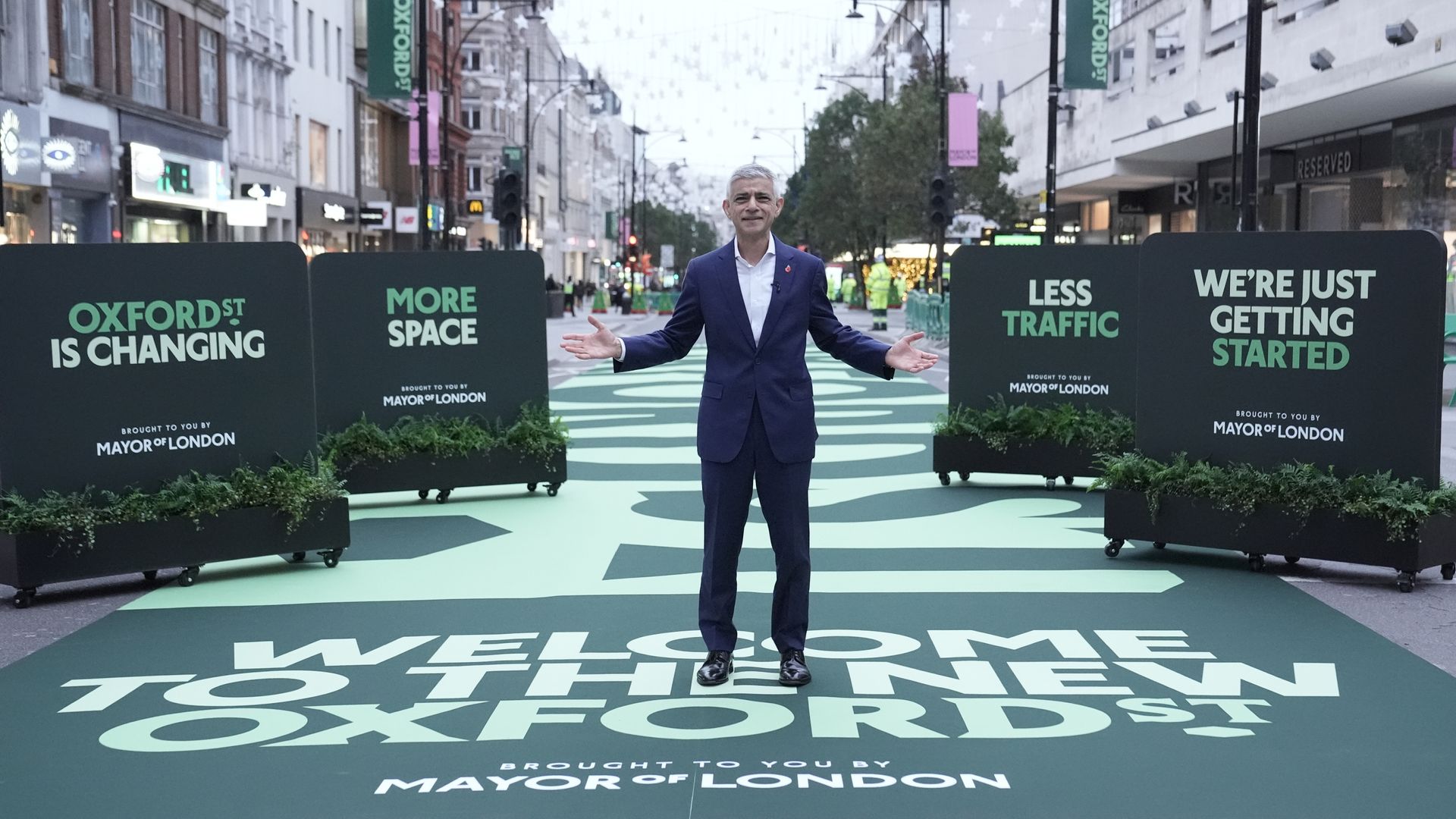
- Mayor Sadiq Khan welcomed the opening as a momentous occasion for London and part of a greener city.
- Early coverage records shoppers welcoming the change, while residents express concerns and buses crowd a nearby junction.
- The wider transformation remains unfinished, with trees, seating and public squares expected to follow in 2027.
Timeline · 5 moments
Retailers anticipate boost as residents voice concerns
Al Jazeera ↗Shopper praise comes alongside congestion at nearby junction
Latest news, sport and opinion from the Guardian ↗Shoppers fill the street on first traffic-free day
BBC ↗Nearly a kilometre of Oxford Street becomes traffic-free
The Independent ↗Guardian editorial backs pedestrianisation ahead of traffic closure
Guardian Politics ↗How it started
Oxford Street's traffic ban follows years of debate about the future of London's famous shopping street. Il Post described the change as coming after prolonged discussions about the street's decline, with further work due over the coming months.
The ambition goes beyond removing vehicles. ABCNews.com reported that the change forms part of Mayor Sadiq Khan's efforts to make London greener. An October 25 editorial in The Guardian backed pedestrianisation as a way to make cities less congested and more inviting.
How it unfolded
On October 26, 2026, vehicle restrictions came into force. Almost a kilometre between Orchard Street and Great Portland Street became traffic-free, according to The Independent.
That is a substantial stretch, but not the whole road. The Guardian reported that about half of the 1.2-mile street would initially be vehicle-free. ARD Tagesschau said cars, buses and taxis would no longer use the affected section.
Khan called the opening "a truly momentous occasion for the capital", Sky News reported. Shoppers filled the street on its first traffic-free day, according to the BBC.
By October 27, early reactions showed both the appeal and the practical strains. The Guardian reported shoppers praising the experience, while describing buses turning at the last junction before the pedestrianised stretch and crowded streets to the east of Oxford Circus.
Where it stands
The pedestrian zone is operating, but the physical transformation is not complete. NDTV reported that trees, seating and public squares are expected in 2027.
The response is not uniformly positive. Al Jazeera reported that retailers expect a boost while residents worry about change. Those expectations and concerns are not yet evidence of the scheme's longer-term effects.
What to watch
The next visible milestone is the installation of the planned trees, seating and public squares. The 2027 additions reported by NDTV will help determine how the space functions beyond its initial traffic closure.
Traffic and crowding around the edges also remain an immediate issue to follow. The junction conditions described by The Guardian show why the experience on neighbouring streets matters alongside the newly cleared shopping stretch.
More in Travel
All →
Villa Vie Odyssey Halts Cambodia Voyage, Leaving Residents Without Their Homes
Around 200 passengers who lived aboard the residential cruise ship must leave after its operator suspended operations in Cambodia, citing soaring fuel costs and pursuing financial restructuring.
23 sources · over 2 days
Airbnb bans hosts from requiring time-consuming checkout chores from guests
Airbnb is restricting the cleaning hosts can demand before guests leave, including stripping beds and washing dishes, prompting objections from some hosts and debate among users.
30 sources · over 6 days
IndiGo power bank fire diversion followed by fresh baggage incident and restrictions
A Delhi to Chennai flight diverted after an onboard power bank fire, with subsequent coverage reporting another baggage incident and restrictions on specific power banks.
18 sources · over 5 days