
Serbia's Student List Wins Election as Leadership and Media Questions Mount
The student movement has defeated Aleksandar Vucic's party, but choosing a prime minister and responding to unrest at a supportive television station now test its victory.
By Hushread Stories, from 55 outlets · First published 27 Oct 2026 · Chapter 3 of 3
Earlier: Serbia's student movement defeats Vučić and prepares to form a government
In brief
- Serbia's Student List won the October 25 parliamentary election, defeating Aleksandar Vucic's Serbian Progressive Party.
- The movement grew from protests following the Novi Sad railway station canopy collapse, which killed 16 people.
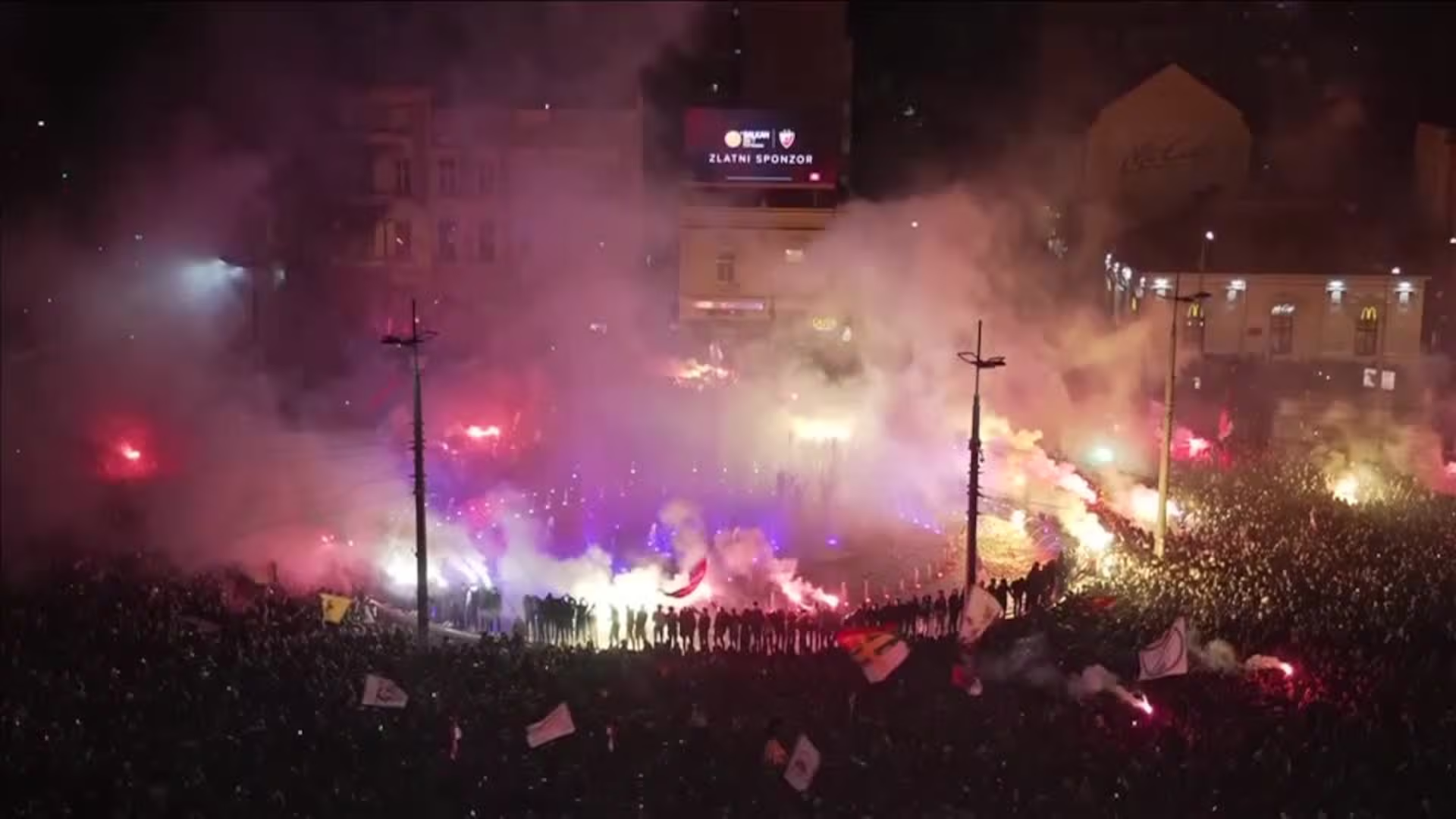
- Vucic conceded defeat, and celebrations continued in Belgrade on Monday after the student movement's election victory.
- Protesters entered the Informer television station on Monday evening, interrupting a live broadcast at the Belgrade broadcaster.
- The movement must choose a prime minister and define its relationship with elected lawmakers who are not students.
Timeline · 6 moments
Broadcaster apology for years of one-sided reporting emerges
Times now ↗Protesters enter Informer studios and interrupt live broadcast
Telegraaf ↗Thousands continue celebrating student movement victory in Belgrade
The Globe and Mail ↗Vucic concedes defeat and congratulates his election opponents
NYT World News ↗Student List wins absolute majority in parliamentary election
Deutschlandfunk - Fortlaufende Nachrichten vom 24. August 2026 ↗Novi Sad canopy collapse triggers nationwide protest movement
Top World News- News18.com ↗How it started
The Student List grew out of a nationwide protest movement triggered by the collapse of a concrete canopy at Novi Sad railway station on November 1, 2024. Sixteen people died, according to News18.
The movement's electoral vehicle was broader than its name suggests. Student assemblies selected academics, engineers, artists and activists to contest the election against Aleksandar Vucic's Serbian Progressive Party, according to the coverage of those assemblies published on October 27 here.
How it unfolded
On October 25, the Student List won the parliamentary election. Deutschlandfunk reported that it secured an absolute majority with just over 52 percent of the vote.
Vucic conceded that Sunday. "It is clear that we have lost these elections," he said in an unusually early speech congratulating his opponents, according to The New York Times.
Celebrations continued into Monday, October 26. Thousands gathered in the Serbian capital after the movement's victory, The Globe and Mail reported.
Monday evening also brought a confrontation at Informer, a television station supportive of Vucic. Protesters entered its Belgrade studios and interrupted a live broadcast, according to De Telegraaf. The New York Times described those involved as supporters of the victorious opposition movement.
By October 27, another broadcaster had offered an apology. Radio Television of Vojvodina apologised to viewers for years of one-sided reporting, according to Times Now.
Where it stands
The election has produced a clear winner, but not a settled leadership team. The Student List had yet to nominate a prime minister candidate, the Financial Times reported on October 26. Reporting from Il Post the following day identified two unresolved decisions: the next prime minister and the movement's relationship with its elected lawmakers, who are not students.
The precise parliamentary tally differs in the supplied coverage. La Repubblica reported 140 elected deputies, while The Conversation cited preliminary results giving the Student List 141 of parliament's 250 seats. Both accounts indicate a majority.
The Informer incident has also made media freedom an immediate issue after the vote. Vucic called it an attack on free speech and the freedom of journalism, according to Al Jazeera.
What to watch
The first concrete test is the choice of prime minister and how authority will be shared between the student movement and its parliamentary representatives. An analyst in Belgrade told Reuters that the new government would probably have a limited remit focused on fighting corruption and reforming the state, according to CNN Brasil. That remains an assessment, not an announced governing programme.
Foreign policy is another unresolved question. Euronews reported that the victory raised hopes of improved relations with the European Union, while the movement's positions on Russia sanctions and Kosovo left Brussels cautious. Al Jazeera cautioned that those expecting a shift towards the West may have to wait while domestic issues take priority.
More in Politics
All →
Judge Questions Justice Department Strategy in Alaska Senate Certification Lawsuit
The administration wants to block certification if Republican Dan Sullivan narrowly loses, while Mary Peltola seeks dismissal before an election that could determine Senate control.
33 sources · over 6 days
Investor Appeals Ruling Clearing Javier Milei in Argentina's LIBRA Crypto Case
An investor has challenged the dismissal of the LIBRA case against President Javier Milei, his sister and nine others, extending a dispute over the cryptocurrency's collapse.
15 sources · over 5 days
Trump to Ease Some Canadian Tariffs October 30, Add Duties on Others
The changes will remove 50% tariffs on some Canadian agricultural and forestry imports while adding other Canadian goods to the tariff list.
27 sources · over 5 days