
Spain's first general strike in 14 years puts housing before elections
Workers across Spain are striking over housing costs and wages, disrupting transport and industry just 18 days before a national election dominated by the housing crisis.
By Hushread Stories, from 28 outlets · First published 11 Nov 2026
In brief
- Spain's two biggest unions called a 24 hour general strike over housing costs, wages and rising prices.
- The November 11 walkout is Spain's first general strike in 14 years, with protests planned in nearly 130 cities.
- Pickets blocked some roads into Madrid and entrances to Barcelona's Sants station as the strike began.
- By 10 a.m., airlines had cancelled 234 flights, while one quarter of high speed trains were cancelled.
- Demonstrations are expected later Wednesday, ahead of the November 29 election, with housing central to the political debate.
Timeline · 7 moments
Extremadura reports uneven participation and tension in Mérida
elEconomista.es ↗Morning cancellations reach 234 flights across airport network
ABC ↗General strike opens with road and station blockades
EL PAIS ↗Drivers postpone November 12 strike until November 23
Infobae ↗Railway safety strike disrupts Madrid and Barcelona trains
Xataka ↗Transport ministry sets minimum flight service requirements
Infobae ↗Minimum commuter rail services set ahead of walkout
elEconomista.es ↗How it started
Spain's first general strike in 14 years centres on the cost of having a home. CC OO and UGT called workers out on November 11 under a message linking wages, housing and prices, according to EL PAIS.
The push did not originate solely within the labour movement. ARD Tagesschau reported that the idea came from a tenants' alliance, which helped mobilise support for the strike.
The dispute has become an election issue as well as a workplace protest. Deutsche Welle described the housing crisis as the main political debate ahead of Spain's November 29 elections.
How it unfolded
On November 9, transport arrangements began to take shape. elEconomista.es reported minimum Cercanías commuter rail services of 75% during peak hours and 50% during the rest of the day. The transport ministry set minimum flight services ranging from 18% to 85%, depending on the service, according to Infobae.
On November 10, a separate train drivers' strike disrupted travel before the general walkout. Xataka reported that the action concerned railway safety and paralysed trains in Madrid and Barcelona. ABC attributed disruption on Cercanías and Rodalies services to failures to fulfil minimum service requirements.
Later that day, the train drivers' union Semaf postponed its planned November 12 strike until November 23, following the approval of measures for the railway sector, Infobae reported. That decision concerned the drivers' separate action, not the November 11 general strike.
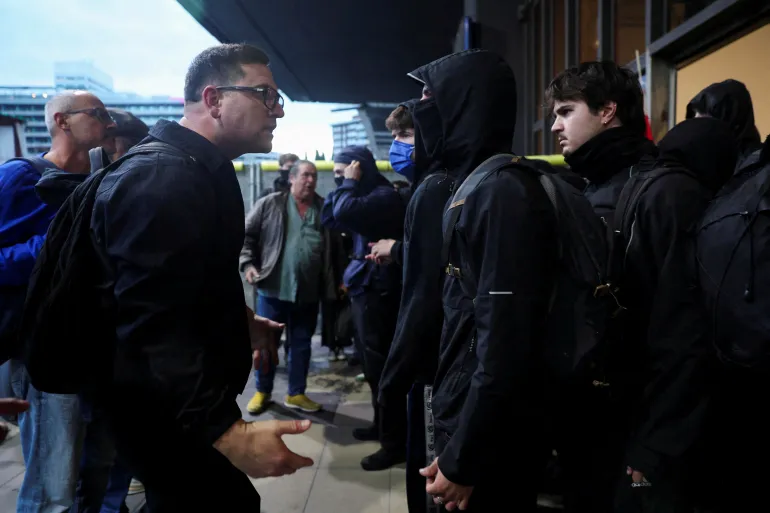
Early on November 11, pickets blocked some access roads into Madrid and entrances to Sants station in Barcelona, according to EL PAIS. Transport was operating under minimum service arrangements as the nationwide walkout began.
By 10 a.m., 234 flights had been cancelled, representing 5.16% of the 4,529 scheduled, ABC reported, citing airport operator Aena. The same report said one in four high speed trains had been cancelled.
Where it stands
The strike is affecting both public transport and industry, according to Al Jazeera. Its impact varies by location: elEconomista.es reported low participation in Badajoz alongside tension with police in Mérida. The available coverage does not establish a single nationwide participation figure.
The political divide is also visible. Il Post reported that the government supports the strike while the opposition opposes it. With the election less than three weeks away, the mobilisation is testing how demands over rents and pay translate into political pressure.
What to watch
Demonstrations are expected late Wednesday afternoon, notably in Madrid and Barcelona, according to Le Monde. DIE ZEIT reported that protests were planned in nearly 130 cities. Their turnout will provide another measure of support beyond workplace stoppages and transport disruption.
The next fixed dates are the postponed train drivers' strike on November 23, reported by Infobae, and the November 29 election. Le Monde described participation in the general strike as a barometer of social discontent before the vote.
More in World
All →
Kolkata-Sairang Express Derails Near Guwahati as Reports Differ on Injuries
A report says a locomotive and five coaches derailed at Digaru, while accounts of injuries remain unsettled.
13 sources · today
Missing South Carolina Baby Found Alive Buried in Dog Crate
Authorities say Koah Sharpe survived roughly 24 hours buried in woodland after his father took him, and reports now say his father has been arrested.
15 sources · today
Gaza floods destroy tent shelters as families await blocked aid
Deadly weekend storms have left displaced Palestinians in soaked shelters, while aid agencies say 150,000 replacement tents await Israeli approval to enter Gaza.
24 sources · over 7 days