
Spain's Transport Minister Resigns After Toledo Train Crash Kills 69
Spain is tightening rail safety rules after the Urda collision, as Transport Minister Óscar Puente announces his resignation and authorities complete identification of the 69 victims.
By Hushread Stories, from 89 outlets · First published 4 Nov 2026 · Chapter 2 of 2
Earlier: High-Speed Train Collision Near Toledo Kills at Least 69
In brief
- Two high speed trains collided at Urda in Toledo province on October 28, killing 69 people.
- Authorities completed identification of all 69 victims on November 2, including a second Japanese national confirmed dead.
- Transport Minister Óscar Puente announced his resignation on November 3 after two deadly rail crashes within a year.
- Spain has announced additional rail safety measures, with fewer trains planned for the Madrid to Sevilla route.
- Questions remain about why a train continued above 160 kilometres per hour after its safety system failed.
Timeline · 7 moments
Puente reveals train continued after safety system failure
Euronews ↗Puente announces resignation and withdraws from election
Infobae ↗Spain announces tighter safety rules and fewer trains
DIE WELT ↗Second Japanese national confirmed among those killed
産経ニュース ↗Authorities complete identification of all 69 victims
Infobae ↗Last carriages removed and floral tribute point established
ABC ↗Two trains collide at Urda in Toledo province
Η Εφημερίδα των Συντακτών | Νέα, ειδήσεις, αναλύσεις και ρεπορτάζ ↗How it started
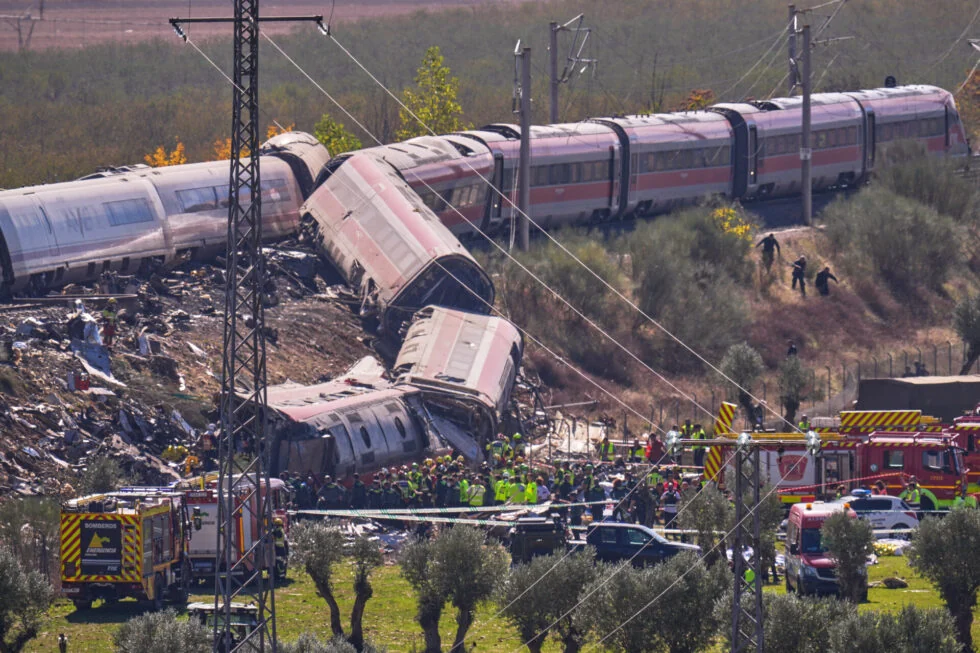
Two high-speed trains collided on October 28 at Urda, in Toledo province in central Spain. The collision involved a Renfe AVE train and an Iryo train, according to Ipadizate.
The death toll reached 69. This was Spain's second serious rail disaster of the year: ABC reported that 46 people died in the earlier crash at Adamuz, bringing the combined toll to 115.
How it unfolded
By November 2, emergency teams had removed the last carriages from the tracks. ABC reported that a place had also been established where people could leave flowers for the victims.
That day, the Institute of Legal Medicine and Forensic Sciences of Toledo and Ciudad Real completed identification of all 69 people killed, according to Infobae. Japan Times subsequently reported confirmation that a second Japanese national was among the dead.
On November 3, Spain announced new rail safety measures. DIE WELT reported that fewer trains would run for the time being on the Madrid-Sevilla route, while Anadolu Ajansı described a new government plan to improve high-speed rail safety.
Later on November 3, Transport Minister Óscar Puente announced his resignation and said he would not stand in the coming general election, according to Infobae. His announcement came at the end of an appearance before Congress, ABC reported.
A central safety concern also emerged. According to Euronews, Puente revealed that a high-speed train had been allowed to continue at more than 160 kilometres per hour after its safety system failed.
Where it stands
All victims have been identified and the wrecked carriages have been cleared from the tracks. Most of the supplied reports put the death toll at 69, including Sky News. One headline from RT en Español instead gives 74; the supplied coverage does not explain that discrepancy.
Puente has announced that he will leave office after two deadly crashes in less than a year, Deutsche Welle reported. His departure establishes political accountability, but does not by itself resolve the technical questions about the collision.
What to watch
The key unresolved issue is why a train was permitted to keep running after its safety system failed, and how that failure relates to the collision. Euronews also reported that rail workers were threatening to strike.
Attention now turns to implementation of the new safety measures and the planned reduction in services on the Madrid-Sevilla route reported by DIE WELT. The supplied coverage does not give a timetable for restoring those services.
More in World
All →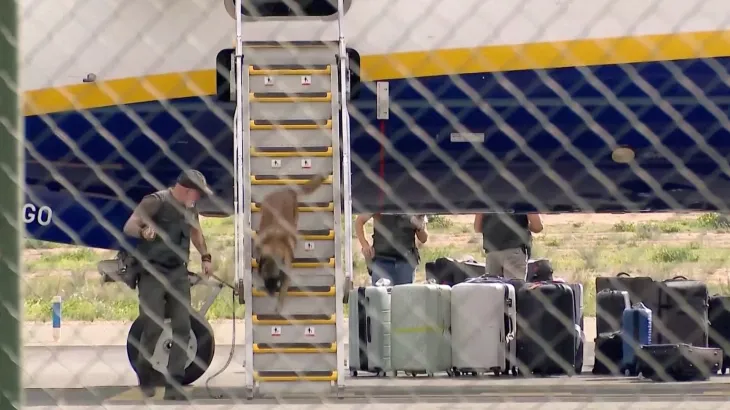
Bomb threats disrupt seven European flights, with no explosives found
Flights were diverted and airports temporarily closed as bomb threats triggered searches across Europe, but checks found no explosives and the connection between the incidents remains unclear.
47 sources · over 2 days
Russian bombing hits Ukraine aid centre as reported toll reaches 33
The reported death toll from the strike on a school used as an aid centre in Komyshuvakha has climbed, with more than 50 people possibly still under the rubble.
36 sources · over 2 days
Monte Smith, 17, Arrested in Fairfield Spirit Halloween Shooting That Killed One and Injured Six
A pregnant woman was killed and six people were injured in the Oct. 30 shooting at Solano Town Center; the teen suspect was arrested Monday.
19 sources · over 4 days