
Ukraine Resumes Russian Refinery Strikes as Zelenskyy Rejects Trump's Diesel Deal
The collapse of a brief pause in Ukrainian refinery attacks deepens a dispute with Washington as Russian diesel exports restart and Ukraine reports restrictions on vital satellite services.
By Hushread Stories, written with AI from 77 outlets · First published 15 Oct 2026 · Chapter 5 of 5
Earlier: Ukraine Resumes Russian Refinery Strikes After Trump Energy Truce Breaks Down
In brief
- Ukraine resumed attacks on Russian refineries after a three day pause requested by US President Donald Trump.
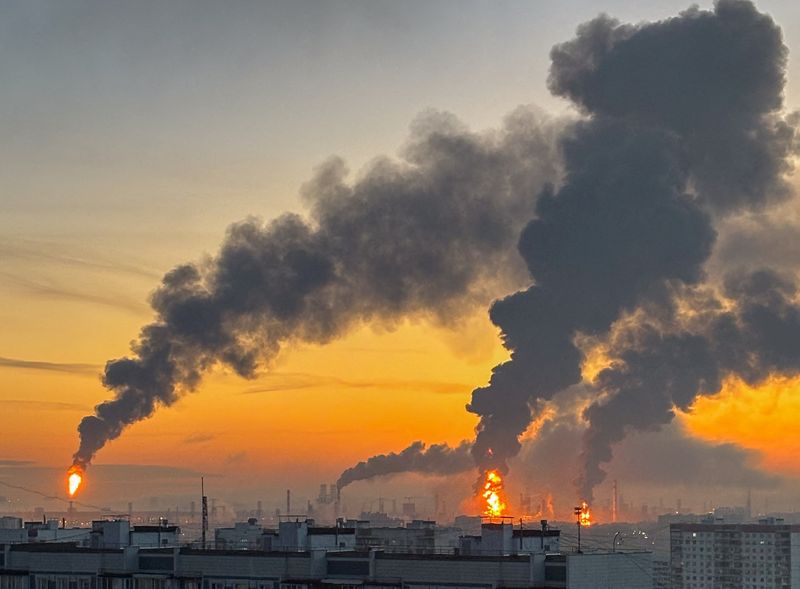
- A strike hit an installation in Russia's Ryazan region on Thursday, according to the regional governor.
- Zelenskyy rejected further restraint after reports that Moscow had not observed the proposed ceasefire on energy targets.
- Russia has restarted diesel exports following its agreement with Trump, while American deliveries are expected before November's midterms.
- European leaders are expected to urge Zelenskyy to temper his criticism as tensions with Washington deepen.
Timeline · 6 moments
Kremlin announces diesel exports restarting after Trump agreement
The Hindu ↗Kremlin says refinery attacks contradict US peace efforts
Anadolu Ajansı ↗Regional governor reports strike on Ryazan refinery installation
Reuters ↗Zelenskyy ends three day pause on refinery attacks
Bloomberg ↗Ukrainians report restrictions on satellite internet used for defence
NBC News ↗Ukraine's president voices betrayal over Trump's diesel agreement
DIE WELT ↗How it started
US President Donald Trump's decision to ease sanctions on Russian diesel came alongside a proposed pause in attacks on energy infrastructure. Ukraine suspended its refinery strikes for three days in response to Trump's call last week, according to Bloomberg.
The arrangement quickly became a source of friction. A commentary published by World News CNA on October 14 argued that easing sanctions left Ukraine more vulnerable while Moscow failed to heed the declared energy ceasefire.
How it unfolded
By October 14, the disagreement had become public. DIE WELT reported that Ukraine's president felt betrayed by the diesel deal and was seeking more air defence support in London.
A separate dispute concerned satellite connectivity. On October 14, NBC News reported Ukrainian complaints that internet services supplied through Elon Musk's SpaceX were being throttled, putting defence capabilities at risk. Musk said the services were controlled by the US government, not him.
On October 15, Ukrainian President Volodymyr Zelenskyy ordered refinery attacks to resume, ending the three-day pause, Bloomberg reported. CNBC International reported that Ukraine was returning to attacks on Russian energy targets because Moscow had not upheld its side of the proposed arrangement.
The decision was followed by a reported strike. Reuters reported on October 15 that Ukraine had resumed attacks, citing the regional governor's account of a strike at an installation in Russia's Ryazan region.
Russia offered a different account of responsibility for the breakdown. Kremlin spokesman Dmitriy Peskov said Ukraine's continuing refinery attacks contradicted US peace efforts, according to Anadolu Ajansı.
Where it stands
Ukraine's pause in refinery attacks is over, while the diesel agreement is moving forward. On October 15, The Hindu reported the Kremlin's announcement that Russia had restarted diesel exports. Sources told the New York Post that Russian diesel was expected to reach the American market before the November 3 midterm election.
European officials are also responding to the dispute. Kaja Kallas, the EU's Foreign Policy chief, described Trump's diesel agreement as a gift to Putin in an interview with Euronews. Meanwhile, the Financial Times reported that EU leaders would urge Zelenskyy to rein in his criticism of Trump because his comments had alarmed European capitals.
What to watch
The next concrete test for the diesel agreement is whether Russian supplies reach the United States before November 3, as sources told the New York Post they expected. The coverage establishes that exports have restarted, but does not confirm American deliveries.
European diplomacy is another immediate development. Le Monde reported on October 15 that Zelensky was in Brussels to meet NATO and EU leaders and seek stronger pressure on Russia. Those meetings come as the Financial Times reports European efforts to soften his public confrontation with Trump.
More in World
All →
Former DUP leader Jeffrey Donaldson jailed for 15 years for sexual offences
The sentence at Newry Crown Court follows June convictions for 18 sexual offences against two women who were children when Donaldson abused them.
13 sources · over 2 days
Houthis Seek Chinese Missile Parts as Aden Palace Comes Under Attack
Reports of a longer-range Houthi missile project have emerged alongside attacks on Saudi Arabia and Yemen's government, raising questions about weapons supplies and the group's developing capabilities.
24 sources · over 4 days
Ankita Bhandari's Parents Released After Detention at India Gate Protest
The family's protest over a Sikkim governor appointment has brought renewed attention to the 2022 murder case, with police detentions drawing criticism and an investigation still pending.
8 sources · today