
Albania student protests enter fifth day as clashes intensify in Tirana
Student demands over education have merged with wider anger at corruption and living costs, while Prime Minister Edi Rama rejects resignation calls and blames foreign involvement.
By Hushread Stories, written with AI from 31 outlets · First published 17 Oct 2026 · Chapter 4 of 4
Earlier: Albanian Student Protests Shake Rama Government After Four Days of Violence
In brief
- Student protests reached a fifth day on Saturday, with fresh clashes between demonstrators and police in Tirana.
- Demonstrators want better university conditions and lower education costs, alongside the resignation of Prime Minister Edi Rama.
- Education protests have converged with opposition to a luxury development linked to Jared Kushner, President Trump's son-in-law.
- Police said 160 people were detained after Thursday evening's violence, as demonstrations spread beyond the capital.
- Rama has rejected calls to resign and blamed foreign involvement, while protesters continue demanding political change.
Timeline · 7 moments
Police fire apparent rubber bullets on fifth day
South China Morning Post ↗Protesters attack police outside government headquarters in Tirana
Infobae ↗Rama blames foreign involvement for escalating unrest
© Adnan Beci, AFP ↗Police report 160 detentions after Thursday evening violence
Euronews ↗Rama rejects resignation demands as street clashes continue
France24 ↗Protest marches spread to cities beyond Tirana
La Repubblica ↗Government buildings damaged during second night of violence
© Florion Goga, Reuters ↗How it started
The unrest brings together several sources of anger, rather than a single dispute. Students demanding better university conditions have joined a broader protest movement over corruption, rising living costs and a luxury development linked to Jared Kushner, President Trump's son-in-law, according to NYT World News.
Rising education costs are another central grievance. The Independent reported that students protesting costs and corruption were calling for Prime Minister Edi Rama to step down.
The latest wave began on October 13, against a backdrop of months of demonstrations by an anti-government movement called Flamingo. BBC World described the student unrest that began that Tuesday as being on a different scale.
How it unfolded
By October 14, demonstrations in Tirana had turned violent for a second consecutive night. Thousands demanded Rama's resignation, several government buildings were damaged and at least one was ablaze, Reuters reported. Al Jazeera identified the Education Ministry as a building protesters had set on fire.
Reports differed on the early count of protest days. Deutsche Welle described October 14 as the second day, while Al Jazeera called it the third. Subsequent coverage generally identified October 15 as the third day and October 17 as the fifth.
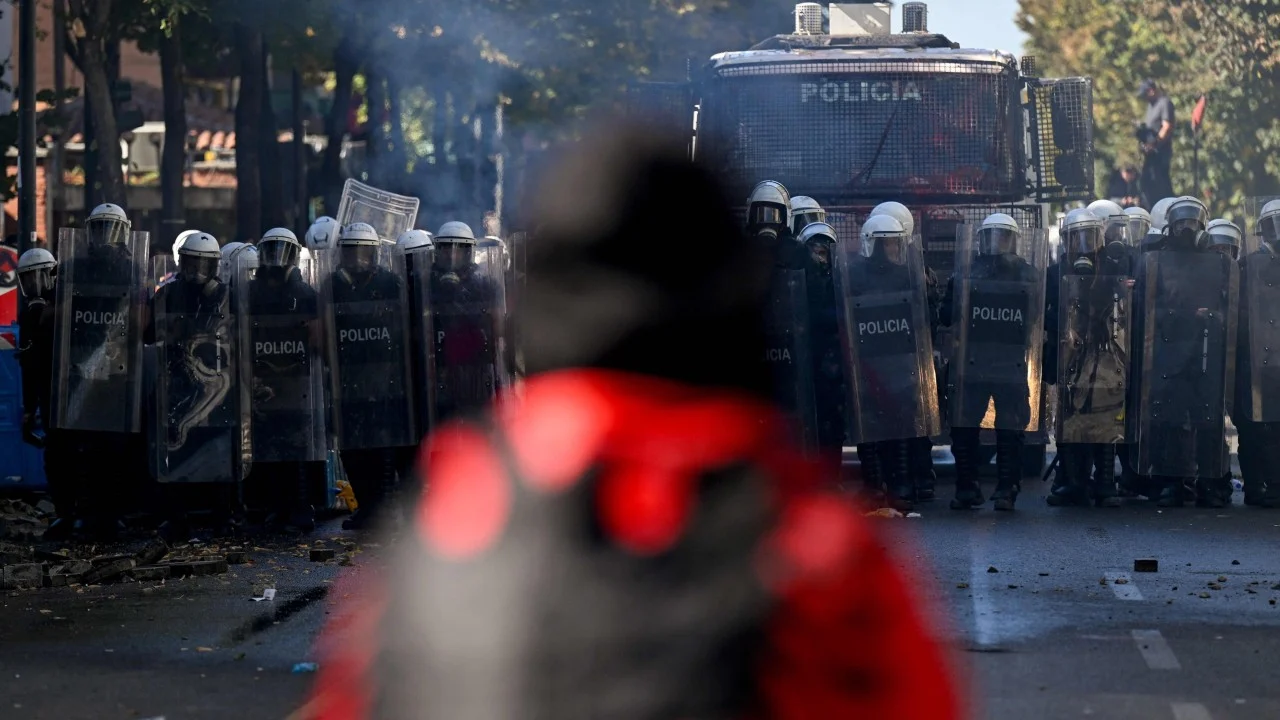
On October 15, the demonstrations spread beyond Tirana. La Repubblica reported marches in Durres, Shkoder and other cities, as well as an attack on the Interior Ministry in the capital. Rama rejected calls to resign while protesters smashed windows and fought police using water cannon and tear gas, according to France24.
Thousands of young people marched through Tirana again on October 16, CNN Brasil reported. That day, Rama blamed "foreign hands" for the escalating unrest and said the protests were intended to obstruct Albania's bid to join the European Union, according to AFP. The provided coverage offers no evidence establishing that allegation.
On October 17, clashes reached the government headquarters in Tirana, where protesters attacked police with Molotov cocktails, Infobae reported. South China Morning Post reported that police fired what appeared to be rubber bullets during the fifth day of demonstrations.
Where it stands
The protests remain active, with education demands now part of a wider challenge to Rama's government. He has refused to resign and continues to allege foreign involvement, according to Al Jazeera.
Police said 160 people were detained following violent incidents on Thursday evening, Euronews reported on October 16. That figure covers those incidents, not necessarily the full protest period. The supplied reports do not establish a comprehensive total for arrests or injuries.
What to watch
The central unresolved issue is whether the government offers changes on university conditions and education costs while refusing protesters' demand for Rama's departure. The latest coverage describes continuing clashes, but does not identify an agreed negotiation process or a settlement.
Further police action also bears watching after Saturday's reported use of apparent rubber bullets. A fuller accounting of injuries and detentions would help establish the scale of the violence.
More in World
All →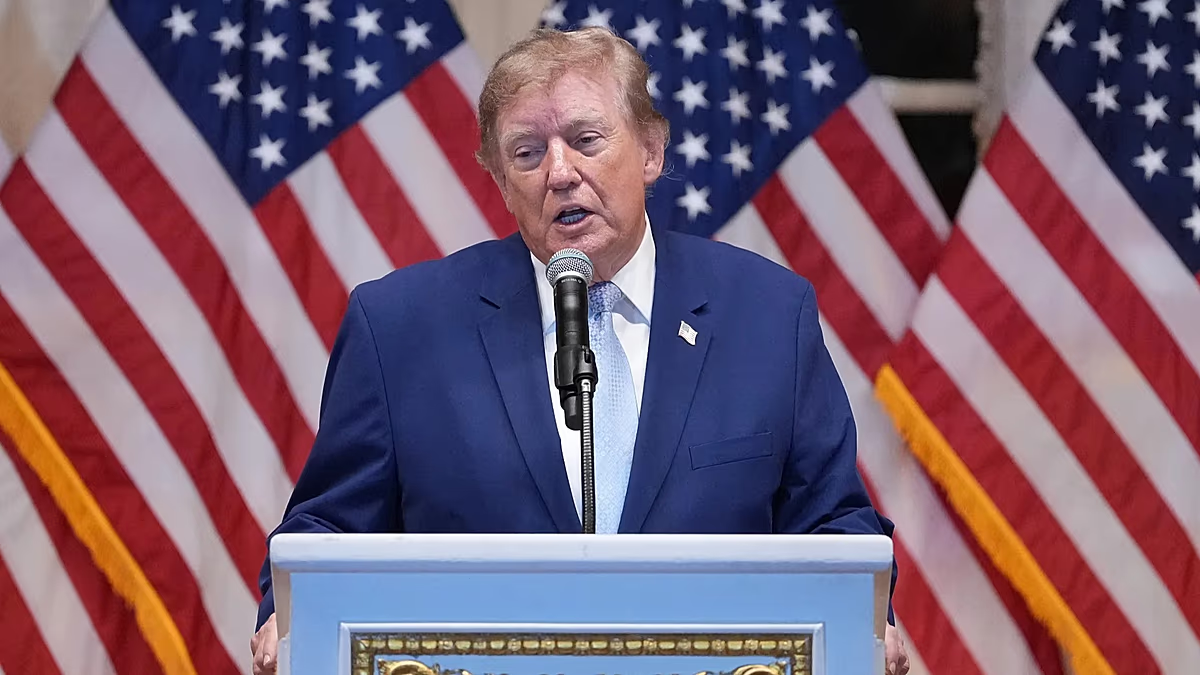
Trump pauses Russia sanctions after diesel deal, drawing criticism from Zelensky
The waiver blocks new economic penalties just before implementation, widening the dispute over Russian energy purchases as Ukraine seeks more European funding for its war effort.
85 sources · over 7 days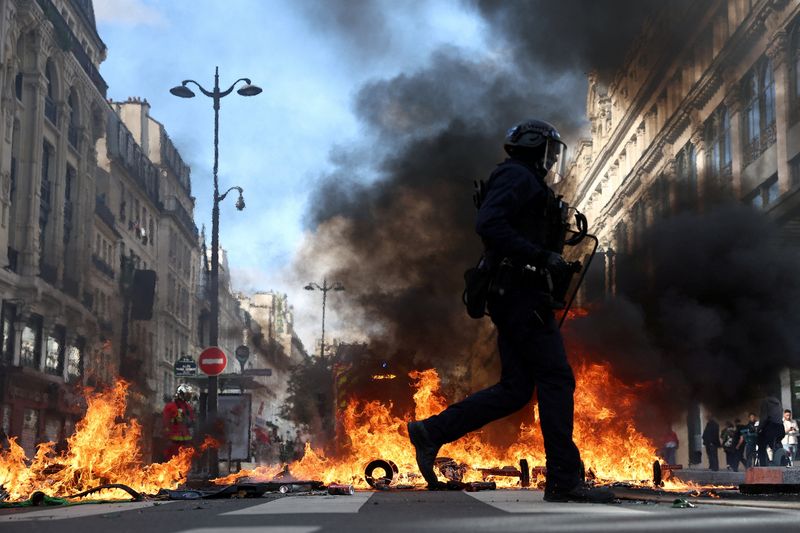
French Student Protests Widen Into Nationwide Rallies Over Living Costs
Students joined unions and Yellow Vest activists across France on October 17, broadening education protests into a confrontation over living costs as police clashes and arrests spread.
57 sources · over 9 days
US Military Weighs Massive Bomb for Possible Strikes on Iran
Reported strike plans include Iranian energy and nuclear infrastructure, as President Donald Trump faces pressure to end the war, but the coverage establishes no decision to use the weapon.
35 sources · over 3 days