
Burnham opens EU free movement debate and leaves referendum option open
Ahead of November's UK-EU summit, the prime minister's call to reconsider free movement has exposed Labour tensions and raised questions about a future public vote.
By Hushread Stories, from 16 outlets · First published 26 Oct 2026
In brief
- Andy Burnham has called for an honest discussion about restoring freedom of movement between Britain and the EU.
- His comments come ahead of a November summit examining the future relationship between Britain and the European Union.
- Angela Rayner backed the discussion, while Labour MPs in heavily pro-Brexit seats face a more cautious political calculation.
- Burnham has said he wants Britain to rejoin the EU in his lifetime, while stressing that the public decides.
- Downing Street has clarified Burnham's stance, but no agreement to restore freedom of movement has been announced.
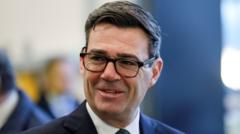
Timeline · 8 moments
Downing Street clarifies Burnham's stance on Brexit
Guardian Politics ↗Burnham leaves referendum option open on EU free movement
BBC Politics ↗Burnham says he would like Britain to rejoin EU
Guardian Politics ↗Burnham rules out eurozone and Schengen membership for Britain
HVG ↗Labour response splits as MPs weigh free movement debate
Guardian Politics ↗Rayner says nothing off the table on Brexit harms
The Independent ↗Farage accuses Burnham of betraying Brexit over free movement
Home | GB News ↗Burnham calls for evidence-based debate on EU free movement
The Independent ↗Update 26 Oct 2026, 7:40 pm UTC
The newer coverage adds a clarification from Downing Street about Burnham's stance after his comments fuelled speculation about the UK's relationship with the EU. Burnham's preference for rejoining the EU and openness to discussing freedom of movement remain distinct from a commitment to restore it.
How it started
Prime Minister Andy Burnham reopened the debate about freedom of movement on October 24, calling for an "evidence-based debate" about a new relationship with the EU, according to The Independent.
The immediate backdrop is a UK-EU summit in November. Guardian Politics reported that Burnham was considering different options for relations with Brussels, including the possibility of a return to free movement. His intervention was a call for discussion, rather than an announcement that the rules would change.
How it unfolded
On October 24, Nigel Farage accused Burnham of "Brexit betrayal" after the prime minister opened the discussion, GB News reported. That established an early line of opposition to any move towards restoring free movement.
On October 25, Burnham's argument included a call to examine how immigration to Britain had changed since Brexit, according to Al Jazeera. The discussion was therefore about the consequences of the existing arrangements as well as possible alternatives.
Angela Rayner backed the intervention. The Independent reported on October 25 that she said "nothing off the table" as Burnham considered ways to address the harms of Brexit. But support within Labour was not uniform: Guardian Politics reported a mixed response, with MPs in heavily pro-Brexit seats potentially more cautious.
Burnham also set limits on closer integration. HVG reported on October 25 that he said Britain would not join the eurozone or the Schengen area.
On October 26, the debate widened to EU membership itself. Guardian Politics reported that Burnham said he would like Britain to rejoin, but that the "British public are the bosses". The same day, BBC Politics reported that he had left the door open to a referendum on EU free movement.
Where it stands
Burnham has expressed a preference for eventual EU membership and openness to discussing free movement. Neither amounts to an agreed policy to restore either arrangement. BBC Politics described his current position as wanting to start a conversation about potential options for Britain's future EU relationship.
The precise referendum commitment is less clear across the reports. The Coventry Telegraph said a referendum would be needed for Britain to consider EU freedom of movement, while BBC Politics framed it more cautiously as an option left open. Neither report in the supplied coverage sets out a ballot question or timetable.
What to watch
November's UK-EU summit is the next scheduled point for discussions about the relationship, according to Guardian Politics. Watch for whether Burnham turns his call for debate into a specific negotiating proposal. The Coventry Telegraph also reported that he saw an opportunity for a practical deal supporting farmers and other British industries.
At home, the unresolved questions are whether free movement would be put to a referendum and how Labour would reconcile support from Rayner with caution among MPs in heavily pro-Brexit seats, as reported by Guardian Politics.
More in Politics
All →
ECI Tells Supreme Court All Three SIR Orders Were Unanimously Approved
The Election Commission has asked the Supreme Court to dismiss challenges to its decision making, while Congress wants records summoned to examine how the SIR orders were approved.
8 sources · today
Ramaswamy Ad Backlash Grows as Ohio Venues Cancel Campaign Events
An ad featuring Amy Acton's estranged mother has divided Republicans, drawn Trump's support and triggered event cancellations as the Ohio governor's race approaches Election Day.
40 sources · over 8 days
Trump Orders Lawsuit to Block Alaska Senate Certification if Sullivan Loses
The Justice Department's preemptive challenge over similar candidate names now faces opposition from Democrats and voting rights advocates, with Senate control potentially at stake.
32 sources · over 5 days