
Canada and EU Drop Associate Membership Language Before Montreal Summit
Objections from Germany and other EU states have narrowed an ambitious proposal for Canada, leaving both sides pursuing closer ties whose shape is to be defined in 2027.
By Hushread Stories, from 15 outlets · First published 29 Oct 2026
In brief
- Canada and the European Union have dropped associate membership language from their Montreal summit declaration.
- European Commission President Ursula von der Leyen had proposed making Canada the bloc's first associate member.
- Germany and other EU member states objected to the proposal before the October 29 summit.
- The replacement wording promises ever closer association, rather than a new associate membership status for Canada.
- Both sides aim to define their new relationship in 2027 while discussing deeper economic and defence cooperation.
Timeline · 5 moments
Montreal summit turns to deeper economic and defence ties
BBC World ↗Wider member state opposition to special status emerges
Deutsche Welle ↗Revised draft sets 2027 target for defining closer association
National Post ↗German objections prompt removal of associate membership wording
Euronews ↗Summit agenda builds on existing trade and defence arrangements
Japan Times ↗How it started
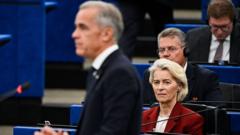
The proposal was to make Canada the European Union's first associate member. According to nu.nl, Ursula von der Leyen announced the idea in September during her annual State of the Union speech.
The two sides already have substantial ties. Japan Times reported that a free trade pact and a defence procurement program were among the existing arrangements underpinning efforts to expand cooperation.
The summit also comes amid tensions over US tariffs, a context highlighted by Al Jazeera in its October 28 account of what both sides wanted from the talks.
How it unfolded
On October 28, Euronews reported that the EU had removed "associate membership" from the draft summit declaration following German objections. The replacement phrase was "ever closer association".
The opposition extended beyond Germany. On October 29, Deutsche Welle reported that Germany and other member states had raised objections to European Commission President Ursula von der Leyen's proposed special status for Canada ahead of the Montreal summit.
Al Jazeera reported that German Chancellor Merz and other EU leaders had pushed for the terms to be removed from the draft statement. Their intervention left the ambition for closer relations intact, but stripped out the proposed membership label.
The revised draft also set a timetable. According to National Post, reporting on October 28, Canada and the EU gave themselves until 2027 to define their new "ever-closer association".
Where it stands
Associate membership is off the table for this summit. BBC World reported on October 29 that officials were instead discussing deeper economic and defence ties in Montreal.
That is a narrower outcome than the initial proposal, not an end to efforts to strengthen the relationship. The available coverage describes a commitment to closer association, but does not establish what specific new status or agreements that wording will produce.
What to watch
The next substantive test is how Canada and the EU define the promised association by 2027. The timetable reported by National Post leaves the details of that relationship still to be settled.
Economic and defence cooperation remain immediate areas to watch at the summit, according to BBC World. Concrete commitments in those areas will show what closer ties mean without the associate membership designation.
More in Politics
All →
Bolsonaro claims Brazil presidency from Miami after losing runoff to Lula
Flávio Bolsonaro is challenging Lula da Silva's victory from the United States, but some allies are rejecting his fraud allegations as Brazilian authorities investigate his departure.
94 sources · over 9 days
Burnham opens EU free movement debate as ministers clash over approach
Ahead of November's EU summit, the prime minister is exploring closer ties while insisting that restoring freedom of movement would require a referendum.
17 sources · over 5 days
Finnish and Norwegian Leaders Call Putin to Seek Ukraine Peace Talks
The Nordic leaders' appeal for renewed peace talks comes as Brussels prepares contacts with Russia, bringing direct European diplomacy over Ukraine into focus.
29 sources · over 2 days