
Burnham opens EU free movement debate as ministers clash over approach
Ahead of November's EU summit, the prime minister is exploring closer ties while insisting that restoring freedom of movement would require a referendum.
By Hushread Stories, from 17 outlets · First published 29 Oct 2026 · Chapter 2 of 2
Earlier: Burnham opens EU free movement debate and leaves referendum option open
In brief
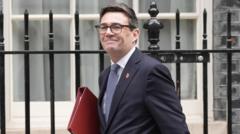
- Prime Minister Andy Burnham has called for an honest discussion about restoring freedom of movement with the EU.
- He says a return to free movement would require a referendum, and rules out rejoining during this parliamentary term.
- Angela Rayner backed the discussion, while Nigel Farage accused Burnham of betraying Brexit by reopening the issue.
- British officials are discussing future relationship options, although November's summit will focus on trade and youth mobility.
- Burnham has urged ministers against fixed positions, but John Healey says freedom of movement is not on the agenda.
Timeline · 7 moments
Healey insists free movement is not on the agenda
Daily Mail ↗Burnham warns ministers against positions before options review
Guardian Politics ↗Officials discuss free movement among future EU relationship options
Guardian Politics ↗Burnham makes referendum a condition for restoring free movement
South China Morning Post ↗Rayner backs debate as Labour response proves mixed
Guardian Politics ↗Farage accuses Burnham of betraying Brexit over free movement
Home | GB News ↗Burnham calls for honest discussion on EU free movement
Guardian Politics ↗How it started
Prime Minister Andy Burnham opened the debate on 24 October by calling for an "honest discussion" about restoring freedom of movement between Britain and the EU. He was considering options for a new relationship with Brussels ahead of November's summit, according to Guardian Politics.
His argument was for an "evidence-based debate" about what that relationship could look like, The Independent reported. That opened a politically sensitive question, but it was not an announcement that free movement would return.
How it unfolded
The backlash began on 24 October. Nigel Farage accused Burnham of "Brexit betrayal", according to GB News, which described the initiative as a plan to reimpose free movement.
On 25 October, Labour's response was mixed. Angela Rayner backed Burnham's call for discussion, while MPs representing heavily pro-Brexit seats were more cautious, Guardian Politics reported. Rayner said "nothing off the table" in addressing the harms of Brexit, according to The Independent.
On 26 October, Burnham set out a significant condition: he would not restore EU freedom of movement without a referendum. He also ruled out Britain rejoining the EU during this parliamentary term, the South China Morning Post reported.
By 27 October, British officials had begun discussing options that included free movement. The business secretary said November's summit would focus on trade and youth mobility, while also covering future options for the relationship, according to Guardian Politics.
On 28 October, Burnham insisted there was "no confusion at all" about his position and said improving the Brexit deal at next month's Brussels summit was his responsibility, BBC Politics reported. He also warned ministers not to express opinions about the future relationship before a review of the options, according to Guardian Politics.
Where it stands
There is a distinction between discussing free movement and agreeing to restore it. Officials are examining future options, but Burnham has made a referendum a condition of any return, according to the South China Morning Post. Rejoining the EU is also ruled out for this parliamentary term.
The government's public messaging remains unsettled. On 29 October, the Daily Mail reported that John Healey insisted freedom of movement was "not on the agenda", despite Burnham having written to ministers the previous day urging them not to take fixed positions on future EU ties.
What to watch
November's Brussels summit is the next concrete test. The stated focus is trade and youth mobility, according to Guardian Politics. The question is how far discussions of the longer-term relationship extend beyond those subjects.
The review of options will also test whether ministers can reach a common position. Burnham's instruction to avoid premature judgments, reported by Guardian Politics, leaves the debate open without settling which proposals the government will ultimately pursue.
More in Politics
All →
Bolsonaro claims Brazil presidency from Miami after losing runoff to Lula
Flávio Bolsonaro is challenging Lula da Silva's victory from the United States, but some allies are rejecting his fraud allegations as Brazilian authorities investigate his departure.
94 sources · over 9 days
Canada and EU Drop Associate Membership Language Before Montreal Summit
Objections from Germany and other EU states have narrowed an ambitious proposal for Canada, leaving both sides pursuing closer ties whose shape is to be defined in 2027.
15 sources · over 2 days
Finnish and Norwegian Leaders Call Putin to Seek Ukraine Peace Talks
The Nordic leaders' appeal for renewed peace talks comes as Brussels prepares contacts with Russia, bringing direct European diplomacy over Ukraine into focus.
29 sources · over 2 days