
Ebola outbreak widens as Kenya records ninth case and Nigeria confirms infection
Kenya's infections remain linked to its first patient, but a new case in Nigeria and expanding transmission in Congo are putting regional containment efforts under pressure.
By Hushread Stories, written with AI from 25 outlets · First published 20 Oct 2026
In brief
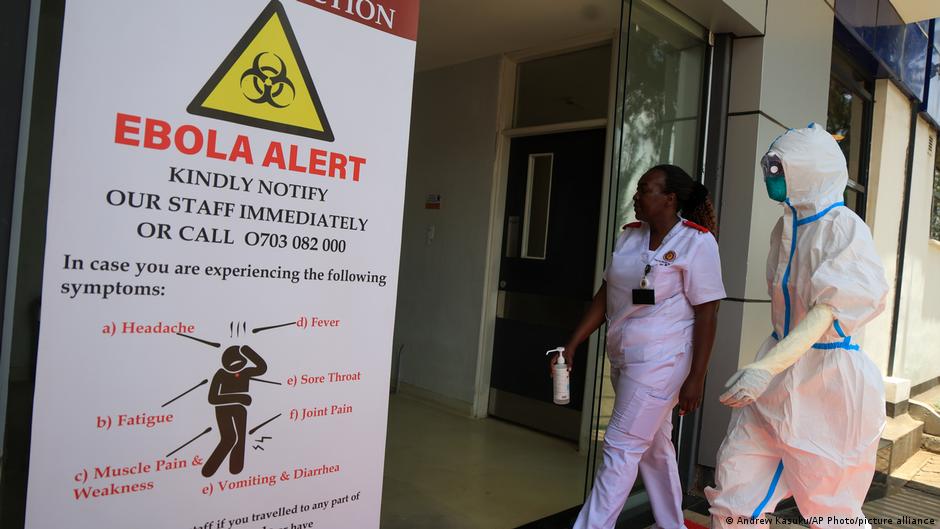
- Kenya confirmed its ninth Ebola case on October 20, involving a man already being held in quarantine.
- Nigeria reported an infection in Abuja involving a woman who had recently arrived from Uganda.
- Congo's outbreak has reached eight provinces, with roughly 9,500 cases and more than 4,500 deaths reported.
- Kenya's infections include relatives and health workers linked to its first patient, with no community transmission reported.
- Contact tracing remains a central concern as responders struggle to contain an outbreak caused by the Bundibugyo virus.
Timeline · 8 moments
Nigeria confirms Abuja infection in woman arriving from Uganda
Deutsche Welle ↗Kenya confirms ninth case in man already quarantined
Al Jazeera ↗Congo reports roughly 9,500 cases and over 4,500 deaths
Infobae ↗Congo outbreak reaches eighth province with two cases
South China Morning Post ↗Four more Kenyan cases include three health workers
Al Jazeera ↗Kenya records third case in quarantined woman
Al Jazeera ↗Kenya confirms second infection in first patient's relative
CBC Top Stories ↗Congo's confirmed Ebola cases exceed 9,000 as containment falters
ABC News ↗How it started
The outbreak in the Democratic Republic of the Congo was declared in mid-May and had grown to roughly 9,500 cases and more than 4,500 deaths by October 19, according to Infobae.
It is caused by the rare Bundibugyo virus, for which there is no approved vaccine or treatment, The Independent reported. Community mistrust has also complicated health workers' efforts, according to Al Jazeera.
Kenya's first patient was a Kenyan who had been living in Congo. He died in a Nairobi hospital on October 5, about a week before Kenya reported its second case, according to France24.
How it unfolded
On October 13, ABC News reported that Congo's confirmed infections had exceeded 9,000 as containment efforts faltered. By October 15, the reported death toll had passed 4,400, according to CBS Top Stories.
On October 14, Kenya confirmed a second infection in a relative of its first patient. The relative tested positive while in quarantine, CBC Top Stories reported. Authorities had identified 128 contacts of the first patient and traced 113, according to World News CNA.
A third Kenyan case followed on October 16. Al Jazeera reported that the patient was a 65-year-old woman in quarantine and that authorities said there were no signs of community transmission.
On October 17, Kenya announced four more infections, bringing its total to seven. Three of the newly confirmed patients were health workers who had treated the first patient, according to Al Jazeera.
By October 18, Congo's outbreak had reached an eighth province. Authorities recorded two cases, including one death, in Nord-Ubangi in the north, South China Morning Post reported. Kenya's total also reached eight, according to Deutsche Welle.
On October 20, Kenya confirmed its ninth infection, a 24-year-old man already in quarantine, Al Jazeera reported. The same day, Nigeria reported an Ebola case in Abuja involving a woman who had recently flown from Uganda, according to Deutsche Welle.
Where it stands
Kenya's latest patient is a close relative of its first patient, and the country still reports no community transmission, according to Infobae. The previous eight infections had all been linked back to the first patient, ABCNews.com reported on October 19.
Congo faces a much larger outbreak across eight provinces. Its expanding geographic reach, alongside the newly reported infection in Nigeria, adds to concerns about regional spread. NPR reported that Nigeria was the latest country to confirm a case as Kenya's total reached nine.
What to watch
The immediate question in Kenya is whether further infections remain within the known contact network. Experts quoted by The Independent warned that contact listing needed to improve and that mapping infected people's movements required resources that were not being deployed adequately.
Another key measure is whether Congo's response can catch up with transmission into new areas. Arab News reported on October 18 that the outbreak's spread continued to outpace response efforts.
More in Health
All →
Christina Applegate Says Her Multiple Sclerosis Diagnosis Was Wrong
Christina Applegate says she does not have multiple sclerosis, but her health has not improved, leaving her shocked and back at the beginning of her search for answers.
19 sources · today
Trump signs order creating NIH division focused on women's health
The order creates a research division and a White House task force after Melania Trump pressed the administration to give women's health greater priority.
11 sources · today
Pope Leo XIV leads public prayer after lung cancer surgery
Pope Leo XIV has made a public appearance a day after leaving hospital, but details needed to assess his cancer prognosis have not been disclosed.
74 sources · over 8 days