
Eisenkot Bloc Wins Knesset Speakership 66-52, Weakening Netanyahu's Grip on Parliament
Matan Kahana's election as speaker hands the opposition control of the legislative agenda while Gadi Eisenkot still tries to form a government, and it lets his bloc start rolling back Netanyahu's policies.
By Hushread Stories, from 38 outlets · First published 19 Nov 2026 · Chapter 3 of 3
Earlier: Israel's Knesset elects Eisenkot ally Matan Kahana as speaker, dealing Netanyahu a setback
In brief
- Matan Kahana, an ally of Gadi Eisenkot, was elected Knesset speaker on November 17 with 66 votes in the 120-seat parliament.
- Most outlets put the margin at 66-52 against Likud's candidate Ofir Katz, though one Italian outlet reported 53 votes for Katz.
- Arab parties backed Kahana, and several outlets framed the vote as a first test of the Eisenkot-led anti-Netanyahu bloc.
- The speaker controls the legislative process, so the opposition can now advance bills that Netanyahu's camp would previously have blocked.
- Eisenkot is still working to build a government, and fellow opposition leaders have warned him against joining a unity coalition with Netanyahu.
Timeline · 8 moments
Legislative offensive opens under new speaker
South China Morning Post ↗Parliament begins moves to unravel Netanyahu's legacy
Arab News ↗Netanyahu lashes out at bloc and its backers
Times of India ↗Arab parties' backing helps Eisenkot bloc win vote
RSS di - ANSA.it ↗Knesset elects Kahana speaker, defeating Likud's Ofir Katz
CNN - Middle East ↗Leaders condemn alleged election-eve framing of Arab party members
dawn.com ↗Liberman and Golan warn Eisenkot against unity government trap
evrensel.net ↗Police open internal inquiry into targeting of Arab parties
Anadolu Ajansı ↗How it started
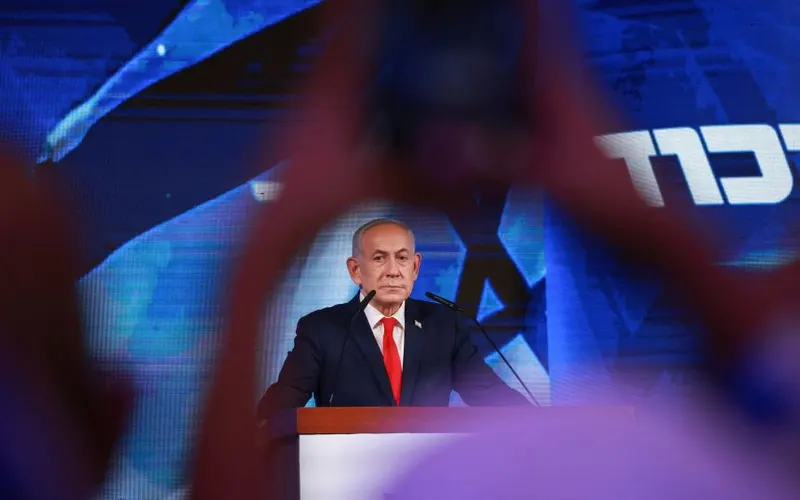
Israel is in a political limbo. Benjamin Netanyahu is still in office as caretaker prime minister, while Gadi Eisenkot, leader of the Yashar party, has been tasked with trying to form the next government.
The weeks around the election were bitter. Opposition figures accused Netanyahu's camp of an attempted election coup, and the fight over who would run the Knesset became the first real test of whether Eisenkot's bloc could hold together on a vote that mattered.
How it unfolded
On November 16, Anadolu Ajansı reported that Israeli police had opened an internal inquiry into claims that Netanyahu used police forces to target parties representing Palestinian citizens of Israel, over rhetoric that they were stealing the elections. The same day, evrensel.net reported that Avigdor Liberman and Yair Golan warned Eisenkot not to fall into the trap of a national unity government with Netanyahu.
The next day, Dawn reported that Israeli leaders were condemning what they called Netanyahu's attempted election coup. According to its summary, reports said the prime minister's office had tried to frame Arab-Israeli party members on the eve of the polls, and three people were freed as the allegations proved baseless. Dawn also reported that the attorney general blocked a Shin Bet bid to wiretap Joint List leaders.
The speakership vote came on Tuesday, November 17. The BBC-style wire accounts from the AP and others described the Knesset electing Matan Kahana, backed by Netanyahu's opponents, over Likud's Ofir Katz. Franceinfo reported that Kahana, 54, a former special forces member, won 66 of the 120 seats. ZeroHedge and Gulf News gave the tally as 66-52, while TGcom24 reported 53 votes for Katz, so the exact opposition count differs slightly between outlets.
Al Jazeera reported that Arab parties supported Kahana, and ANSA likewise noted the Arab backing. Times of India reported that Netanyahu fumed, calling the bloc's backers terror supporters. CNN described the result as a critical blow to his grip on power, giving the opposition greater control over the legislative agenda.
Where it stands
Kahana now controls how parliament works. SBS News reported that he can advance bills prioritised by the Eisenkot-led bloc and the parties that back it, and NDTV said he was expected as soon as Wednesday to begin undoing much of Netanyahu's agenda.
By November 18, the South China Morning Post reported, parliament met under its new speaker and opponents of the caretaker prime minister began a legislative offensive to roll back his legacy. DW Türkçe noted that Eisenkot's search for a governing majority is still going on, and Der Spiegel called government formation a tightrope walk for him.
What to watch
The main open question is whether the coalition that elected Kahana can hold together on harder votes. The speakership drew the opposition and Arab parties together, but forming a government needs a durable majority, and Liberman and Golan have already warned against a unity deal with Netanyahu.
Also pending are the investigations into the election-eve allegations and the police inquiry. Alongside that, Reuters reported that opposition leaders remain alarmed over Netanyahu's push for new strikes on Iran, a dispute that could shape the weeks ahead.
More in Politics
All →
Musk Says He Feels 'Pretty Foolish' After Nearly $500 Million Midterm Spending
The billionaire said he is not MAGA as reported figures for his Republican midterm spending range from about $440 million to nearly $500 million.
46 sources · today
House Democrats Nominate Hakeem Jeffries for Speaker, 251 Votes to 11
Jeffries is set to become the first Black Speaker in U.S. history when the new Congress convenes in January.
43 sources · over 4 days
Judge Ana Reyes temporarily blocks closure of East Potomac Park golf course for Trump redevelopment
A federal judge stopped the planned 15-month closure of a public D.C. park hours before it was due to start, putting Trump's golf course makeover on hold while the lawsuit continues.
24 sources · over 6 days